The Young Leader

  • GLA Program Blogs
  • Gamechangers
  • Newsletters
  • About The Young Leader

December 3, 2015 by The Young Leader

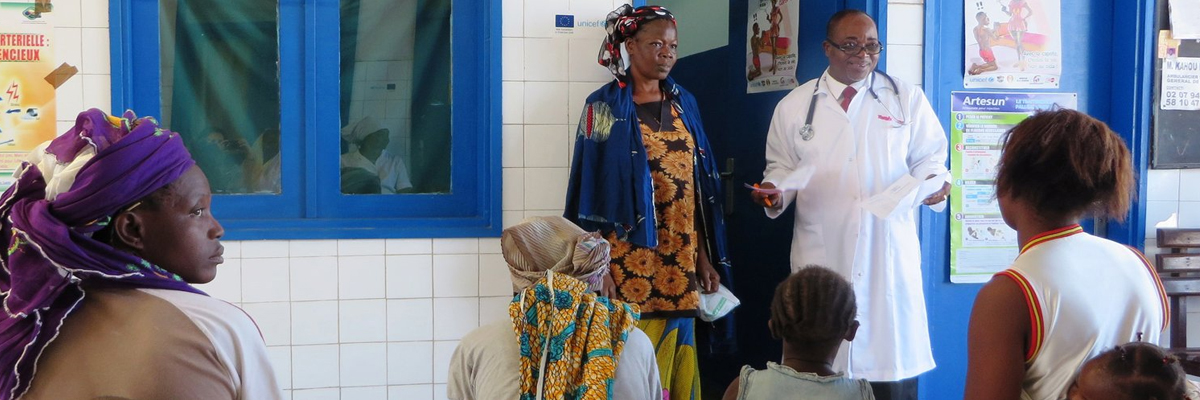
5 Reasons Why Health & Hygiene are the Most Important Tools You Can Promote in the Developing World

GLA-Medical

If you’re interested in public health and caregiving back home—why not promote it abroad?

Hey there, health volunteers! Here are 5 reasons why you should apply your passion to the developing world:

1. There is an overwhelming need

If you’ve always wanted to volunteer but weren’t sure how you could help, then consider the importance of health. Many of the luxuries that we take for granted in first-world countries—such as clean running water—are not standard elsewhere. There are billions of people without these daily necessities.

2.  Health and hygiene are universal

Let’s say that you pull up a map of the world. You then close your eyes and point to a random part of the world map. Wherever you end up pointing to has health and hygiene as an essential need. This may seem obvious when you point to well-known countries; this may not be so obvious when you point to the ocean (sailors and seagoers have to be meticulously, even obsessively clean and also mindful about their nutrition).

3. Everyone’s affected

Nobody’s immune to sickness or disability. Infants, children, young adults, parents, and the elderly are all at risk. If you’re looking for a meaningful area to volunteer in, then choose health and hygiene since it impacts everyone.

4. Small improvements make huge impacts

It’s a cliché but one that’s certainly true. If you install a water purification system for a village, this greatly improves the health of everyone living there and especially for children yet to be born.

Your contribution will help generations.

5. YOU can help right now

Absolutely! You don’t need any specialized knowledge or experience to make an impact here. All you need is a genuine interest and a willingness to learn from others.

What have been your goals and experiences with promoting health and hygiene? We’d enjoy hearing your story!


Contributed by Nick Focthman
Filed Under: Bright Futures, Latest Posts

December 2, 2015 by The Young Leader

4 Times Sports in History Have Been Used to Bridge Differences Between Countries or Communities

GLA-Sports

The outcome of a sporting event always means more to than a simple win or loss. If our team wins, we carry the glory, if our team loses, we feel the shame. It’s this emotional connection to sports that keeps them at the forefront of our lives and constantly on our mind. For years, we have seen our various sporting events as metaphors for world power or to sway political views. Here are four times in history when sports have represented more to the world than a simple loss or victory.

1. 1936 Olympics

Adolf Hitler was hosting the 1936 Olympic games in Germany hoping to use them as a showcase for Aryan superiority. Hitler was upset when Jesse Owens, an African American, took home four gold medals in his four respective track and field races. To this day, Jesse Owens’ victories represent one of the greatest blows to international racism viewed on a wide scale.

2. 1971 China Vs. U.S. Ping Pong

For over twenty years leading up to the famous China Vs. America Ping Pong match the U.S. had virtually no contact with China since 1949. China made a surprise offer to the U.S. team in 1971 to play a few exhibition games. China had plans to use this match as political propaganda for their citizens to show superiority over America. This exchange allowed for Americans to see China for what it really was at the time, opening up America’s eyes to the truth behind the Chinese people and paving the way for President Nixon’s trip in 1972.

3. 1995 Mandela Supports Rugby

After becoming president of post-apartheid Africa in 1994, Nelson Mandela offered his support to South Africa’s rugby team. A team which at the time consisted of only whites and acted as a symbol of white dominance in South Africa and Black suppression. After Africa’s team, the Springboks won the championship Nelson hand delivered the trophy to the team’s white captain representing the African people’s ability to forgive, but never forget.

4. 1936 wrestling match

Another event from the 1936 Olympic games that may have held just as much fervor as Jesse Owen’s victory would be the defeat of the German wrestler, Wolfang Ehrl by a Jewish-Hungarian athlete, Karoly Karpati. The defeat happened with Adolf Hitler in attendance.


Contributed by Josh Schwartz

Filed Under: #myGLA, Be Bold!, Latest Posts

December 1, 2015 by The Young Leader

9 Reasons Why Traveling Abroad to a Country with a Different Language Than Your Own is Better for Language Learning Than the Classroom

GLA-Language-Learning

Trying to convince your parents, and maybe yourself, that time in another country to study a language without being in a formal classroom is a good idea? Here are nine. Maybe they will help you and/or your parents feel a little better.

1. Get Out of the Classroom

You’ve spent thousands of hours sitting in classes during the regular school-year. Why spend your time abroad in a similar setting? Unless, of course, education is a subject in which you’re interested.

2. Get Out Into the World

There’s far more to learning a language than diagramming sentences. In fact, the formal languages often taught in language courses are considerably different from the way natives speak. (Think about your last English class and compare it to how you talk.)

3. Natives Are Better Teachers

When you’re immersed in a foreign culture where everyone speaks an unfamiliar language, you’ll find that you learn the quickly language – especially key phrases.

4. Gain Perspective

Words communicate our cultural differences that no textbook can. Learning the meanings of various ways locals emphasize words can bring new perspectives on language that you don’t get in a classroom.

5. Expansive Vocabulary

Let’s be honest: vocabulary books and translation guides give you a limited number of words. There are far more words in a language than those taught in the classroom. Try learning the words people use every day – by every day interaction with them.

6. Get Moving

It’s pretty easy when you’re given a map, recommendations and someone to contact if you get lost. Without those, you’ll have to learn to get around. Your reading skills will also improve as you learn directions, sign meanings and menus.

7. Hang with the Locals

Too often, when studying abroad in a classroom setting, there are many other Americans studying there as well. Unfortunately, often they all hang out together – inside and outside the classroom. So, studying abroad outside the classroom will force you to talk in the native language.

8. Tough It Out

Almost all of us get homesick, and it helps if there are fellow students who understand, but studying abroad outside the classroom allows you to build the confidence not only in speaking the language but in knowing you can take care of yourself.

9. You Decide
Finally, you get to decide your schedule when studying abroad. If you learn best in the afternoon, you can focus then.

As long as you’re self-motivated and disciplined, studying a language abroad outside the classroom can be a great learning experience. I’ve given you some reasons – now go do it!


Contributed by William Pate

Filed Under: #myGLA, Latest Posts, Wanderlust

November 30, 2015 by The Young Leader

Elephants, Tortoises, Cats, & Dogs: Why Each of These Animals Are Important to Save

GLA-Animals

Everyone has a favorite type of animal and almost everyone owns a dog or a cat as a pet; and if you don’t, you surely know someone who does. Well we’ve compiled a list of a few animals that are especially important to the world and to help save.

1. Elephants

They help the environment with land.

They help communities by bringing in tourism.

In tropical forests, elephants create gaps in canopies of trees and bushes while in the savannas they help remove bush cover, which creates an environment helpful to other animals. Elephants are also a popular sight for tourists bringing in money to areas that they live in like Africa. By saving elephants we help to keep their habitat safe, support communities that thrive off of them, and make sure natural resources are available for years to come.

Fun fact: Elephants are the largest mammals on earth, some weighing up to eight tons!

2. Tortoises

They help the environment by creating places to live for other animals.

They help people by being a rarity to see.

Desert tortoises live in burrows that they create during most of the year. These little holes are helpful to other animals like birds and reptiles that use them as shelter. Tortoises are also a rare occasion to see and some actually have helped people cope with injuries and disabilities.

Fun fact: Adult desert tortoises can spend a year or even more without access to water!

3. Dogs

They help the environment by protecting other animals.

They help people in many ways besides being a “man’s best friend.”

By digging up soil to burry items dogs are actually helping to renew the environment and some dogs actually help protect other animals in different locations around the world. There are also dogs that help people out with jobs from Seeing Eye dogs to firefighter rescue dogs.

Fun fact: Dogs only sweat through the palms of their feet!

4. Cats

They help the environment by preying on animals that help keep the ecosystem stable.

They help people with health.

Cats prey on animals like rats and rabbits that actually help to keep their population consistent and in turn keep the ecosystem on track. For people, owning a cat can reduce the chance of having a heart attack or stroke by one third. So saving cats not only helps the world but also selfishly us!

Fun fact: Cats have more than 20 muscles that control their ears!


Contributed by Samantha Watkins

Filed Under: #myGLA, Bright Futures, Latest Posts

November 22, 2015 by The Young Leader

Why Preserve Our Forests, Oceans and Islands

GLA-Environment

All of our amazing new technology and machinery has become so distracting that we forget to think about our environmental impact. Most of us don’t stop to think about how our habits and actions effect the environment on a daily basis. But, why should we? We have professionals whose jobs are to monitor the earth and tell us what we’re messing up and how to fix it. So, in case you too need more motivation, here are three habitats that are diminishing due to a lack of environmental caution and why it is crucial to preserve them.

1. Forests

Forests and wildlife make up for just under half of the oxygen produced across the planet. What most of you didn’t know however is that forests provide the key to sustaining rivers and ecosystems that allow water to travel freely from place to place. With out forests, land begins to dry up as there are no roots to lock moisture into the ground. This causes land to dry up and die which leaves the land to barren of nutrients for plant life to grow. By planting new forests and allowing for life to flourish, you can strengthen climates to a state of intense growth allowing for higher oxygen production and Carbon filtering. Forests allow for massive amounts of naturally and unnaturally produced carbons to be filtered at massive levels.

2. Ocean

You may be thinking that the ocean obviously needs to be protected, but what you probably aren’t thinking is that the Ocean is the biggest factor in keeping surrounding climates from changing. The ocean acts as the worlds largest carbon dioxide filter which means that the ocean is constantly preventing global warming while at the same time producing over half of the oxygen that we breath. As new technologies develop allowing research to be conducted at greater depths, scientists are finding that the ocean may hold the most promising source of new medicines to fight cancer, pain and bacterial disease. This being that we know the sea to contain a number of undiscovered plants and animals with completely different chemical make ups than those on land.

3. Islands

We all know that islands offer some of the most beautiful landscapes and habitats for us to spend our time, but there are more important reasons to preserving these natural undersea mountains. First, some islands known as Barrier Islands actually act as a natural current diffuser that can help lessen the blow or completely crush the power behind a tsunami or other large scale waves. Isolated islands also allow for unique species to grow and evolve due to a lack of predatory life. Islands also serve as popular hot spots for fishing and fish habitats as they are usually surrounded by large reef systems allowing for massive communities of fish to form. These large gatherings of fish also attract whales who use the large floating masses as landmarks while traveling.


Contributed by Josh Schwartz

Filed Under: #myGLA, Latest Posts, Wanderlust

  • « Previous Page
  • 1
  • …
  • 16
  • 17
  • 18
  • 19
  • 20
  • …
  • 31
  • Next Page »

Give Back to the Community

Donate to the GLA International Foundation and help support projects and grant recipients around the world.

Brought to you by

Copyright © 2026 · Executive Pro Theme on Genesis Framework · WordPress · Log in