The Young Leader

  • GLA Program Blogs
  • Gamechangers
  • Newsletters
  • About The Young Leader

November 30, 2015 by The Young Leader

Elephants, Tortoises, Cats, & Dogs: Why Each of These Animals Are Important to Save

GLA-Animals

Everyone has a favorite type of animal and almost everyone owns a dog or a cat as a pet; and if you don’t, you surely know someone who does. Well we’ve compiled a list of a few animals that are especially important to the world and to help save.

1. Elephants

They help the environment with land.

They help communities by bringing in tourism.

In tropical forests, elephants create gaps in canopies of trees and bushes while in the savannas they help remove bush cover, which creates an environment helpful to other animals. Elephants are also a popular sight for tourists bringing in money to areas that they live in like Africa. By saving elephants we help to keep their habitat safe, support communities that thrive off of them, and make sure natural resources are available for years to come.

Fun fact: Elephants are the largest mammals on earth, some weighing up to eight tons!

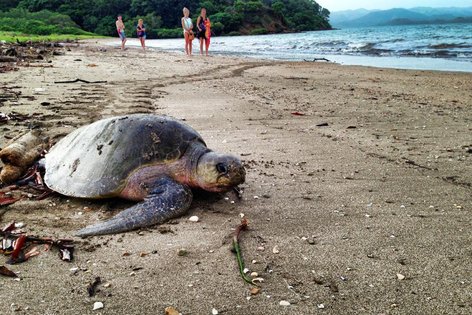
2. Tortoises

They help the environment by creating places to live for other animals.

They help people by being a rarity to see.

Desert tortoises live in burrows that they create during most of the year. These little holes are helpful to other animals like birds and reptiles that use them as shelter. Tortoises are also a rare occasion to see and some actually have helped people cope with injuries and disabilities.

Fun fact: Adult desert tortoises can spend a year or even more without access to water!

3. Dogs

They help the environment by protecting other animals.

They help people in many ways besides being a “man’s best friend.”

By digging up soil to burry items dogs are actually helping to renew the environment and some dogs actually help protect other animals in different locations around the world. There are also dogs that help people out with jobs from Seeing Eye dogs to firefighter rescue dogs.

Fun fact: Dogs only sweat through the palms of their feet!

4. Cats

They help the environment by preying on animals that help keep the ecosystem stable.

They help people with health.

Cats prey on animals like rats and rabbits that actually help to keep their population consistent and in turn keep the ecosystem on track. For people, owning a cat can reduce the chance of having a heart attack or stroke by one third. So saving cats not only helps the world but also selfishly us!

Fun fact: Cats have more than 20 muscles that control their ears!


Contributed by Samantha Watkins

Filed Under: #myGLA, Bright Futures, Latest Posts

October 26, 2015 by The Young Leader

High School Leadership: What You Can’t Learn in the Classroom

Leadership-in-Africa

What makes a good leader? Sure, you’ve heard this question asked in all kinds of places. It’s been asked by your teachers, parents, and even inspirational TV ads that interrupt your favorite show. But there’s a difference between knowing about leadership and being a leader, and it won’t be until you step outside of your comfort zone that you will learn about true leadership.

When you start participating in leadership opportunities (for example, volunteering with a program or raising awareness of important causes) outside of the classroom, you will learn some valuable things about leadership. You will learn to project a vision that others will believe in and support. George Washington Carver once said, “Where there is no vision, there is no hope.” Good leadership lies in the skill of helping people see and love the dream that you have, and you can use this skill to lead people of all backgrounds, poor or rich, young or old. Seeing (or envisioning) is believing.

You will also learn to work with others. Good leaders have good people skills. You will learn to work with others as a team, listen and respect other people’s opinions and ideas, and delegate tasks. Consider your favorite athletes. Most likely they do not push their team members around and bash them. Instead, they support their team members and know everyone’s strengths and weaknesses. They know how the team works best together. You will learn this skill quickly as you step into a leadership role. For example, if you work with one of Global Leadership Adventure’s service programs, you will have to learn to work with your friends and team mates while in an unfamiliar setting, in order to help the international community. Good leadership equals good team work.

In addition to these skills, you will also learn more about yourself. Cheesy, I know, but it’s true. You will learn that you can do things you didn’t think you could do before. Melissa Faraci, one of my friends, has traveled all over the world. While she was volunteering in Mexico during her teen years, she had the opportunity to get to speak to a group of children and lead them in games. At the time, she thought she couldn’t do it and was afraid she would be awkward and incapable, but the adventure forced her out of her comfort zone, and she was able to go above and beyond what she originally thought she couldn’t do. Melissa testifies that this experience helped her grow as a leader and as a person. Leadership will do the same for you.

So do you want to lead? There are plenty of leadership opportunities for high school students. Consider volunteering locally, like at a nursing home or community center. Start an internship with an organization that you love. Or volunteer with a leadership program for high school students. Global Leadership Adventures has lots of programs to match your interests and talents! Their Service Learning Adventures give you opportunities to lead and help others, while having a blast at the same time. Through GLA, you will meet people from all different backgrounds, and you will gain experiences that can’t be found anywhere else. Oh, and did I mention you get to travel? Bonus!

Leadership isn’t just telling people what to do, and it can’t simply be taught. It’s about creating a vision, working with your team, and pushing yourself to grow. True leadership is a valuable skill, one that will stick with you for the rest of your life. Now, are you ready to become a leader? Let’s go!


Contributed by Addie Davis

Filed Under: Bright Futures, Latest Posts

October 23, 2015 by The Young Leader

Teens: Get Your Science On Outside the Classroom

Summer-Science-Programs-for-High-School-Students

Do you have a passion for community health, the environment, or cute animals?

Science

Science! Love it or hate it, most of us have to take science classes in high school. But outside the cold, dark recesses of your school basement, there’s a different kind of scientist.

These scientists find outdoor discovery fascinating, thrive on collaborating, and have a personal interest in understanding real world problems. They are well-traveled and enjoy volunteering in other cultures to solve pressing issues. Once they understand exactly what local communities need, they go ahead and make it happen.

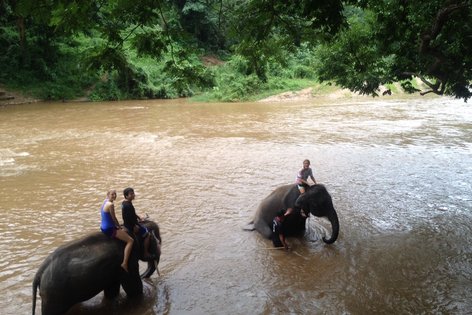
Although you may not enjoy the traditional science taught in school, you might have a passion for environmental conservation and public health. Perhaps what you’ve always wanted was a more motivated, hands-on, and culturally rich experience. It’s one thing to memorize animal classification schemes, and another one entirely to ride elephants through a river after a satisfying day’s work:

Elephant River

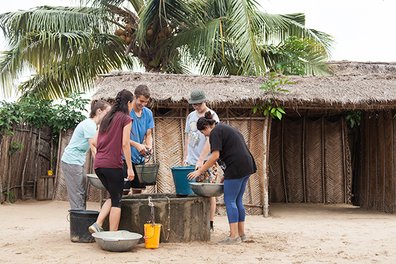
It’s also one thing to desperately throw powders together so your mixture turns blue in chem lab, and a completely different one to install a water filtration system that will improve the lives of many people:

Public Health

If any of these ideas interest you, then consider yourself a modern scientist.

(And don’t worry, you can leave your lab coat and goggles back home.)

If you can’t wait to get some down-and-dirty, life-changing experience—especially if you want to get your science on over Summer Break—then also consider joining a global service learning project! For those of you already prepping for medical, veterinary, or dental school, it’s useful to supplement what you’re learning with a meaningful intercultural experience.

But what Summer Science Programs are available for high school students?

Well…that all depends on your interests and goals. To help you get started, you can check out Global Leadership Adventures’ (GLA’s) Summer Science Programs for High School Students:

  • Animal and Wildlife Conservation

  • Environmental Conservation

  • Medicine / Public Health

Outside of high school classes, science solves global problems and brings together communities from all over the world. Who knew science could be so useful and—dare we say—fun?

What’s been your experience with science outside the classroom (good or bad)? Please share below!


Contributed by Nick Fochtman

Filed Under: Bright Futures, Latest Posts

October 12, 2015 by The Young Leader

Learn Spanish in an Immersive Way with GLA Spanish Summer Programs for High School Students

Language-Immersion-for-Teens-in-Costa-Rica

I’ve taken part in a Spanish summer program for high school students. It can be an eye-opening learning experience, and on programs like GLA’s Costa Rica: Spanish Service Adventure.

Unlike most students who spend the majority of their time in classrooms during Spanish summer programs, on the Costa Rica: Spanish Service Adventure program, you only spend some of your dedicated language learning time in the classroom, you but also get outside to help on projects benefiting your local host population. It’s an immersive summer Spanish program for high school students where sharing conversation on a volunteer project site, at the local town market, or over dinner is as profound to your language learning as the classroom portion of your program.

From experience, I can tell you the best way to learn a new language is to be surrounded by it – so surrounded that there are very few speakers of your native language. Working alongside those in your host community, you can learn Spanish much more quickly and the projects can open your eyes to cultural differences and important social issues. Some issues don’t translate the same way between languages, so learning new aspects of a second language can open your mind up to understand different issues in ways you may not have conceived of before.

Adventure can consist of traveling to another country, and being a friendly new face in an unknown community. Adventure can also consist of sharing a part of yourself with your host community, and taking something of that community with you when you go. Language – the great connector – is a powerful way to achieve the latter. Learning a new language is a path to adventure where there hadn’t been a bridge before.

So what are you waiting for? Take the adventure.


Contributed by William Pate

Filed Under: Bright Futures, Latest Posts

September 30, 2015 by The Young Leader

Top Colleges for Study Abroad Programs

IMG_1916

You’re used to it by now. Every year, the US News & World Report releases a list of the best universities in the United States, and every year the top three schools end up being Princeton, Harvard, and Yale. The most newsworthy item is whether any of the top three swapped positions, which is hardly useful information to potential college applicants, since we all know these (among a handful of others) are top-tier universities, and studying at any one of them would be a feat for most young people.

Unfortunately, given that each of these schools has incredibly limited enrollment capacity, that leaves tens of thousands of otherwise highly qualified, exceptional teens making decisions without a lot to go on. At least until they realize that the top universities list isn’t the only one US News & World Report produces.

If you’re a teenager with a very specific college experience in-mind – say,  you’re very oriented around service work, or you want to go to an explicitly non-party school – there’s a list for that. One that we find especially pertinent in today’s increasingly globalized, ever more connected world is the list of colleges with the top study abroad programs. More and more students from the United States have international experience well before college even begins, and that leads more of them to have a desire to extend that international experience into college. The US News list contains 34 exceptional colleges and universities. We won’t cover them all here, but below you’ll find some highlights of schools for students who want to put ‘study abroad’ at the top of their college selection criteria.

Georgetown University in Washington, DC

Georgetown might not be Yale, but it certainly has name recognition to go along with its storied study abroad program. For students who desire an international experience, especially those going into foreign affairs, Georgetown University makes an excellent choice. First, while on-campus, you’ll be immersed in an American city best known for its ties to the outside world – think diplomats, state dinners, and all that jazz. Then, consider the fact that nearly 900 Georgetown students study in another country every year, with particular ties to the university’s business, foreign service, and health studies programs. That’s something to be really jazzed about.

Elon University in Elon, NC

More than 70 percent of Elon students study abroad during their time at the school, a mind-boggling number when you remember that fewer than 1% do nationally. Elon University’s unique trimester schedule allows many students who would not otherwise have the time or finances to study abroad for a whole semester the chance to do so during its January term, making it suddenly feasible for a substantial majority of the student body to participate. With an emphasis on hands-on learning abroad through internships and other activities, it is a great fit for many internationally-minded students.

Michigan State University in East Lansing, MI

Michigan State is an excellent option for students looking for a state school with a robust study abroad program. MSU helps connect prospective study abroad students with peer advisers who can offer details and advice based on their own experiences abroad during undergrad. There’s also a lot of flexibility to study abroad multiple times throughout your undergraduate experience, as highlighted by one student who spent part of her freshman year in New Zealand, before studying environmental sustainability in Israel and sustainable development in Costa Rica. If you’d like to leave your footprints on multiple continents, MSU is one university to consider.

There’s more!

Of course there’s more. Check out US News’ full list here, and remember to think about factors beyond just one ranking when selecting a university.

Filed Under: Bright Futures, Latest Posts

  • « Previous Page
  • 1
  • …
  • 4
  • 5
  • 6
  • 7
  • 8
  • …
  • 11
  • Next Page »

Brought to you by

Copyright © 2026 · Executive Pro Theme on Genesis Framework · WordPress · Log in