Changemakers: Springville High School Basketball Team

You may or may not have seen the heart-warming story about a high school senior, Taylee Smith, from Springville High School in Utah. She has Down Syndrome and, for every other game in her basketball career, she served as the women’s team manager. On Senior Night, however, her team, as well as their opposition, made an incredibly kind gesture to show their appreciation for Smith’s hard work and dedication.
Smith was the first member of the team to walk onto court. She was also the first player, on either team, to score for the evening. Smith’s layup from a bounce pass gave Springville High School a 2-0 lead, but the opposition didn’t care. Following the layup, the entire student section proceeded to cheer Smith’s name while jumping up and down in support of her unyielding commitment to the team and school.
This was clearly an event planned by the students of Springville High School. It wasn’t just Smith’s teammates and classmates, but all of the students and coaches associated with the opposing team who wanted to participate as well. These three groups of incredible teenagers – Smith’s teammates, the school body, and the opposing team – wanted to do something special for a fellow student who had, in all likelihood, never been the center of so much positive attention and love-filled energy.
Sports, at any level, can be quite competitive and, in some cases, even dirty. Too often, there’s a “me first” or “our team has to win” mentality associated with athletics. This story, however, demonstrates a breakdown in this kind of thinking and truly exemplifies the meaning of sportsmanship. Whereas similar events allow honorary teammates to score points in the closing minutes of a winning game, what the students at Springville High School planned was even more exceptional because Smith’s basket could have won or lost the game for either team.
Not only does this story exemplify the absolute best of high school athletics, it also demonstrates how impactful a community of teens can be. Smith and her family will never forget this game and neither will the students who planned and executed it.
Contributed by Amanda Vosloh Bowyer
Changemakers: Reversing the Course with Mary Grace Henry
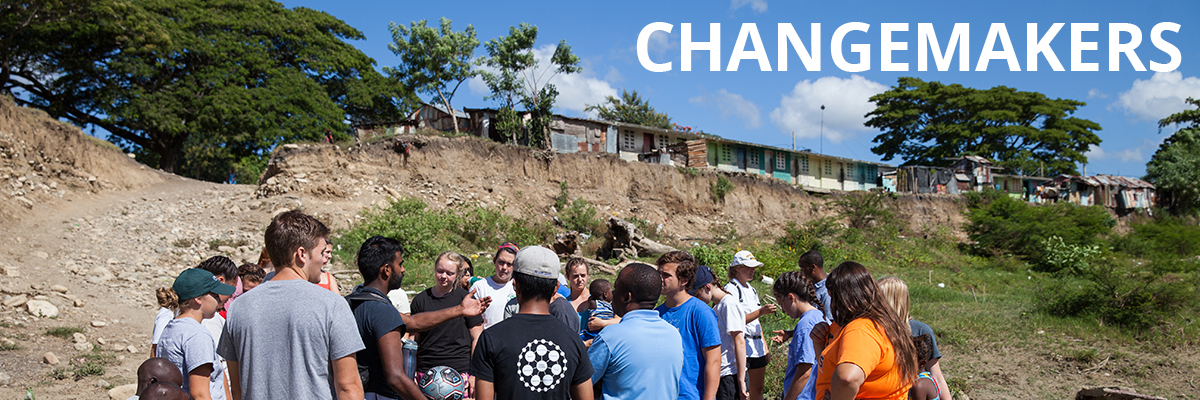
Changemakers is a companion series to Gamechangers, following teens outside of the GLA circle who have made a profound difference in the world or in their own communities.
You may think that as a teenager there isn’t much you can do to help others. You may think you have yet to develop any kind of special skills or that you just can’t do anything until after you graduate college and all that, but it’s simply not true. There are numerous teenagers out there in high school, college, and even some in junior high, taking action to make the world a better place. You could very well be the next one.
Let’s take a look at one teen whose actions have changed the lives of many of her peers in a positive way, a true gamechanger. Meet Mary Grace Henry. By day, she’s just a normal, everyday teenager from Harrison, NY going about her routine school life. But on the side, she’s done something truly spectacular.
She started a nonprofit called Reverse The Course at the young age of 12. Her goal was to improve the lives of the underprivileged by providing money to fund education for girls in extreme poverty. This was her goal, but she knew she had to get the money somehow. So she decided to teach herself how to make reversible headbands. She then put them up for sale on the internet through her website and a smart use of social media with 100% of the profits going to fund these girls’ educations.
Now, she’s 18 years old and still going at it strong. She continues to sell the hairbands, and she was honored in 2014 with the World of Children Award for her distinguished efforts. Her website states her efforts have put 115 girls in four African countries through school since her venture began, with 251 years of school paid for and over 16,000 headbands sold to fund it all.
On why she chose this particular venture she said, “The greatest obstacle to education faced by both girls and boys is poverty. Girls, though, face a second hurdle that is far more difficult to address: their culture. In many countries throughout the world, girls are viewed as having not just lesser value than boys, but often devastatingly little or no value.”
Mary Grace is an inspiration to all of us who thought there was nothing we can do for the good of others. Even a simple skill like making a headband can translate itself into making a huge difference for those around the world. As Mary Grace herself says, “My advice is just to begin. When you see a need, act. Dream big, but start small, taking little steps.”
So what are you waiting for? Get out there and just begin. Make a difference in your community or around the world. Even small things eventually add up to something great.
Contributed by Nick Bartholomew
Changemakers: Author, Editor and Activist Marley Dias
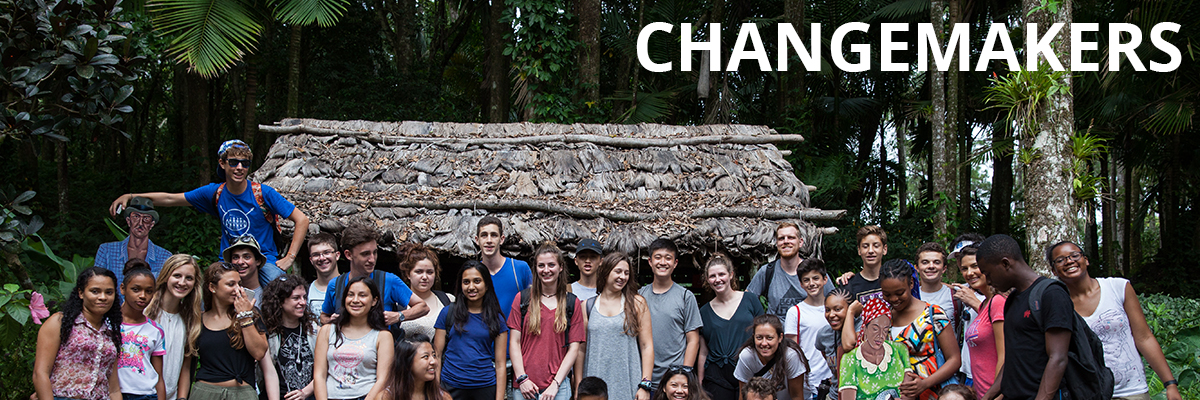
Changemakers is a companion series to Gamechangers, following teens outside of the GLA circle who have made a profound difference in the world or in their own communities.
If you’ve ever read who publishes the books you use in school then the name Scholastic probably sounds familiar. The illustration of an open book that’s on almost all of your textbooks. One girl knows this logo all too well as she is working with Scholastic to publish an activism guide for children and teens.
“Scholastic is the perfect partner for spreading my message of diversity, inclusion and social action,” said Dias to the Huffington Post.
We’ve all heard about girl power and #likeagirl but Dias is taking it a step further.
The book she is writing will encourage kids to use their strengths in an impactful way, while exploring common topics like social justice, inclusion and social media.
Dias is planning on releasing the book in spring of 2018 and was inspired to write it from her book drive, where it all started.
#1000BlackGirlBooks was the drive Dias created to make sure that there were more girls of diversity represented, especially in schoolbooks. She started it in the fall of 2015, hoping to get 1,000 books by the beginning of 2016.
The drive went viral, as many things do, and she has been able to donate up to 8,000 books to girls. That’s a lot!
As if writing a book and going viral from a book drive isn’t enough, Dias has also become editor of a zine for Elle.com.
It’s probably what you’re picturing, a cute picture of Dias, some fun drawings, clever taglines, and of course the hashtag #MarleyMag. If you’re curious, Google it, or check out the hashtag on social media.
For a 12-year-old, a tween almost gone teen, Dias has accomplished quite a bit! Talk about an inspiration and #goals.
So what are you waiting for, join Dias and become a game changer. The possibilities are limitless – what will you set out for?
***
If you want to donate a book to Dias to help her #1000BlackGirlBooks, you can send one to the address below:
59 Main Street, Suite 323, West Orange, NJ 07052
Contributed by Samantha Watkins
What a First-Time Teen Visitor Should Know About the Country of India

If you’re traveling to India, there are several distinct cultural differences you should know and understand before setting out. As a non-western country, India may seem very strange, especially if this is your first trip out of the United States. While it will be impossible to gain a complete understanding of a country beforehand, researching India can ensure you’re better prepared for your trip. Here are five important things a first-time visitor to India should know.
India’s Primary Religion is NOT Christianity
Regardless of your own religious beliefs, Christianity remains the primary religion in the United States. This isn’t the case in India, where the largest religions are Hinduism and Buddhism. As a result, when you’re visiting India, you’ll likely notice major religious and cultural differences. You might see unfamiliar religions symbols, varying styles of dress, new deities, and different worship practices. The experience will be unlike anything experienced in the United States, making your visit a perfect opportunity to learn about a completely different religious culture.
India Was Once Much Larger
One major difference between India and the United States is that while the United States has continually grown in size, India has gotten smaller. This is due to the 1947 Partition of India that broke nation into two separate countries – India and Pakistan. The division wasn’t an easy one and distrust between the two nations still exists. If you’re interested in learning more about the Partition and its impacts on India, consider reading “Train to Pakistan” by Khushwant Singh. The books was later adapted into a film by the same name and could likely offer a lot of good insight into the nation’s history.
The Taj Mahal is more Than Just an Impressive Building
Any trip to India would be incomplete without visiting the Taj Mahal. The Taj Mahal is widely considered one of the most beautiful buildings in the entire world. Somewhat less known, however, is that the building is a physical representation of love. In the 17th Century, Mughal emperor Shah Jahan had the Taj Mahal built as a mausoleum for his favorite wife, Mumtaz Mahal. This magnificent building is a must-see for anyone visiting India.
Family Structures are Different in India
No, you didn’t misread the above paragraph. Mumtaz Mahal was Shah Jahan’s favorite wife. Polygamy, the practice of having more than one wife, was practiced in India until the 1950s and still influences the nation’s culture. It’s also common for many generations to live together in a single household. Whereas family units in the United States are generally limited to parents and children, homes in India will often house several generations at a time.
Street Markets are Common
While there are malls in India, many people obtain the goods and foods they need from street markets. As you walk the major streets in the country, you’re sure to see a number of market vendors selling produce, meats, handmade baskets, and other household goods. Shopping in this manner is undoubtedly different, but absolutely worth trying.
Visiting any country can be an amazing opportunity. While there will be differences, new cultural experiences enhance your worldview, as well as your ability to think critically. One of the most important things to remember during your visit to India is that, despite all the apparent differences, the people living halfway around the world are remarkably a lot like you. Embrace the opportunity to learn about the differences while also appreciating the similarities.
Contributed by Amanda Vosloh Bowyer
- « Previous Page
- 1
- …
- 11
- 12
- 13
- 14
- 15
- …
- 71
- Next Page »
