The Young Leader

  • GLA Program Blogs
  • Gamechangers
  • Newsletters
  • About The Young Leader

August 18, 2016 by The Young Leader

What is the Peace Corps? 5 Things You Didn’t Know

What-is-the-Peace-Corps

Thinking about joining the Peace Corps? It’s a big decision, especially because the typical assignment lasts two years. Becoming a Peace Corps volunteer is no walk in the park; it takes months of careful training, years of hard work, and an unwavering determination to make the world a better place. Many people think they have a clear understanding of what the Peace Corps is all about, but before you decide whether the program is or is not for you, make sure you dig a little deeper. Here are five lesser-known facts you may not have known about the Peace Corps to get you started.

Most Positions Require a College Degree

Many young people expect that they can join right after high school, but most Peace Corps volunteer opportunities require applicants to have at least a four-year degree. There is, however, no age limit for participating. In fact, over 50% of volunteers in 2016 are over the age of 50. If you’re older and opted to join the workforce right out of high school, you may still have some options. The Peace Corps does offer a limited number of opportunities to people with job experience and relative education. If this sounds like you, speak with a recruiter to find out if you might be a good fit for an available position.

You Can Serve With Your Spouse or Partner

If you and your partner are interested in joining the Peace Corps together, you can! It might, however, take longer to find appropriate placements and, or process through your applications. You and your partner will need to find positions in the same country that fit both of your skills and then submit your applications at the same time. While placements might be more limited, it’s definitely possible to serve together.

Training Doesn’t End When You Leave the U.S.

Every Peace Corps volunteer is required to go through three months of training before starting their two-year placement, but education doesn’t just stop when you get on the plane. In fact, you’ll be working toward various competencies throughout the entire placement. You should expect extensive community integration, cross-cultural, and language preparation, as well as technical, health, and safety training to be part of your entire Peace Corps experience.

Your Medical Expenses Are Covered

Because placement environments can sometimes be harsh, Peace Corps volunteers are provided full health-care coverage while part of the program. This care ranges from immunizations to med-evac back to the United States. While series medical problems are few and far between, it’s good to know you’re covered in case of an emergency. There are also Peace Corps medical officers available 24-7 to volunteers.

There Are Numerous Financial Benefits for Joining

There are several financial benefits to joining the Peace Corps and they start the moment you apply. You don’t pay to submit your application and, if accepted, all travel, housing, dental, medical, and living expenses are covered for the duration of your service. That’s a very impressive package. Further, while volunteers do not get paid for their services, the Peace Corps does provide $8000 to those who complete their two-year placement. The money is intended to assist you transitioning back into life in the United States after being gone so long, but can be used however you like. Another great perk is the opportunity for discounted tuition rates at select universities for those interested in pursuing a graduate degree.


Contributed by Amanda Vosloh Bowyer
Filed Under: Latest Posts, VIVA

August 18, 2016 by The Young Leader

Study Abroad in England for High School Students – What is it Like?

Study-Abroad-in-England-in-High-School

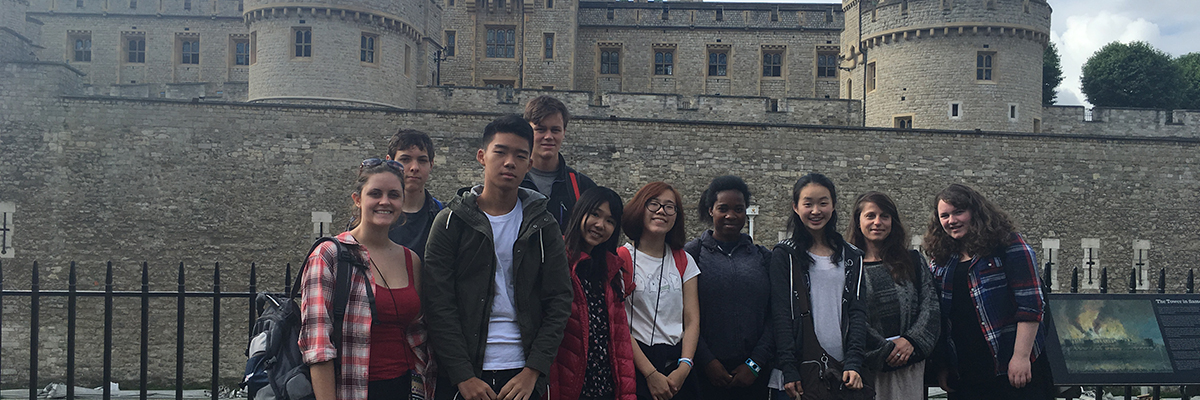
While high school is an important time to grow and explore it also makes it a perfect time to travel the world. England has many sites to see, similar customs to the U.S., and best of all you can communicate with everyone there. High school bloggers agree that studying in England was life changing.

Now these sure sound like great reasons to make England your study abroad destination. And if you need a bit more inspiration, check out these bloggers accounts on their abroad experience.

Whatever you want to study, chances are that England offers it.

The classes you take in England are more than likely going to count towards your high school graduation requirements. But there is also room to not only explore a new country but also a new curriculum. Perhaps you’ve always wanted to take an art class or challenge your mathematics ability – well here’s your chance!

There is always something to do!

Whether you’re visiting and snapping shots at local art galleries, concerts, or markets there are fun times to be had. Adelaide Downey blogged about all the sites she’s seen in England while studying there this year, “We started by going to Buckingham Palace… next we went to the National Gallery which is one of my favorite museums ever!” Downey even had traditional high tea with mini sandwiches, scones and cakes that she sad was “so good!”

Comfort food.

While abroad it’s definitely worth to try new food but sometimes it’s nice to have that good old mac n’ cheese that you’re used too. Well lucky for you, England has many similarities to America. Olivia S. went to England at 16 years old and blogged about her experience, “We stopped in a café to get lunch, where I got a toastie (or a grilled cheese to Americans).” There are many cafes too and even common grocery stores. “We also went into a shop called Poundland, which is like a dollar store, except everything is a pound not a dollar,” shared Olivia.

Shorter school days.

Even though you’ll be learning and attending school, you’ll have plenty of free time to explore. This is what Allie Agate blogged about her first week of school, “All of my classes are much easier and shorter than in the U.S. only running an hour. The very British concept of common rooms and free hours were new to all of us.” That’s right, teachers give time for students to hang out with each other in the common room or free time to study, relax, or eat.

Home away from home.

When in England you’ll most likely find yourself taking the bus to school, studying with friends, or grabbing food with others. We shared part of Downey’s blog earlier about the many sites she saw but she also mentioned that soon she felt at home in England. Downey said her days became a routine that she came to love, “Even though it all seems really normal and average for me now, I’m cherishing every second because I know that when I leave I’ll miss all of it!”

Ready to study abroad in high school in England? Let us know in the comments!


Contributed by Samantha Watkins

Filed Under: Latest Posts, Wanderlust

August 18, 2016 by The Young Leader

What Kind of High School Medical Internships Are There?

5

Passionate about public health and medicine, but not sure where to start? Here are five ways that you can get involved now!

VOLUNTEER:

One of the most important and easiest ways to gain experience in the medical field while in high school is to volunteer, specifically at a local hospital or medical center. Not only will you be giving back to your community, but you will also be gaining important experience. Whether you are helping at a front desk or cheering up a patient, you will learn a lot. Ryan Mohamadi, a current high school student, earns his volunteer hours by helping at his local hospital. He started as early as his freshman year, and has enjoyed doing it ever since. He has learned a lot about a hospital’s functions and daily rhythms. “My job is more of helping check in patients, diffuse any situations…, and helping give supplies to each department” says Ryan. His favorite part about volunteering? “[M]eeting new people and helping others who need help.” Volunteering is the perfect way to build your experience and help your community.

SUMMER PROGRAMS:

Some research centers and colleges offer special summer programs specifically for high school students! Different colleges offer short summer courses to give you a taste of what the academic side of the medical field is like. Some programs even let you take part in research and do activities that simulate real-life medical careers. Think of them like short internships. If there is a program near you, this is a great way to learn more about the medical field and decide if it is the fit for you.

JOB SHADOW:

Becoming a “shadow” is one of the best ways to see if the medical field is for you. You will quickly learn a lot. While it may seem like an unpaid internship, it is more than worth the time. Priya Jain, who is studying to become a doctor, says that she gained invaluable experience through shadowing. During her first summer helping in high school, she aided in an ER hospital, and she got to see first-hand that the medical field, while not always the easiest career, is the most fulfilling. During one particular moment, Priya said “that was one of the moments that solidified my desire to pursue medicine because I saw how hard the doctors worked and how they didn’t give up until the end.” You will get to watch and possibly even help with all kinds of things. Even if you feel inexperienced, sometimes the best way to learn is to help where you can, learning from your role models.

RAISE AWARENESS:

Obviously if you want to go into the medical field, health and well-being are things you care about. So help others care about them, too! Get involved in a health school club. Or partner with organizations like the Red Cross! The Red Cross offers several ways for teens to get involved. Help with a blood drive; join their National Youth Council; help with the wide variety of events and fundraisers that the Red Cross sets up. Even though getting involved in activities like this is not specifically an internship, it helps build your passion for the field, and it is good experience to mention on applications.

VOLUNTEER (INTERNATIONALLY!):

Not only can you volunteer locally, you can also help people on the international-level! For instance, Global Leadership Adventures offers programs specifically for those passionate about public health. From helping build health centers to working personally with the local people, you will have an amazing experience and help others in a big way. So whether it is Bali, Dominican Republic, Ghana, or Haiti, no matter where you choose to go, it will be an unforgettable summer.

So what’s the best thing that you can do to have a high school medical internship -like experience? “My best tip of advice is really just to get as much experience in the field as you can and know that you really enjoy the area of study,” says Priya. So what are you waiting for? Get a head start on what you are passionate about and let us know your story in the comments below!


Contributed by Addie Davis

Filed Under: Bright Futures, Latest Posts

August 18, 2016 by The Young Leader

Like A School for Social Enterprise: How a High School Student Can Learn to be a Business Pro while Staying Socially Conscious

How can we design businesses that build healthy, long-term relationships?

youth-social-entrepreneurship

Welcome fellow entrepreneur! In this post, we’ll explore how you can create businesses that are both globally successful and socially responsible.

Businesses are really all about lifelong relationships with people—they depend on you communicating well with specific individuals in your target audience, your ability to genuinely connect with their cultural values, and the relevance of your core mission for local communities both within and outside your company.

Meaningful relationships are critical because people join people, not organizations.

Fostering lifelong customer relationships is fundamental and might seem obvious, but one Harvard Business Review article in 2014 suggests that companies do struggle with putting these basic social skills into practice:

“Clients who want to be treated more like a friend may be treated like just a party for exchange, rather than a unique individual…customers are frequently frustrated by a company’s inability to meet their relationship expectations, and on the other side, companies do not always know how to translate the data they have gained…into a feasible plan of action” (Source).

During your last birthday or holiday, did you receive a gift or something special that you really enjoyed?

Would you agree that it was personally relevant, met your expectations, and was especially meaningful?

Now imagine instead that you received a teeny, tiny pair of plush pink bunny slippers from your grandma. Really, only a toddler could fit into them. What would you think of your grandma after she gave you this strange gift?

And what if—even after telling your grandma multiple times over the phone that you’re in high school now—she still keeps asking you if you finally learned how to tie your shoes?

Most businesses, like your hypothetical grandma, make these relationship mistakes unintentionally. They really would like their customers to be happy and wish that they could respond to your feedback appropriately. But there’s one central problem getting in everyone’s way: they don’t really understand you and what you personally value.

We can have the most advanced technology, and yet it means nothing if we don’t understand the social realities, physical spaces, and community values that customers experience. Feedback or data comes from people, and it’s only by understanding people’s experiences throughout all areas of the business that we can make informed decisions. This contextual knowledge is essential since numbers and other analytics are meaningless without it.

But how can we continue to stay socially conscious in a diverse and globalizing world?

It depends…there are no easy answers. One potentially useful approach adopts a design perspective.
Design methods engage the people that matter: local communities and key stakeholders. They involve communicating with your target audience, connecting with their local context, and making your business relevant. In short, you go through a collaborative process that requires getting feedback while tailoring your business model.

Acclaimed Design Management Researcher, Alan Topalian, explains this socially conscious approach below:

“When design professionals harness the expertise of key stakeholders and work effectively together through iterations and validations to generate approved solutions, that is a good demonstration of optimization, given the time and resources available. By contrast, it is not productive to characterize designerly approaches to solving problems by seeking to fit reality around fashionable ideas” (Source).

Socially conscious businesses are designed by engaging local communities and promoting healthy, long-term relationships. It’s a collaborative learning process that involves openness at a professional and personal level.

With these youth social entrepreneurship values at heart, the African Leadership Academy and Global Leadership Adventures is putting together their South Africa: One Nation, Two Worlds™ program. This is one promising avenue for you to gain practical experience with cross-cultural business design. And there’s nothing stopping you as an entrepreneur from exploring your local community, discovering any pressing needs, and immediately diving right into your passion.

What kinds of practices do you think make a business socially conscious? We’d enjoy hearing what you value!


Contributed by Nick Fochtman

Filed Under: Be Bold!, Latest Posts

August 18, 2016 by The Young Leader

Six Youth Social Enterprise Ideas for the Idealist High School Student

youth-social-entrepreneurs

As a high school student, you may be finding yourself becoming more and more interested in volunteering to benefit your community, the planet, or even various charities. Perhaps you were introduced through great organizations like the Girl Scouts or Boy Scouts, and now you’re just itching to do more. Well, there’s certainly plenty to choose from.

Here are six different volunteer efforts you can engage in to better our world or mankind.

Soup Kitchen

Volunteering at your local soup kitchen can be a quick and easy way to get your feet wet in volunteering. Doing anything from serving the food to cooking it, you can certainly find a way to be helpful without requiring any special skills that can’t be learned on the job.

If you don’t know where one is or how to get involved, start out with a quick Google search of “soup kitchen (your city’s name)”. Many of them have websites where you can get in touch with them and schedule a time to go and help out for a couple hours. You can also contact your local church or religious community. Often, these communities have ties to local volunteering organizations.

Give Blood and Save Lives

It seems like something that’s so simple. Your school might even run its own Red Cross blood drive. Maybe you passed it up because you hate needles or just couldn’t be bothered with it. However, the fact of the matter is that your blood can save a lot of innocent lives. From accident victims to shootings to disease, blood transfusions save countless lives per year.

With something that’s so easy to do, why not get out there and do it? It only takes a small amount of your time and is completely free. If you don’t have the time to do anything else, you can at least give an hour or so of your time to perhaps save someone’s life. Contact your local blood bank or check out the Red Cross website to see where and when you can go give blood.

Go Abroad

If it’s summer vacation and you’ve got time to burn, consider taking a trip abroad to volunteer in a foreign country. An organization can hook you up with an opportunity to assist with a wide range of things in a developing country. You could find yourself doing anything from helping at a wildlife sanctuary to teaching kids how to surf in Africa or even teaching your native language to eager students. You can choose whatever you’d like to do.

Granted, these trips aren’t free, but they aren’t expensive relative to a vacation either. You’re also getting a lot of bang for your buck, with traveler’s insurance, lodging, and 3 meals a day often provided. Maybe take some of that money you’ve been saving up from your part-time job or ask your parents really nicely and go on a volunteering adventure that could change your life.

State Parks

Many state parks offer volunteering options for students. You can engage in activities like maintenance, trail construction, or educational programs. You can be a part of preserving the park and all its natural beauty.

Contact your own state park or check out their website for contact information and possible information about volunteering options you can engage in. Just think of it as an excuse to spend some time out soaking up some nature.

Work on an Organic Farm

Available in many countries, WWOOF (World Wide Opportunities on Organic Farms) lets you experience the simple life for yourself. You can work on a farm in a variety of different countries, ranging from the US, to Australia, to India. You’ll likely work 4-6 hours a day helping out with the day to day farm chores and earning valuable skills and experience you can take with you in life. As the types of farms vary, you could find yourself staying at anything from a vineyard to a farm that specializes in cheese making.

You can stay at the host farm for as long as you and the host family agree on. If you want to cut costs on travel expenses, you might be able to stay on a farm in your home country. If you’re under 18, your options on available countries abroad might be limited, but there are still some places you can go.

Animal Shelters

If you’re an animal lover, you may also consider helping out at your local animal shelter. A lot of animal shelters have extensive volunteer programs (with some being entirely run by volunteers). Volunteers are always welcome to come in and care for the animals, clean up, and make appearances with some of the animals to aid adoption. Call your local animal shelter or check out their website if you’d like to work with some cuddly critters in your off time.

As you can see, the opportunities for young social entrepreneurs to volunteer are endless. Start researching your ideal method of volunteering and see if you can get involved sometime soon. Don’t think it won’t make a difference. It will probably make more of a difference than you can possibly imagine.


Contributed by Nick Bartholomew

Filed Under: Bright Futures, Latest Posts

  • « Previous Page
  • 1
  • …
  • 8
  • 9
  • 10
  • 11
  • 12
  • …
  • 31
  • Next Page »

Give Back to the Community

Donate to the GLA International Foundation and help support projects and grant recipients around the world.

Brought to you by

Copyright © 2026 · Executive Pro Theme on Genesis Framework · WordPress · Log in