The Young Leader

  • GLA Program Blogs
  • Gamechangers
  • Newsletters
  • About The Young Leader

August 18, 2016 by The Young Leader

Helping Haiti and its Children: 5 Social, Political, and Economic Challenges Facing Haiti’s Children

Remember the 2010 earthquake in Haiti and the global media coverage it received?

Have you ever wondered what after effects children in Haiti still face today?
y

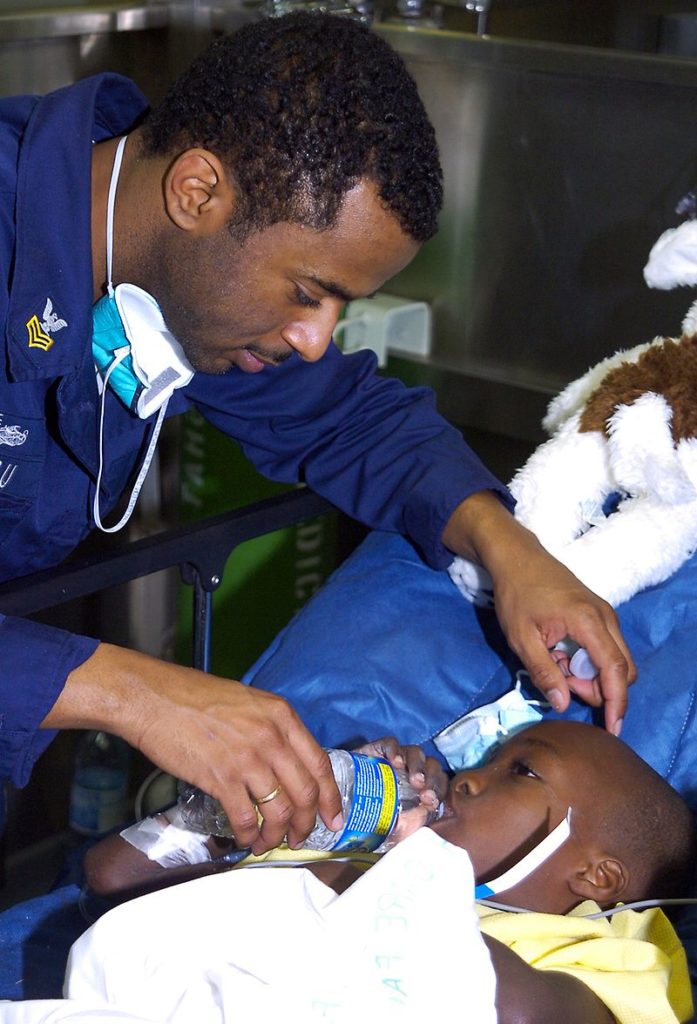
Following the 2010 earthquake, this Haitian child received aid aboard the USNS Comfort (Public Domain Image)

Welcome, global volunteers! Let’s dive into the story and rippling effects of the 2010 earthquake on Haitian youth.

The earthquake was a catastrophic natural disaster that affected an estimated 3 million Haitians. The actual death toll is widely debated and ranges from 100,000  to 316,000 people with many more injured. Findings from the Haitian government suggested that about 250,000 residences and 30,000 commercial buildings were damaged. But that’s only the initial effects, Haitian children have experienced ongoing challenges that were made worse by the earthquake. Here are 6 social, political, and economic aftershocks facing Haitian youth today:
x

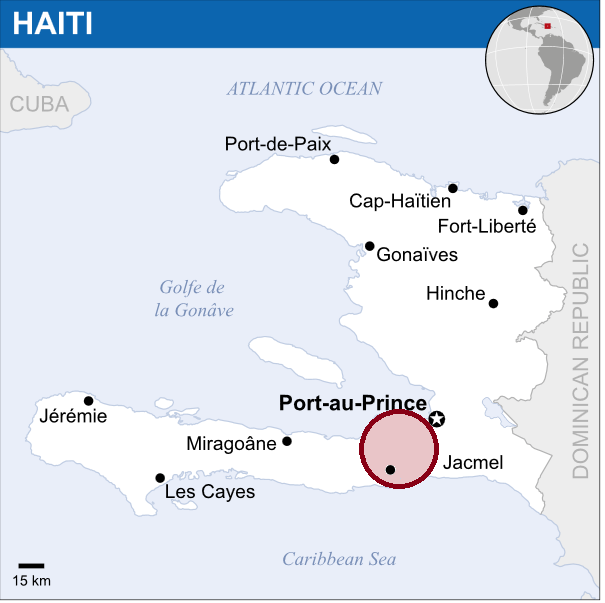
Haiti Map created by the UN OCHA and modified under a Creative Commons License

1. Sanitation and Clean Water Access

Following the mass destruction in Port-au-Prince, all of the capital’s hospitals were destroyed along with 50 health care facilities in total. Public utilities also suffered severe damages which greatly limited Haitian peoples’ already scarce access to clean water. Despite the efforts of volunteers worldwide over many years, Oxfram International expressed the difficult challenge facing Haiti’s youth in their 2010 briefing paper: “Well before the earthquake, Haiti suffered from extreme poverty, gross inequality, chronic political instability, and weak, corrupt state institutions.” Haitian youth live within this reality: recovery is a slow process and will still take many more years to happen.

2. Disease Outbreaks

Haiti’s lack of public health resources and earlier political challenges made them especially vulnerable to disease epidemics. Beginning months after the earthquake, Haiti experienced a devastating cholera outbreak that continues to threaten Haitian youth today. Since the media and most relief efforts stopped reporting on Haiti around 2013, recent information about the disease’s impact isn’t readily available. Although, a Boston Globe Editorial claimed that by August 2015, more than 700,000 Haitians had cholera and over 9,000 people had died. Given what we already know, Haitian youth today are probably vulnerable and likely suffer from illness on a wide scale.

3. Forced Migration

The immense destruction following the earthquake uprooted millions of Haitians. Considering that Haiti already suffered from extreme poverty and gross inequality, many Haitian families might still be homeless.


Want to help us design a Global Health program based in Haiti? Your feedback can have an impact on our program itinerary. Click here to participate in our survey.


4. Educational Access

Consider that half of Haiti’s schools (more than 1,300) and three Port-au-Prince universities collapsed. Since Haitian youth lack basic necessities—clean water, healthcare, and homes—that certainly affects both their ability to attend school and learn if they’re lucky enough to have one. Haiti’s inequality also makes it more difficult for students in poverty to do well in school. Educational resources are probably still scarce for many Haitian children.

5. Unemployment and Underemployment

The earlier social, political, and economic challenges facing Haitian youth today are complex. What’s unfortunate is that these many challenges work together and make an already difficult situation even worse. Since educational access is limited, Haiti’s youth also faces the risk of unemployment and underemployment. The destruction of Port-au-Prince and its slow recovery today have left a gaping whole in Haiti’s economy that is slow to fill.


Interested in other mission trip-style programs in the Caribbean? Check out GLA’s Dominican Republic programs for both spring break and summer.


6. Spring Break, Haiti Style, Just Doesn’t Exist

It may be an unfortunate truth, but tourism is still one of the primary drivers of funds to Caribbean nations. Families spending summer or spring break in Haiti could help to provide essential funds to this island country, but because of the pervasively negative media coverage of Haiti, it doesn’t see nearly the numbers that its island-sharing neighbor, Dominican Republic, sees. While tourism can bring about its own potential issues for youth (think exploitation of youth at cruise ship ports and the like), it does offer significant advantages socially and economically.

Without visiting Haiti and experiencing the realities facing Haitian youth, it’s hard for us to know what’s really happening. But we do know that these challenges are complex and persist long after their media coverage ends.


Contributed by Nick Fochtman

Sources:

Numbers and statistics mentioned can be found within the 2010 Haiti earthquake wiki references

Oxfam International’s 2010 Supporting good governance in post-earthquake Haiti briefing paper

Boston Globe 2015 Editorial UN must step up, apologize, and help drive cholera from Haiti

Filed Under: Be Bold!, Latest Posts

August 18, 2016 by The Young Leader

Youth Empowerment for Sustainable Development: Four Ways Teens Can Take a Stand for a Sustainable Future

1

Perhaps the previous generations haven’t been too kind to you guys. We’ve wasted, we’ve polluted, and we’ve ravaged our home planet’s climate. Facing the hottest temperatures ever on record just this year, the threat of climate change and the disastrous fallout that would come from it is very real. But not all hope is lost. Your generation is inheriting this planet. Despite the mess previous generations may have left it in, there’s still a lot you can do individually and collectively as a generation to help out and reduce waste. Your planet thanks you.

1. Use Laptops, Not Desktops

It sounds silly, but laptops on average use about 80% less energy than desktops, according to reports by Energy Star. If you really want to help out with the environment, the smaller the better. A smartphone can cost as little as $1.50 per year in electrical costs, while a desktop PC can cost up to $600 a year! That’s a huge difference in energy use! Luckily, this is something you’re probably already doing, so keep it up and our planet will be in better shape.

2. Recycle, recycle, recycle!

Recycling really is important for the environment. Why? Well, less waste means less creation of products that harm the environment, such as plastics. If we just keep reusing the ones we have, we won’t have to make more and more and more. Harmful gases are released as waste decomposes in landfills, and those chemicals have a severely negative impact on our environment.

If you can’t recycle it, repurpose it. Take those plastic bags from your shopping and use them as garbage bags or bags to pick up animal waste instead of buying them from the store. Often these bags aren’t recycled by the government, so you need to do it yourself.

Be creative guys! There are also a ton of websites out there as well that will show you how to make useful or cool things out of materials you would usually throw out!

3. Carpooling leads to cleaner air

Emissions from cars are one of the biggest sources of greenhouse gases emitted into our atmosphere. As you enter your driving years, consider taking turns carpooling to school or work with your friends or co-workers. By carpooling, assuming everyone was going to drive separately anyway, you can cut emissions down to a fraction of what they would have been. You’ll also get to engage in some great companionship before the drudge of the day starts, so that’s a bonus. So grab a friend or three and jump into that carpool lane. The planet will thank you.

4. If you don’t need it, turn it off

If you aren’t using it, turn it off! It’s amazing how many people leave lights on in rooms they aren’t using or leave TVs on when they go out. That adds up people! The U.S. Department of Energy recommends shutting off the lights in any given room if you’ll be out for more than 15 minutes. Lights waste a lot of energy, especially incandescent bulbs, which give off about 90% of energy as heat and only 10% as light.

Bigger things like air conditioning we often don’t think about, but if you leave it running all day, you’ll use 317% more energy compared to those who turn it off. If you can, set your A/C to kick on about an hour before you get home. You’ll save money, and you’ll still be cool when you get home.

Get to it

The time is now. Get out there and spread the word. Make sure you follow the plan as well. If you’re still living at home, sit down with your family and work out a green plan for your household. Your parents will thank you when they see their energy bills, and you’ll know you’re contributing to a better future for yourself and future generations.


Contributed by Nick Bartholomew

Sources:

http:// michaelbluejay.com/electricity/ac-on-or-off.html

http:// www.greenenergytimes.net/2014/06/15/teaching-your-teens-to-embrace-a-sustainable-lifestyle/

Filed Under: Be Bold!, Latest Posts

August 8, 2016 by The Young Leader

One Opinion: Why Should A High School Student Take A Year Off Before College

6

When a senior graduates from high school, it is the start of a new life. The ending of high school is shared with tears of joy and tears of sadness. The joy is formulated by the realization of completing the journey of semi-adulthood. While in high school, a student is responsible for committing, regardless of their feelings. However, once the high school diploma is in their hands, it is exactly in their hands. The future of the high school student is right in front of their faces and it is a joyous feeling.

After high school, a student will pack up, leave, and move into a dorm with another person or rent am apartment with five other roommates, right? Somewhat. There are other ways to have a life before attending college, and that can taking a break. One may be confused about which direction to take in college, and another may not be financially stable. These reasons are more common than you might think, and it can detour many plans, and offset goals that most students have after graduating from high school.

The ones that graduates confused may already be in the mindset that they have failed in some big type of way. In this case it us untrue. Taking a year off before starting college because of being unsure can be smart in a way, if thought out, worked on with parents or other close advocates who want you to be successful in the future.

School can be tiresome for those not best designed to spend a lot of time in classrooms sitting still, and taking a break can be a great way to energize oneself to become more focused. The process of being in school takse twelve-plus years, and in those twelve-plus years, a student is required to learn something new every single day, and each year it gets harder and harder. When the time comes to choose whether you want to go to college right away, or perhaps take a semester or year off (like many students in Australia do), get the advice of those you trust. Make a plan, and set a goal about when to return for your education, so you don’t lose track. Getting a job or volunteering at a local hospital or senior citizens’ home to build up your skill sets and experience until going back to school might even light that spark, and get you back in the frame of mind for learning.


Contributed by Tyler Dickerson

Filed Under: Latest Posts, VIVA

August 1, 2016 by Brett Scuiletti

The Power of a Story

“Storytelling has this incredible power.”

[Read more…]

Filed Under: Gamechangers, Latest Posts

July 28, 2016 by Brett Scuiletti

Q&A with GLA’s 2016 STA Flight Voucher Contest Winner

Sydney-1

Sydney Johnson, a Chicago native and graduated senior from Hampshire High School, is the inaugural winner of GLA’s STA Flight Voucher Contest.

[Read more…]

Filed Under: #myGLA, Latest Posts, Wanderlust

  • « Previous Page
  • 1
  • …
  • 18
  • 19
  • 20
  • 21
  • 22
  • …
  • 71
  • Next Page »

Brought to you by

Copyright © 2026 · Executive Pro Theme on Genesis Framework · WordPress · Log in