
“Filmmaking is all about appreciating the talents of the people you surround yourself with, and knowing you could never have made any of these films by yourself.”
-Steven Spielberg
“Filmmaking is all about appreciating the talents of the people you surround yourself with, and knowing you could never have made any of these films by yourself.”
-Steven Spielberg
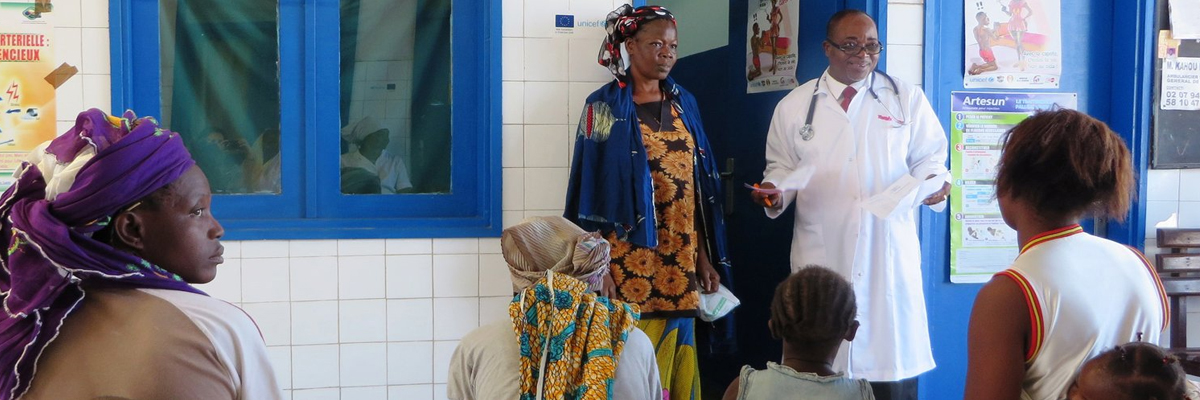
If you’re interested in public health and caregiving back home—why not promote it abroad?
Hey there, health volunteers! Here are 5 reasons why you should apply your passion to the developing world:
1. There is an overwhelming need
If you’ve always wanted to volunteer but weren’t sure how you could help, then consider the importance of health. Many of the luxuries that we take for granted in first-world countries—such as clean running water—are not standard elsewhere. There are billions of people without these daily necessities.
2. Health and hygiene are universal
Let’s say that you pull up a map of the world. You then close your eyes and point to a random part of the world map. Wherever you end up pointing to has health and hygiene as an essential need. This may seem obvious when you point to well-known countries; this may not be so obvious when you point to the ocean (sailors and seagoers have to be meticulously, even obsessively clean and also mindful about their nutrition).
3. Everyone’s affected
Nobody’s immune to sickness or disability. Infants, children, young adults, parents, and the elderly are all at risk. If you’re looking for a meaningful area to volunteer in, then choose health and hygiene since it impacts everyone.
4. Small improvements make huge impacts
It’s a cliché but one that’s certainly true. If you install a water purification system for a village, this greatly improves the health of everyone living there and especially for children yet to be born.
Your contribution will help generations.
5. YOU can help right now
Absolutely! You don’t need any specialized knowledge or experience to make an impact here. All you need is a genuine interest and a willingness to learn from others.
What have been your goals and experiences with promoting health and hygiene? We’d enjoy hearing your story!
Contributed by Nick Focthman
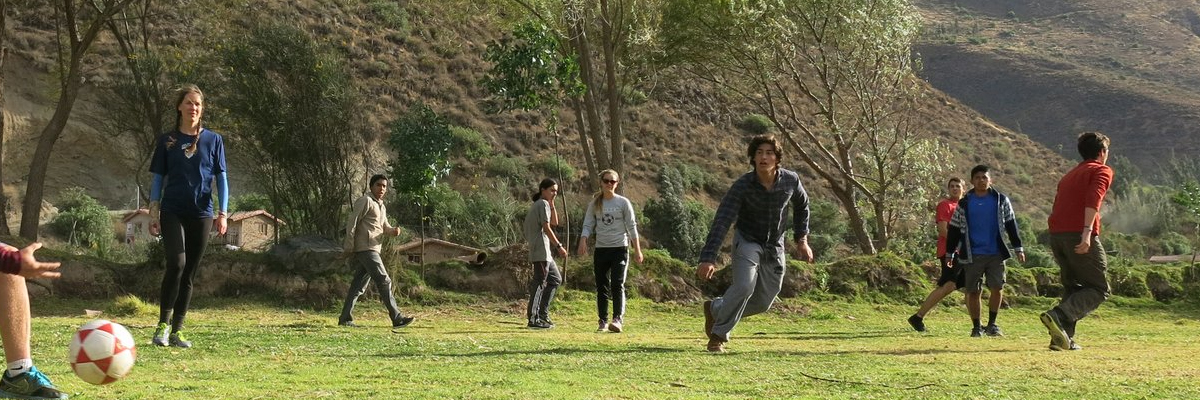
The outcome of a sporting event always means more to than a simple win or loss. If our team wins, we carry the glory, if our team loses, we feel the shame. It’s this emotional connection to sports that keeps them at the forefront of our lives and constantly on our mind. For years, we have seen our various sporting events as metaphors for world power or to sway political views. Here are four times in history when sports have represented more to the world than a simple loss or victory.
1. 1936 Olympics
Adolf Hitler was hosting the 1936 Olympic games in Germany hoping to use them as a showcase for Aryan superiority. Hitler was upset when Jesse Owens, an African American, took home four gold medals in his four respective track and field races. To this day, Jesse Owens’ victories represent one of the greatest blows to international racism viewed on a wide scale.
2. 1971 China Vs. U.S. Ping Pong
For over twenty years leading up to the famous China Vs. America Ping Pong match the U.S. had virtually no contact with China since 1949. China made a surprise offer to the U.S. team in 1971 to play a few exhibition games. China had plans to use this match as political propaganda for their citizens to show superiority over America. This exchange allowed for Americans to see China for what it really was at the time, opening up America’s eyes to the truth behind the Chinese people and paving the way for President Nixon’s trip in 1972.
3. 1995 Mandela Supports Rugby
After becoming president of post-apartheid Africa in 1994, Nelson Mandela offered his support to South Africa’s rugby team. A team which at the time consisted of only whites and acted as a symbol of white dominance in South Africa and Black suppression. After Africa’s team, the Springboks won the championship Nelson hand delivered the trophy to the team’s white captain representing the African people’s ability to forgive, but never forget.
4. 1936 wrestling match
Another event from the 1936 Olympic games that may have held just as much fervor as Jesse Owen’s victory would be the defeat of the German wrestler, Wolfang Ehrl by a Jewish-Hungarian athlete, Karoly Karpati. The defeat happened with Adolf Hitler in attendance.
Contributed by Josh Schwartz
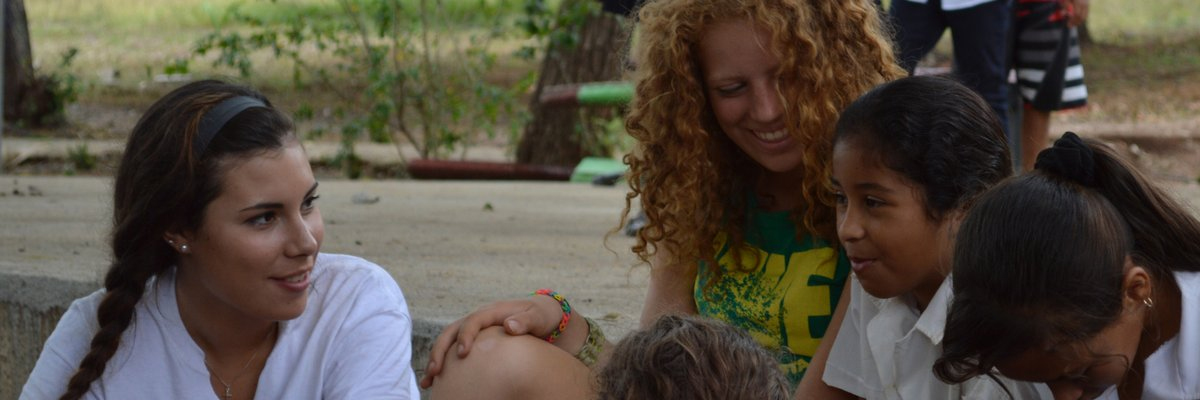
Trying to convince your parents, and maybe yourself, that time in another country to study a language without being in a formal classroom is a good idea? Here are nine. Maybe they will help you and/or your parents feel a little better.
1. Get Out of the Classroom
You’ve spent thousands of hours sitting in classes during the regular school-year. Why spend your time abroad in a similar setting? Unless, of course, education is a subject in which you’re interested.
2. Get Out Into the World
There’s far more to learning a language than diagramming sentences. In fact, the formal languages often taught in language courses are considerably different from the way natives speak. (Think about your last English class and compare it to how you talk.)
3. Natives Are Better Teachers
When you’re immersed in a foreign culture where everyone speaks an unfamiliar language, you’ll find that you learn the quickly language – especially key phrases.
4. Gain Perspective
Words communicate our cultural differences that no textbook can. Learning the meanings of various ways locals emphasize words can bring new perspectives on language that you don’t get in a classroom.
5. Expansive Vocabulary
Let’s be honest: vocabulary books and translation guides give you a limited number of words. There are far more words in a language than those taught in the classroom. Try learning the words people use every day – by every day interaction with them.
6. Get Moving
It’s pretty easy when you’re given a map, recommendations and someone to contact if you get lost. Without those, you’ll have to learn to get around. Your reading skills will also improve as you learn directions, sign meanings and menus.
7. Hang with the Locals
Too often, when studying abroad in a classroom setting, there are many other Americans studying there as well. Unfortunately, often they all hang out together – inside and outside the classroom. So, studying abroad outside the classroom will force you to talk in the native language.
8. Tough It Out
Almost all of us get homesick, and it helps if there are fellow students who understand, but studying abroad outside the classroom allows you to build the confidence not only in speaking the language but in knowing you can take care of yourself.
9. You Decide
Finally, you get to decide your schedule when studying abroad. If you learn best in the afternoon, you can focus then.
As long as you’re self-motivated and disciplined, studying a language abroad outside the classroom can be a great learning experience. I’ve given you some reasons – now go do it!
Contributed by William Pate
Name: Alex Moscovitz
Hometown: Guilford, CT
Education: Fulbright Scholar
Passions and Interests: Cooking, reading and spending time outdoors, in the woods or on trails.
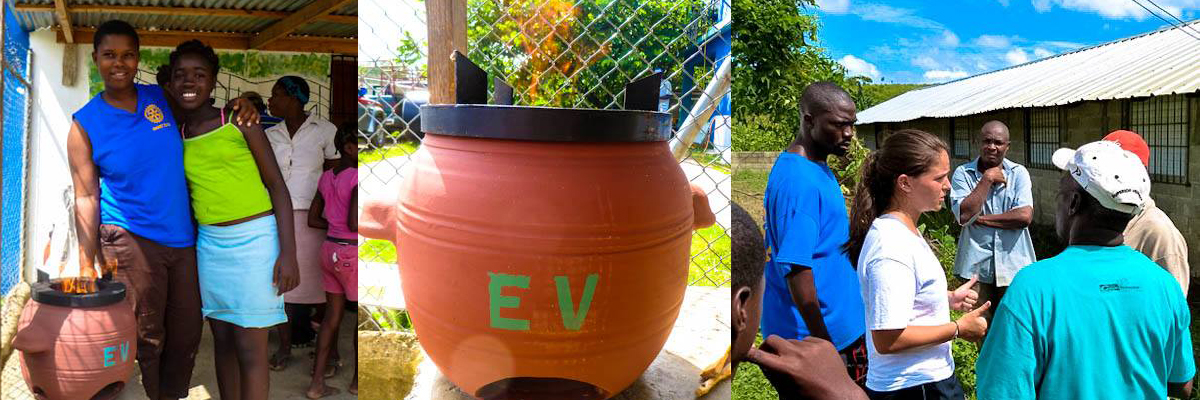
Transformational Experience: Dominican Republic: Building a Sustainable World™
Making an Impact: Fulbright Scholar studying food insecurity with an NGO in the Dominican Republic
Identifying problems seems easy, but it takes a keen mind and a lot of research to dig beneath the surface issues and find the root of the problem you’re trying to solve. For GLA alum Alex Moscovitz, digging deep is part of her daily life.
As a recipient of a Fulbright scholarship, Alex is spending 10 months with a local NGO in the Dominican Republic studying food insecurity. Her research will help determine the differences in food security as experienced by urban vs. rural populations. This research may be used in the future to help NGOs and organizations better tackle how food insecurity affects populations differently, since a one-size-fits-all approach rarely works on a large scale.
To Alex, the research is important because the work it affects after matters. The wrong approach, if ill-informed, can not only have no net gains, but could possibly have a negative impact on a community.
I’ve seen how important development work can be. I’ve also seen how damaging it can be if not done right.”
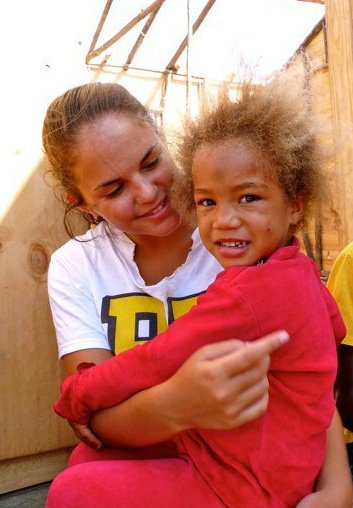
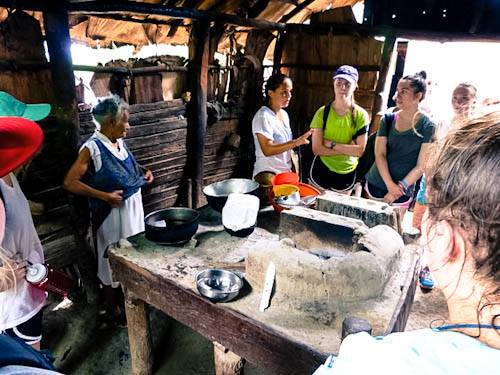
Part of Alex’s interest in this work began with GLA in the Dominican Republic, while on the 21-day Building a Sustainable World™ program. GLA partners with a local organization in the Dominican – 7 Elements – which teaches student volunteers about the cross-section of sustainability, human security and education through instruction and real-world examples. It was here that Alex was introduced to issues of food insecurity, environmental degradation, pollution and more.
Alex took her trip right after she graduated from high school, and her experience with GLA in the DR helped inform her educational goals. She graduated from college with a dual degree in sociology and environmental science, and Alex intends to go to graduate school to earn her Masters degree in environmental urban planning so that she can “work on projects that solve problems in how our human systems (food, water, etc.) affect the environment, and make steps towards socially inclusive, ecologically friendly cities.”
While in the DR with GLA, staff took groups, including Alex, through small development projects working to correct harms caused on the environment by people. She began to learn – and take interest in – to what extent people have an effect on their environment, and vice versa.
I am moved to dedicate my time to work in topics of social and environmental justice because I believe that we should work to build communities that improve the environmental health, function sustainably and do not foster inequality.”
Alex’s concern, which she hopes to address through her Fulbright research, is that people in many communities are unable to eat their staple foods due to the uniformity of what they grow for income production. “There’s a lack of diversity in the food being grown here,” she said, and her research into food issues at households, markets, and farms may help to pinpoint where the gaps in the system are occurring.
These are complicated problems with potentially complicated solutions, but when it comes to her insights on making a meaningful impact, Alex’s advice is simple.
Leave more behind than you take.”
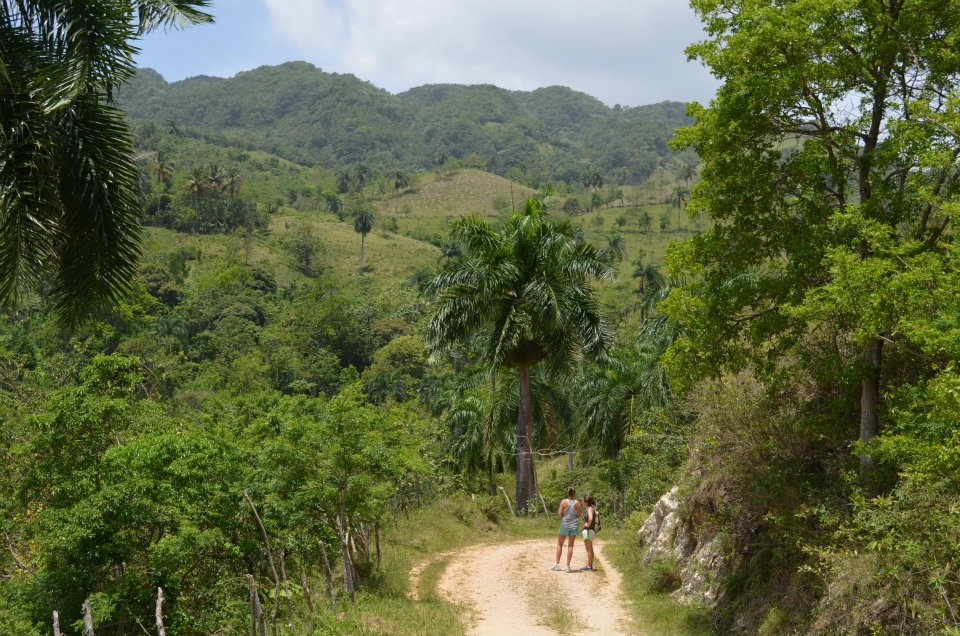
Alex is currently a Fulbright scholar doing research in the Dominican Republic. She plans to attend graduate school after, where she’ll study environmental planning and public health.
Program Alex attended:
GLA Dominican Republic: Building a Sustainable World™
Curious about exploring your own GLA adventure? Check these out:
Brought to you by
