What Does It Take to Be An Animal Shelter Teen Volunteer?

A Guide to Being an Animal Shelter Volunteer for Teens
As a teen in high school, one of the best ways for colleges to consider a student for a scholarship or admission is the work that a student does outside the classroom. Many students play sports, join clubs, or even tutor other students.
But what about the students that volunteer in other places like senior citizens and animal shelters?
Teens that contribute these types of work are helpful and are really are trying to help their cause. The animal shelters that teens will volunteer at want students with a love for animals, a caring heart, and an understanding of the needs on how to take care of an animal. When volunteering at an animal shelter, it’s just not about the hours that are put, in but the love, time, and personal attention a volunteer has to have for animals.
Dogs, cats, snakes, horses, pigs even hamsters often end up in an adoption situation, even though most except dogs and cats don’t end up in a typical shelter situation. However, people will adopt animals for many different reasons, and knowing these could help convince an on-the-fence adopter to commit and bring home a new friend and companion. Some of the most persuasive reasons include: protection of the household, having a reliable cuddle buddy, or to give a child a companion to grow up with.
The work that animal shelter teen volunteers may have to do at an animal shelter will vary on what the manager decide, and the hours you’re able to work between school and other extracurricular activies. Don’t overlook that this may involve cleaning (very, very smelly) rooms, grooming the animals, separating those that don’t get along well, playing with the animals, feeding the animals, etc.
You have to be a animal lover and that means the love has to spread widely, but also worldly. A team player is a must as well because taking care of animals takes multiple hands. The most important thing to remember though is that a volunteer, or anyone working with animals at a animal shelter, has to care for all of the animals. Not just your favorite. Not just the ones that are easiest to handle.
Animals are like toddlers; they require a lot of attention and whether it’s playing, feeding, or even just being around, these are critical aspects of the gig. A volunteer doesn’t need a degree to show love and a volunteer doesn’t need money to make them care for loving creatures. We talk to animals because we know they love us and they will always be there no matter what happens.
Contributed by Tyler Dickerson
Why a Teen Who Loves to Write Should Take Journalism in High School
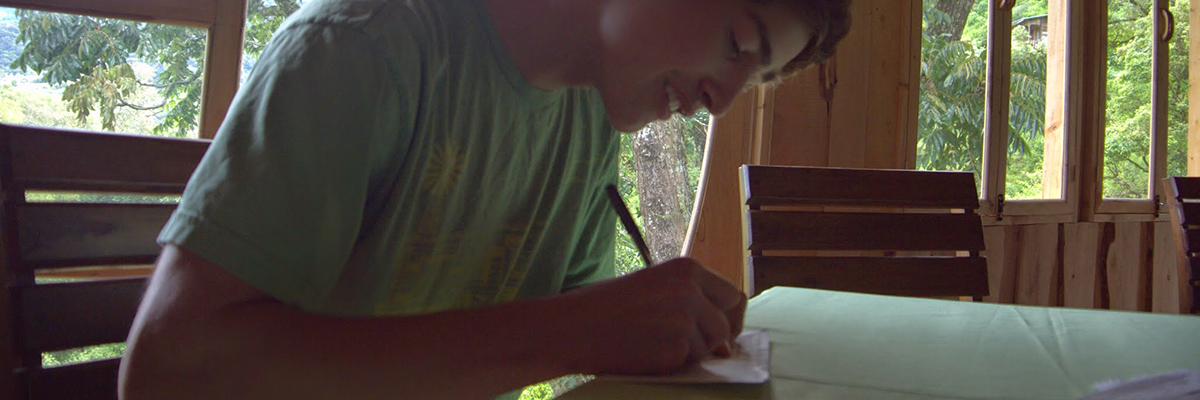
Attention all high school students who love to write: You may be a naturally-gifted writer if you are more than a shopaholic, you are a certified bookaholic. Your mug either has a quote from C.S. Lewis or resembles the book cover of F. Scott Fitzgerald’s The Great Gatsby. Last but not least, you love to write! Writing is more than a daunting task, it’s your healthy yet obsessive craft. Now that we have established your talented trade in writing, it’s time to foster and grow your writing into a masterpiece. One effective way is to enroll in a journalism class next semester or the semester after.
I did not have the opportunity to take journalism in high school; in fact, my first class wasn’t until the second semester of my freshman year of college. Let’s just say I was a square peg trying to fit into a round hole. I was so used to writing in freeform that I found reprogramming my writing to follow the journalistic model of writing to be quite the challenge. As a self-proclaimed contender of challenges, I happily accepted and succeed in the challenge. I still to this day remember how the Inverted Pyramid works without any assistance from a cheat sheet: lead (who, what, when, where, why and how), body (background) and tail (extra information). The only aspect I would change from my experience with journalism is taking a course in it high school. To save you from making the same mistake that I made, here are some convincing arguments on why you should include a journalism class in your class schedule.
Broaden Your Writing
Like the assortment of literary genres available, there are different types of journalistic writing.
1. News (Straightforward and to the point)
2. Columns (Personal Perspective)
3. Feature (Mixture of Column and News)
4. Investigative (Literary Detective)
Having exposure to the above types of journalism will transfer well to other forms of writing. Some of the greatest writers dabbled in journalism: Claude McKay, Maya Angelou and Rudyard Kipling to name a few. From poetry to best-selling novels, you will become a master of all writing trades.
Learn Other Useful Skills
Learning the craft of writing and mastering Associated Press (AP) style are not the only skills you will obtain. You will develop strong creative, critical thinking and social skills that are transferable to your current and future studies. In the age of where digital technology runs supreme, you will also learn how to use Adobe Photoshop, InDesign and other software programs that are key for a journalist to succeed.
Gain Valuable Experience
Taking a journalism class is definitely something to consider if you aspire to be the next head anchor for Nightly News, columnist writer for The Washington Post or just a general career in journalism. The more hands-on experience you develop in your high school journalism class will prepare you for college and your dream career in journalism. Also, your journalism experience may provide opportunities to cover stories around the world (which is the win-win of all situations).
Still not convinced of all the benefits a journalism class can provide you? Take the class and experience the results yourself. You still need electives to graduate, right?
Contributed by Courtney Liddell
To Travel, with Purpose
“My ultimate goal for giving back to the world is to help youth in impoverished communities. By educating these communities, nothing but positive change will come back.”
GUATEMALA – Children of the Maya – June 12 – June 25, 2016
Time Capsule Letter – October 2016
Session 1 was a blast. The students were all very engaged and just really got along with each other. The most memorable moments were when the students were hanging out with the home base staff. They were constantly asking questions about everything and everyone. I think one of our best moments for the session was when Don Arturo spoke, and our student Ben stayed with him after his talk and continued to ask him questions over dinner and long thereafter. I actually had to tell Ben he had to wrap up his conversation with him because it was late and Don Arturo had to go home. His response was, “But they don’t teach us this stuff in school.”
Service included creating a curriculum from scratch on teaching English language classes to 5th graders as Escuela Pacajal. This session also was fast working at setting the foundation for the classroom construction project. We had volcano eruptions but we did amazing work. The mural was also measured and draw out leaving a strong base for the sessions to follow.
-Joe Castano
Summer Blog Posts
All students have arrived safely! Everyone is excited and ready for all upcoming activities.
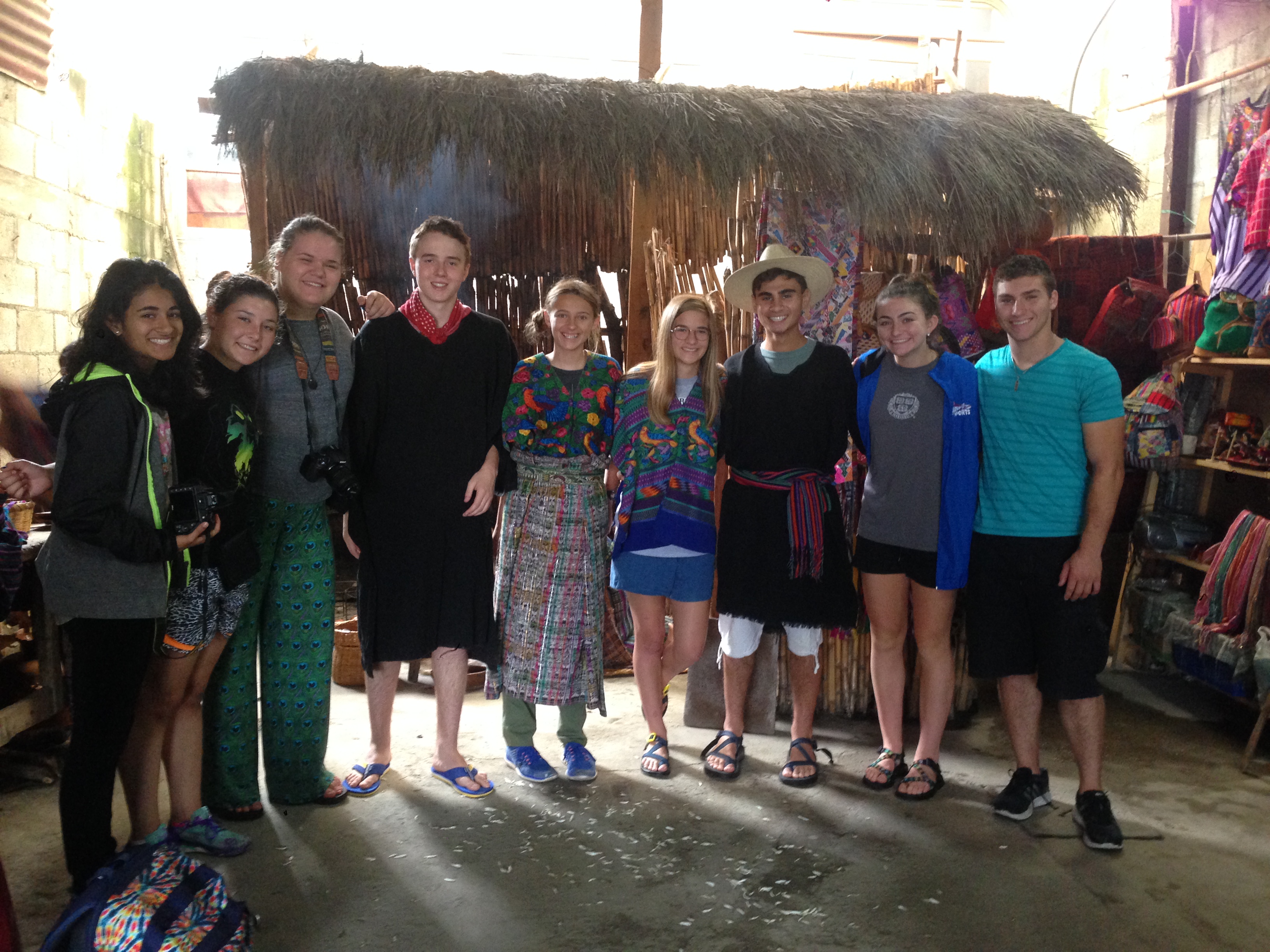

As our adventure began this past Sunday we had the feeling that we truly had an incredible group of students with us. Their energy and willingness to engage has been apparent from day one. Their flexibility has as well.
Monday was our first true day as a group. We learned early that morning that there would be peaceful protest on the main highway from Guatemala City to our home Base in Xela. Some of the local communities had gather to bring awareness to a birth certificate tax that the government had recently made official. We went had our traditional mornings activities in a small Mayan community where the students were able to participate in a wedding, laugh at each other and just generally get to break the ice.
From there we had to change plans and move our lunch back to Antigua. We also spent the rest of the morning touring a coffee plantation. Again this was met with wonderful flexibility on the part of our students. We left Antigua after lunch and had to wait a brief period while the protests were disbanding and the traffic on the way to our home base began to move. The students shared music and stories while we made our trek home. Our students had a late dinner.
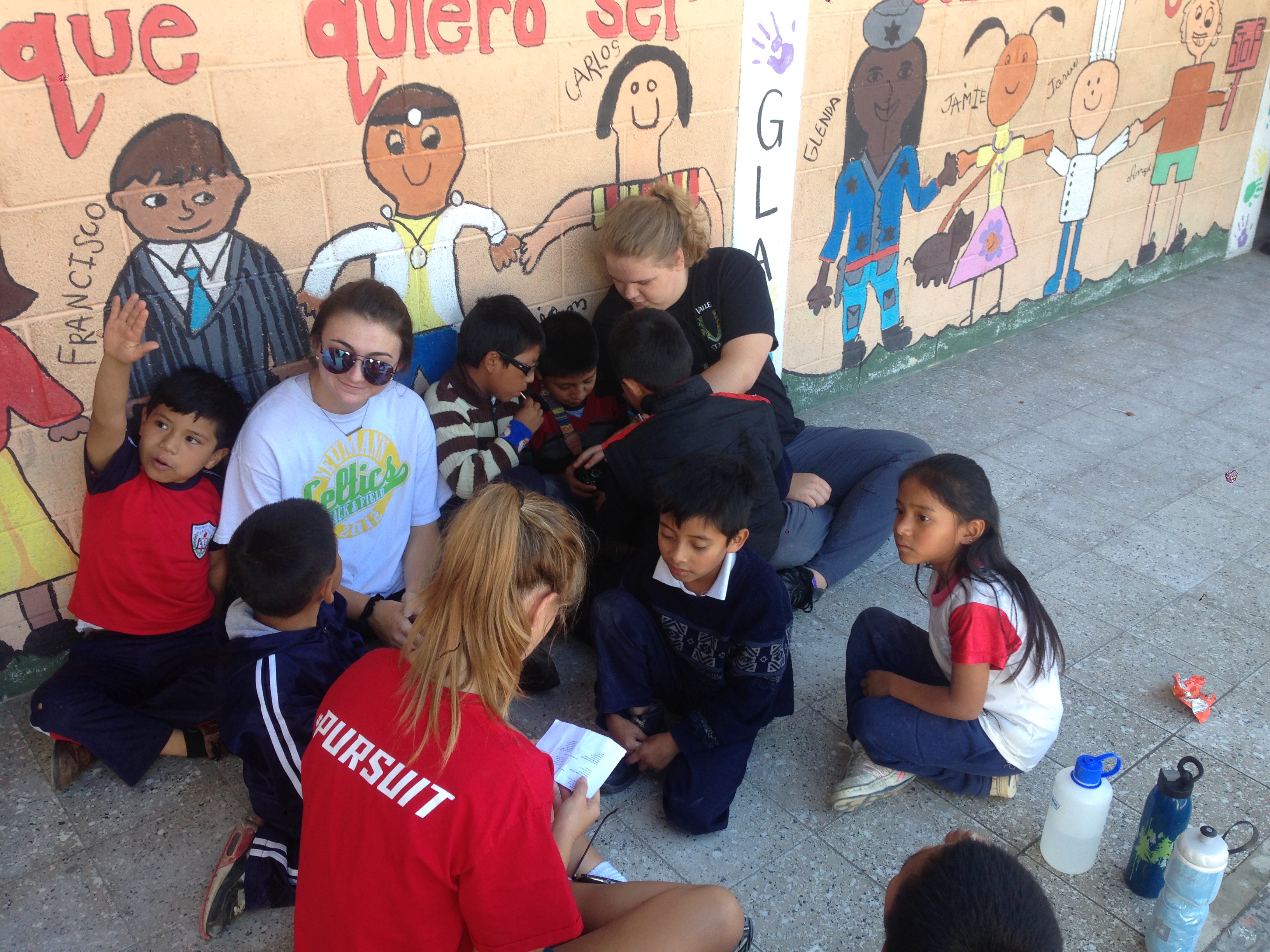
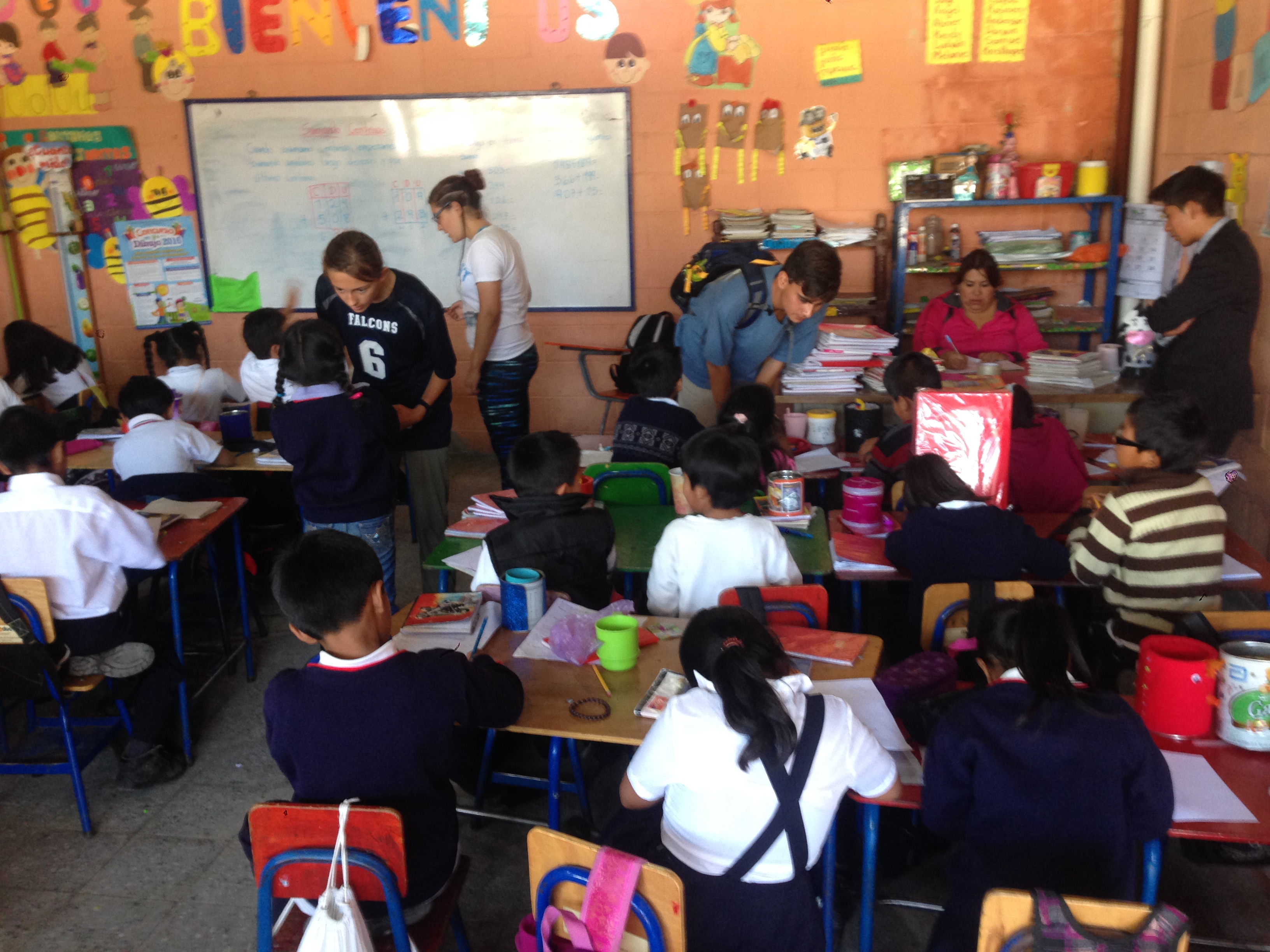
Tuesday we started our community service project. The our students spent the morning getting a tour of our school and going into all of the classrooms and saying hello to all the students. Then they participated in the crazy adventure which is recess. Our 9 students played with over 500 elementary schoolers. Piggyback rides, jump rope and soccer were a must.


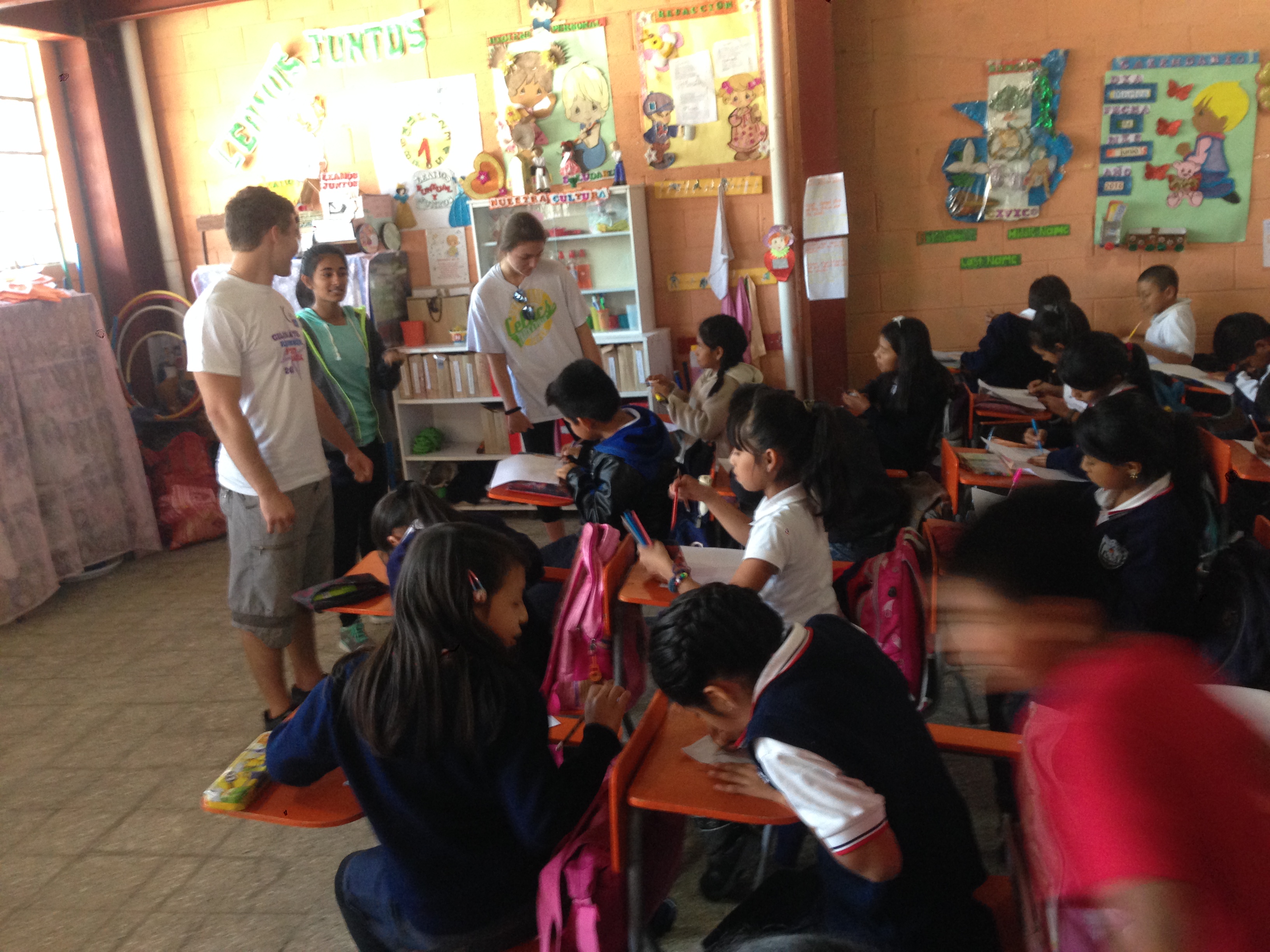
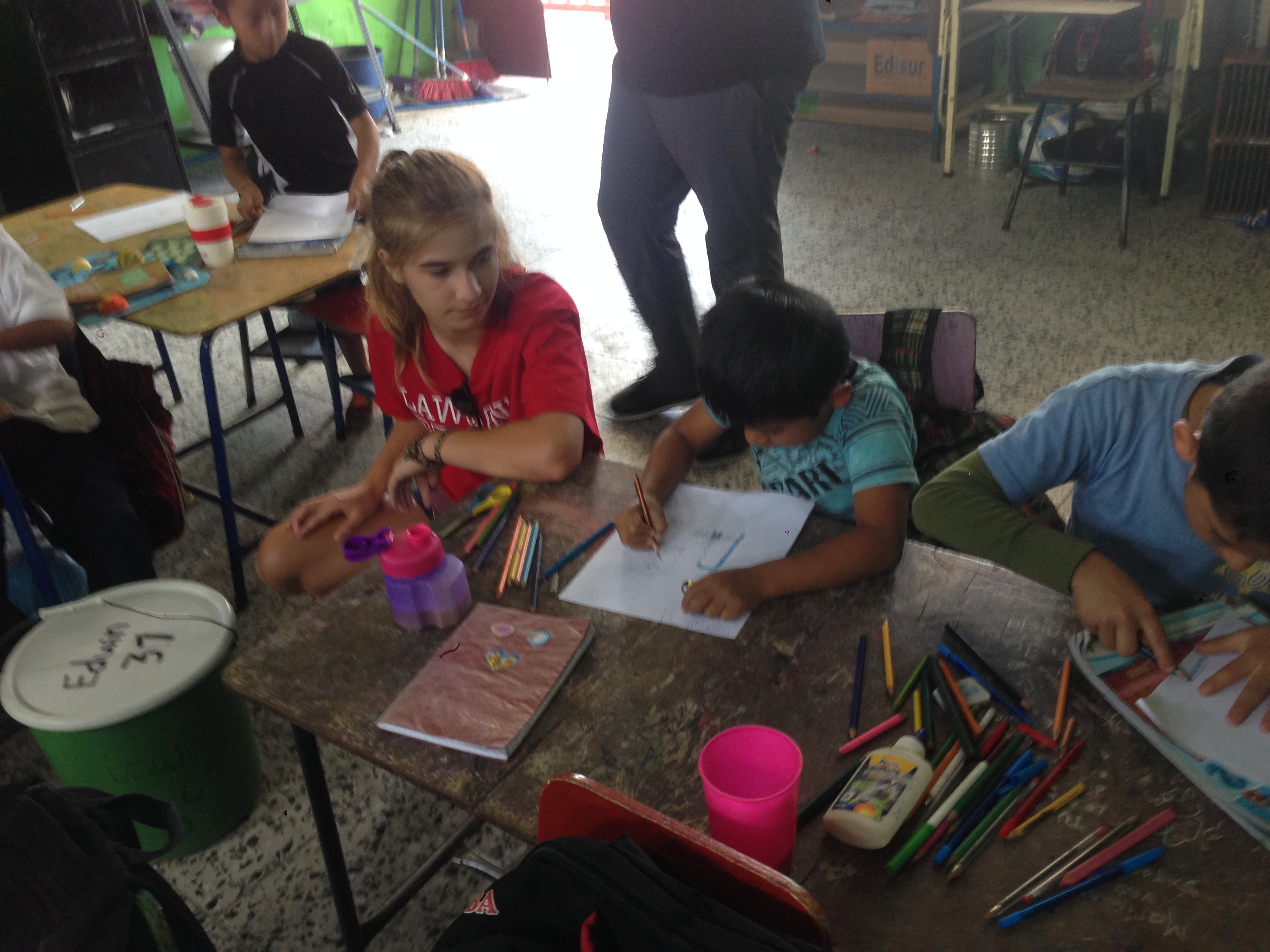


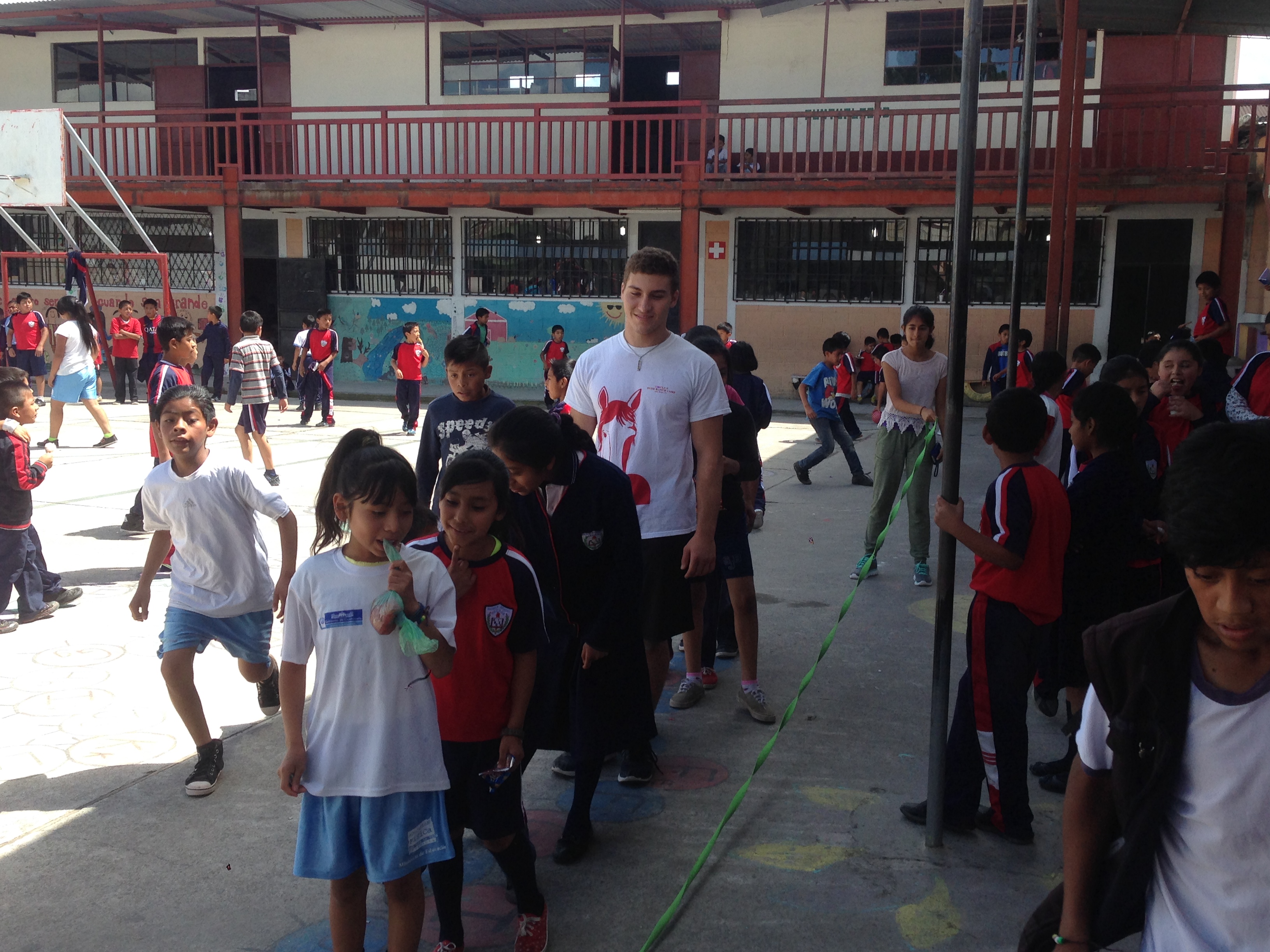
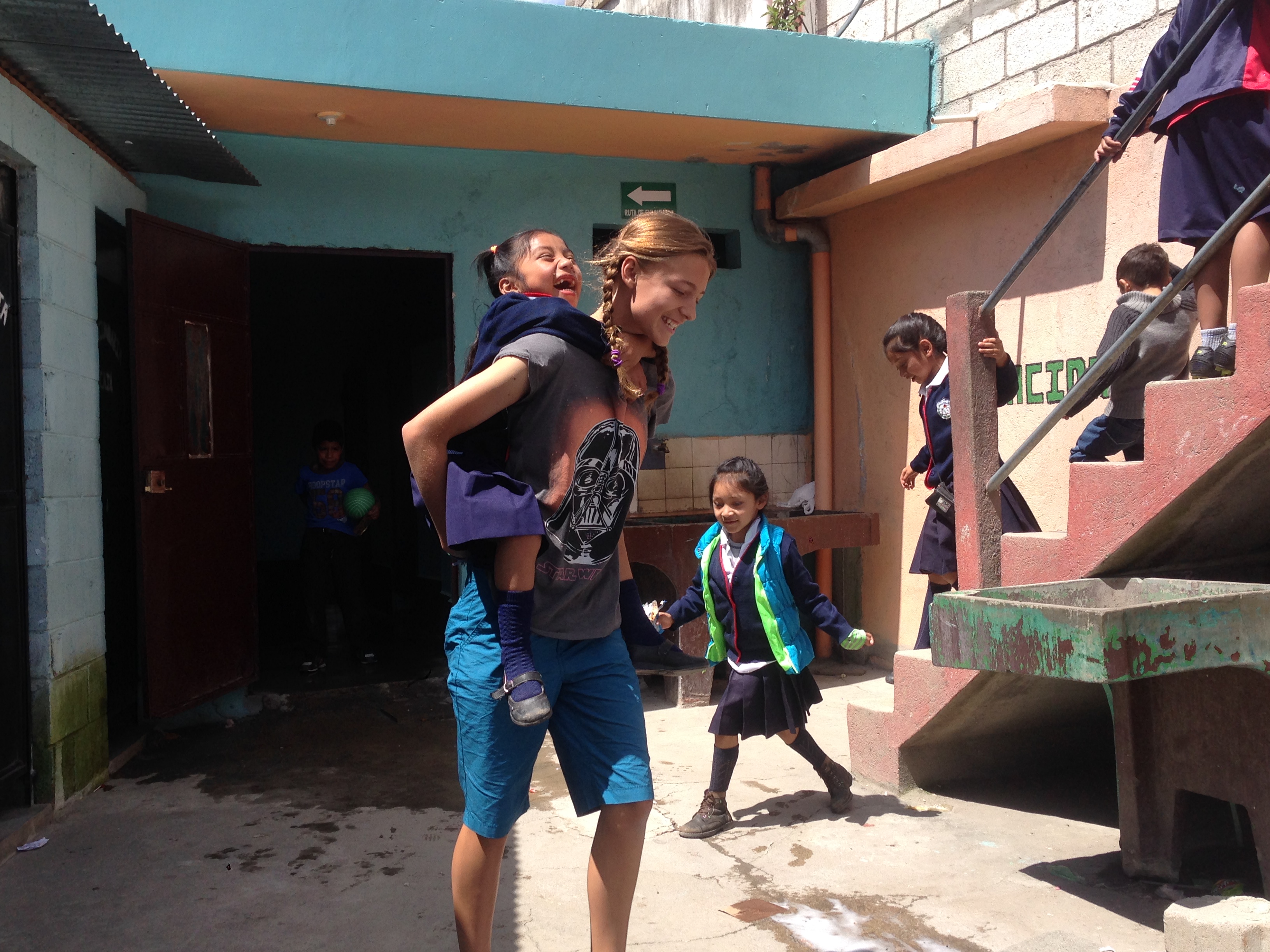
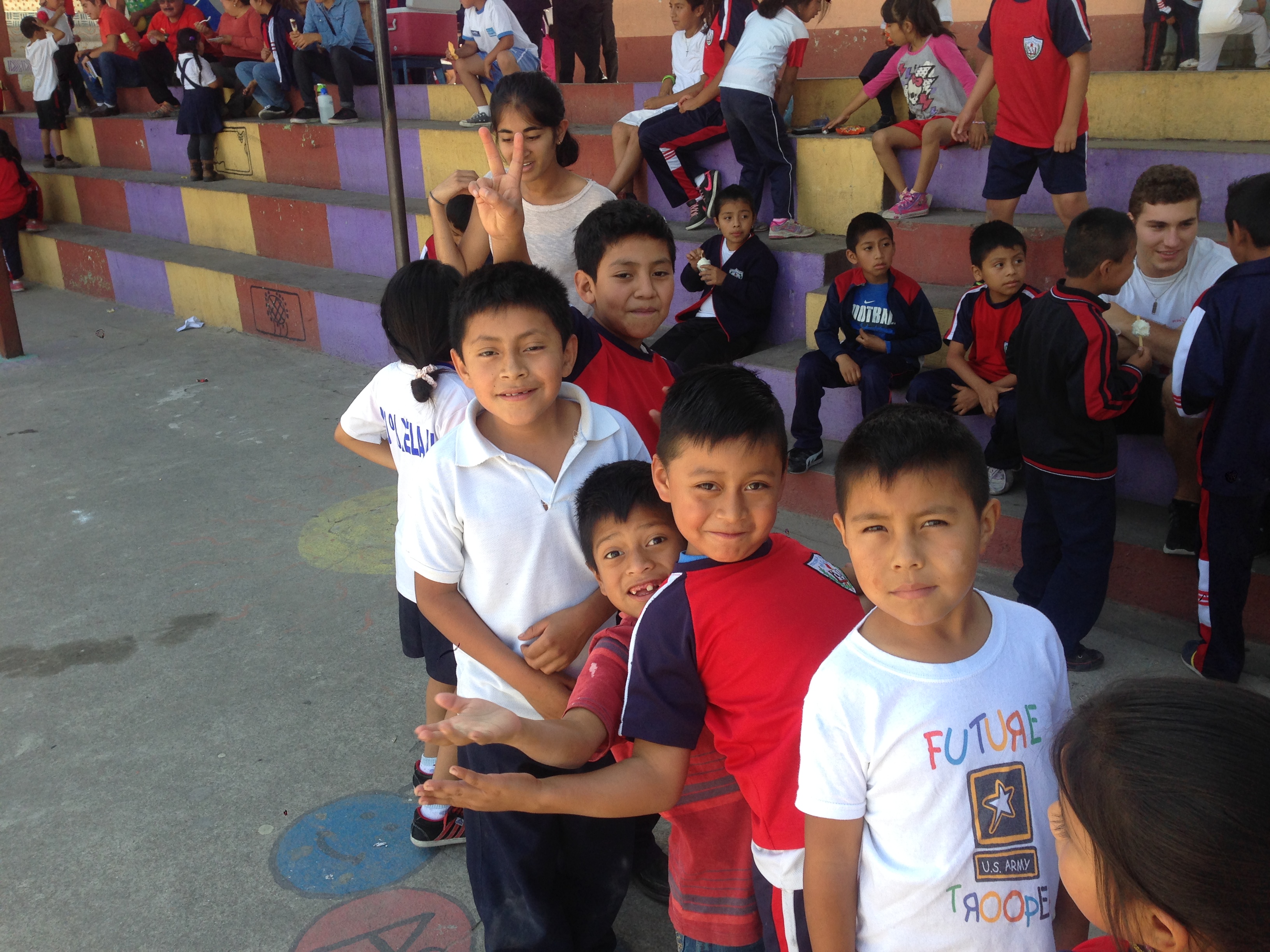
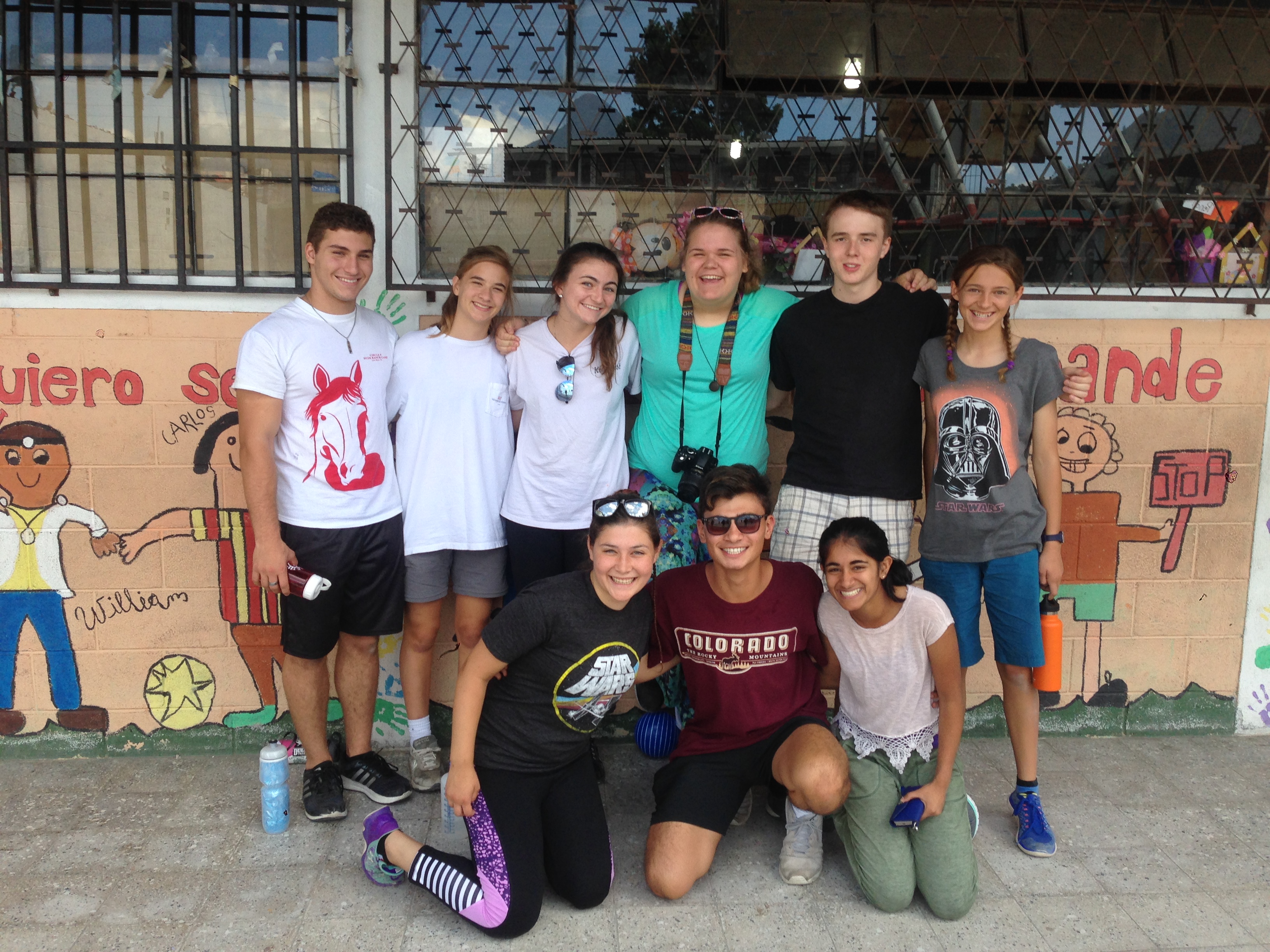
In the afternoon we visited family in the hills just outside of Xela. Where the students learned how to make wool into yarn and corn masa into tortillas.
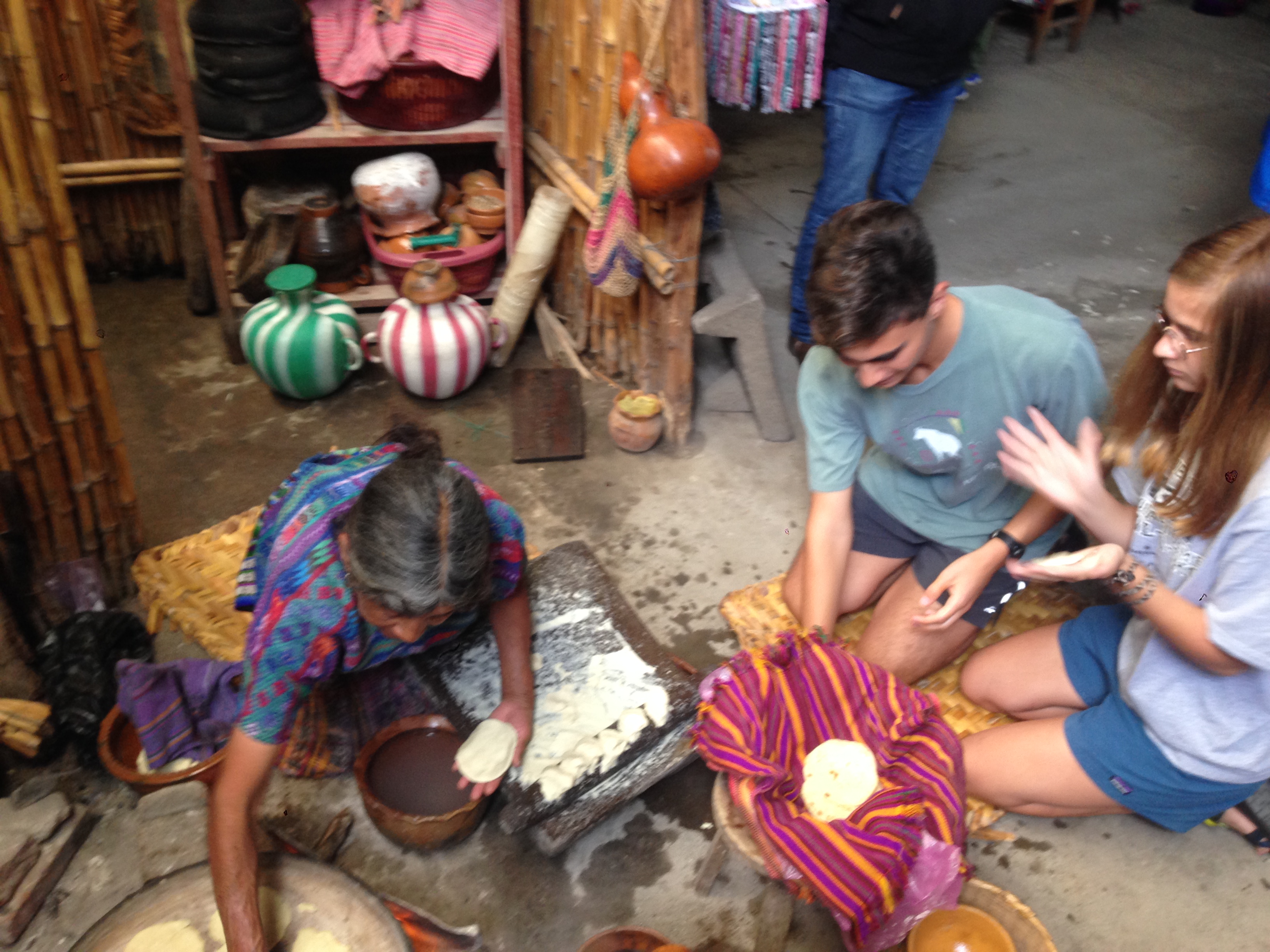
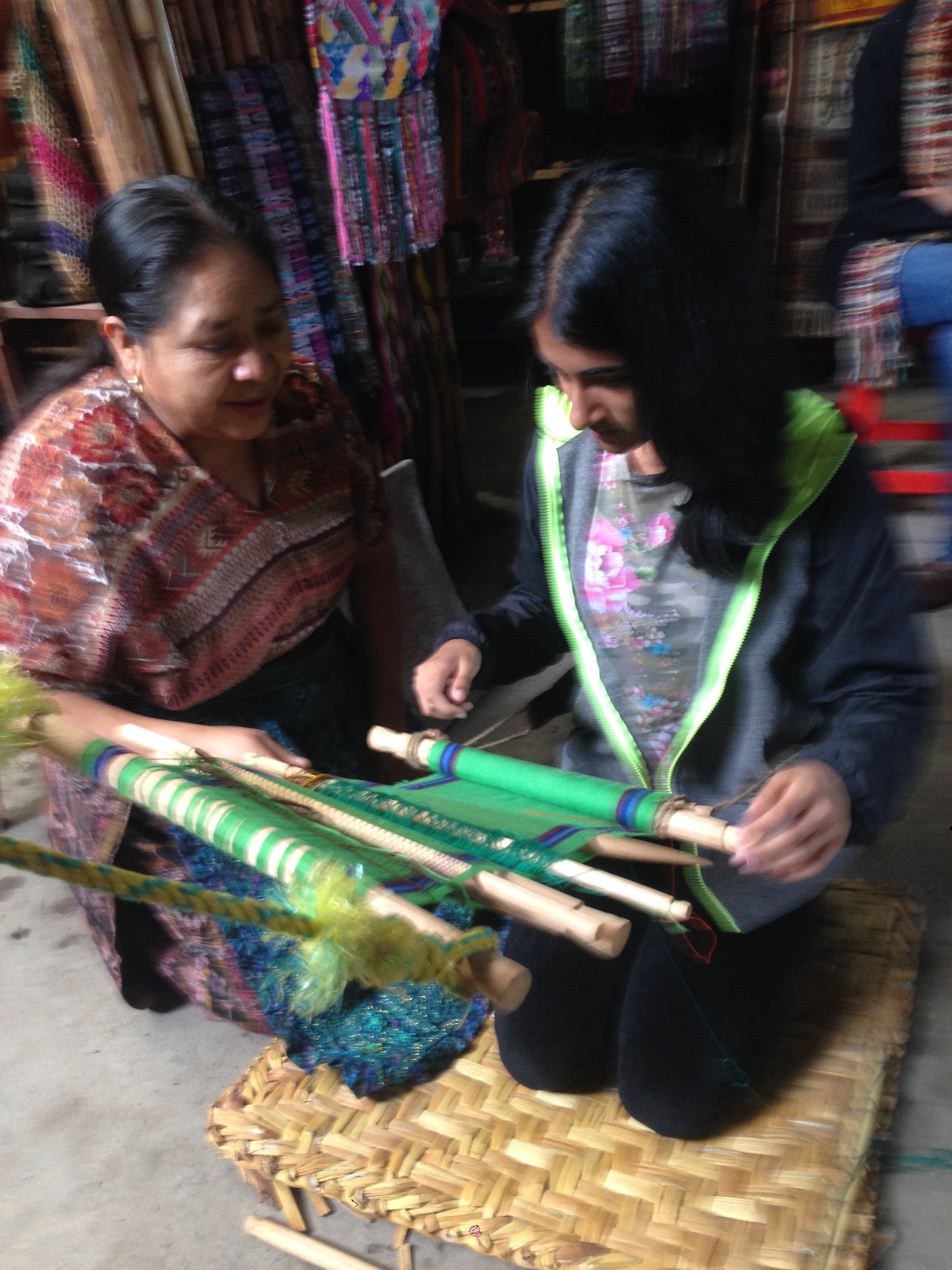
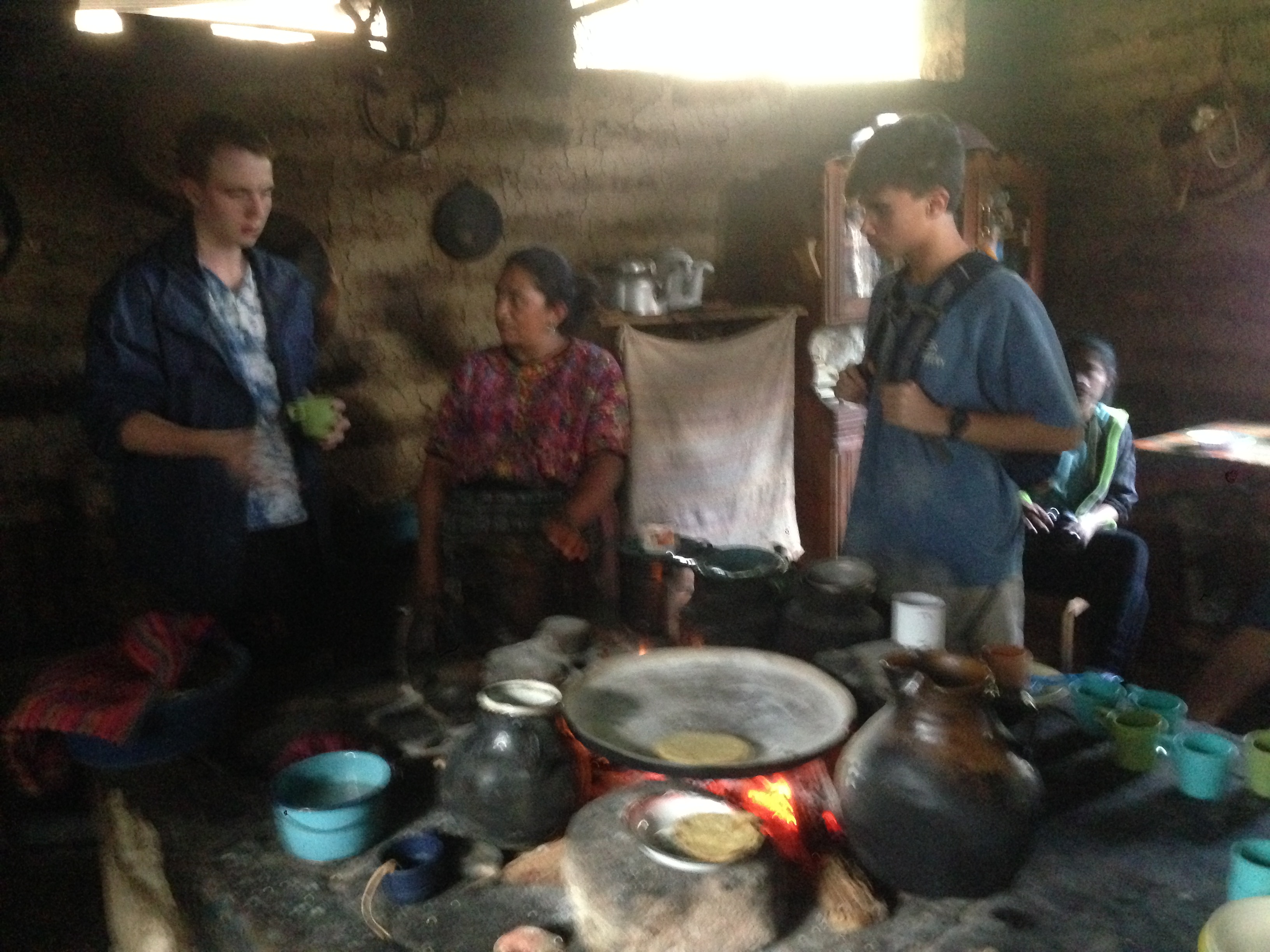
That evening they told stories about themselves and connecting with each other on a deeper level. Our stories are what connect us someone once said and this group has bonded really well over these last few days.
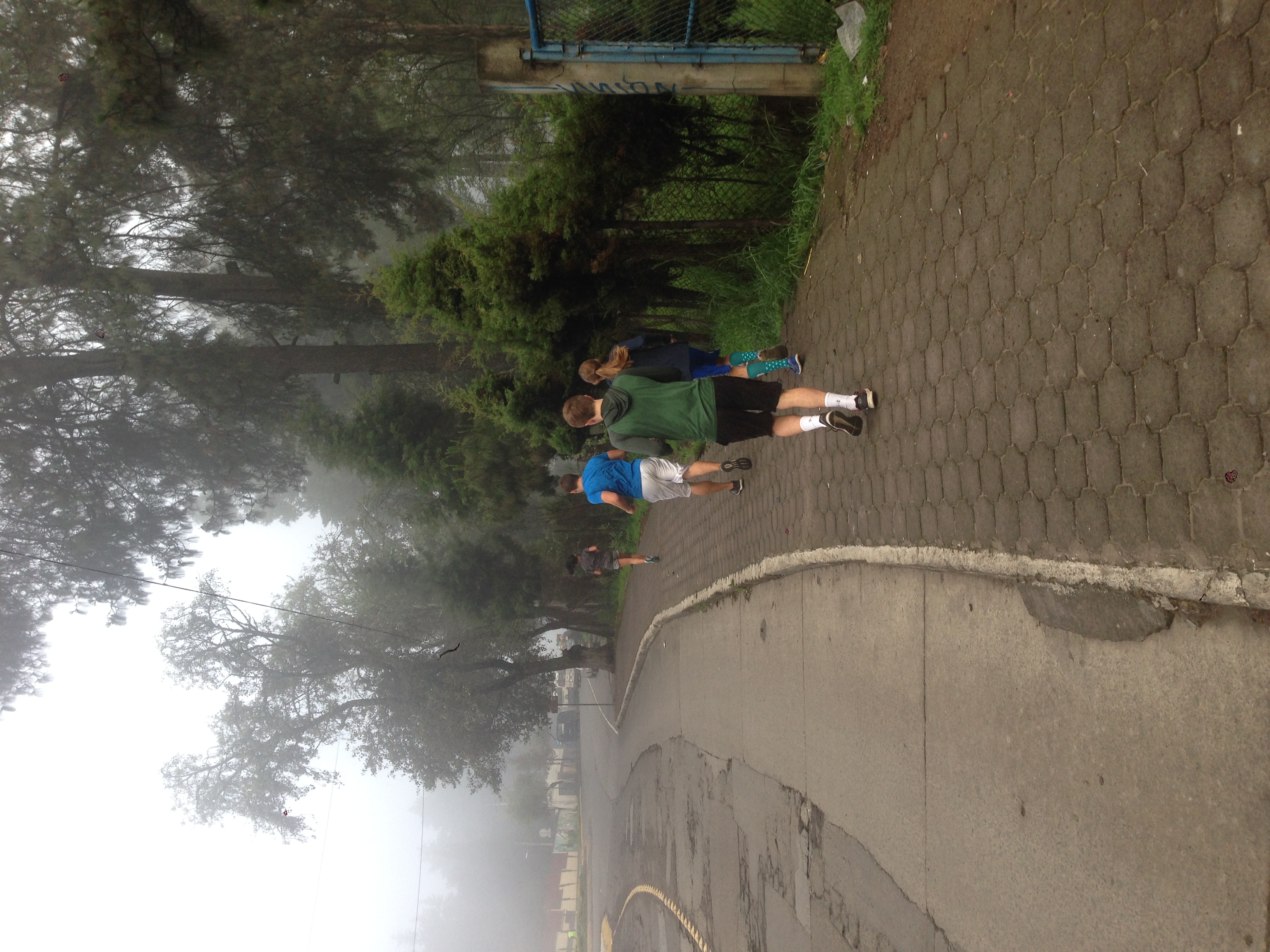
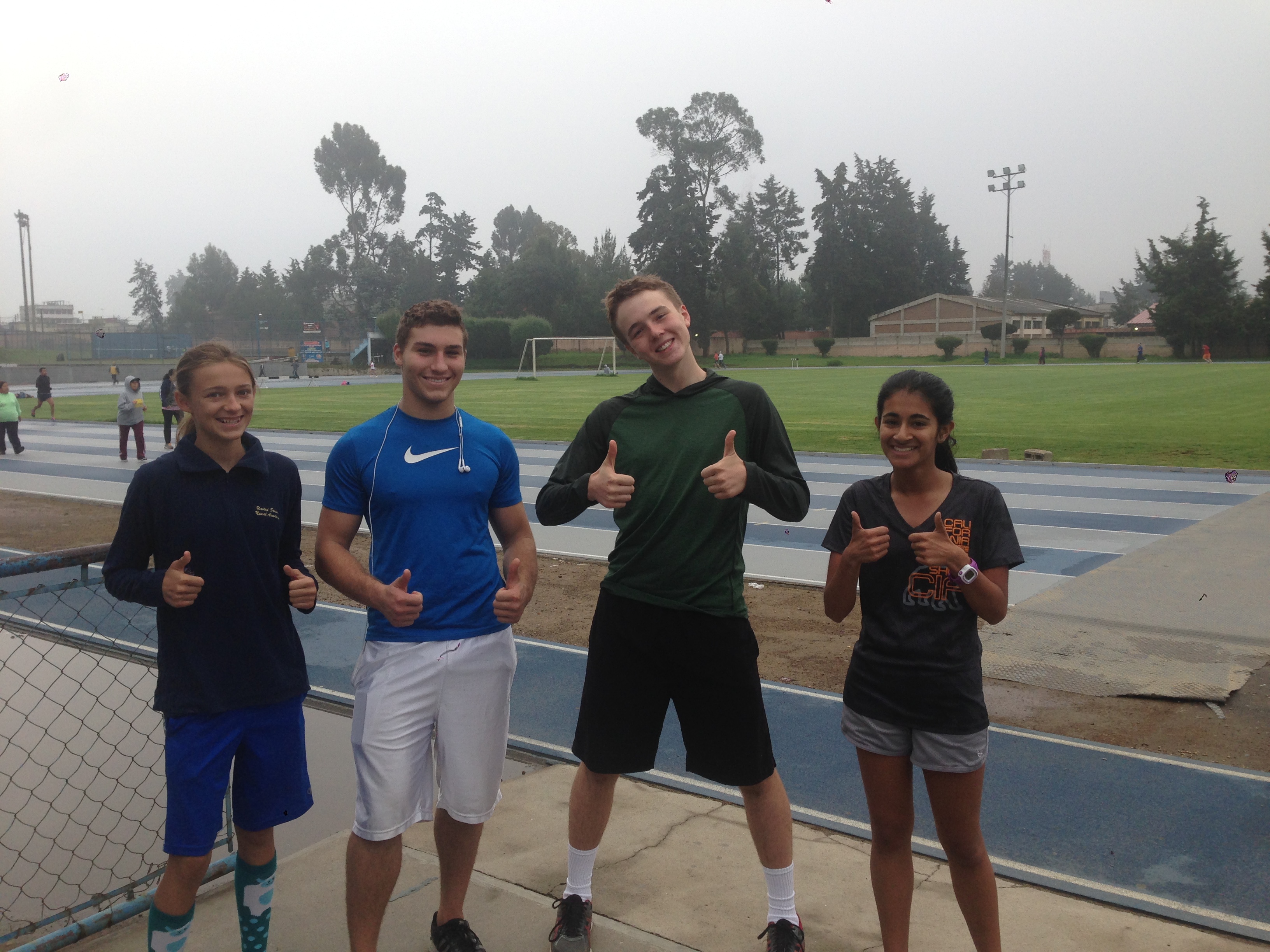
This morning (Wednesday) some of us work up early (530 am) and went for a run. We ran a mile to the public stadium and back.
At 7:45 am during breakfast we experienced our first earthquake of the season with GLA. We had already gone over our safety plan with our students on our first night at the home base and everyone quickly moved to the garden outside of the main house. Though not before one of our boys grabbed a breakfast burrito on the way out the door, “I might get hungry,” he said. Our students like everything else on this trip reacted very positively. We spent the next 10 minutes in the garden where they all talked about how “fun” and “cool” it was that they had “lived through” an earthquake. We all went back inside and finished breakfast and prepared to go to our service site. Again back at the school they went right into the classrooms to continue a project we had previously started, which involved getting each class to make drawing about what they thought about the importance of water. Again we had recess and it was a blast! Everyone is full of smiles, laughter and stories and can’t seem to get enough of their time with the kids.
All is well in Guatemala,
Joe Castano
International Director
June 15, 2016
In the afternoons, we have been participating in daily excursions. Today we jumped in our bus and headed to the town of San Andres Xecul. Xecul means “under the mountains” in K’iche, and our group headed up steep hills throughout the town. We took a tour and our guide showed us all the unique places of the town. We visited an ancient church, which combined Mayan cultures and Christianity; we continued further into the city and arrived at the town pila. A pila is where the community comes to wash their clothes and get water. The pila is one of the only places to get water and has running water only from 3AM to 7AM. After that, we hiked to a Mayan altar where it is tradition for Mayans to initiate their priesthood. This was the highest point of our hike, and we had a spectacular view of San Andres Xecul. After stopping for a group photo, we headed down to the house of a local elder who is famous for her embroidery of huipiles, traditional blouses. She gave us a quick embroidery lesson, and then we headed off to our guide’s house to finish our tour. We were welcomed with delicious hot chocolate and traditional Mayan sweet bread because in Guatemalan culture, it is customary to offer food to your guests. After packing up loaded with hot chocolate bars, we trekked back down the hill to our bus, tired but satisfied.
Tomorrow we will return to the school and help out with their field trip where we will plant trees alongside the children.
– Akshara, Cody, & Emma

Spanish immersion at recess with the kids
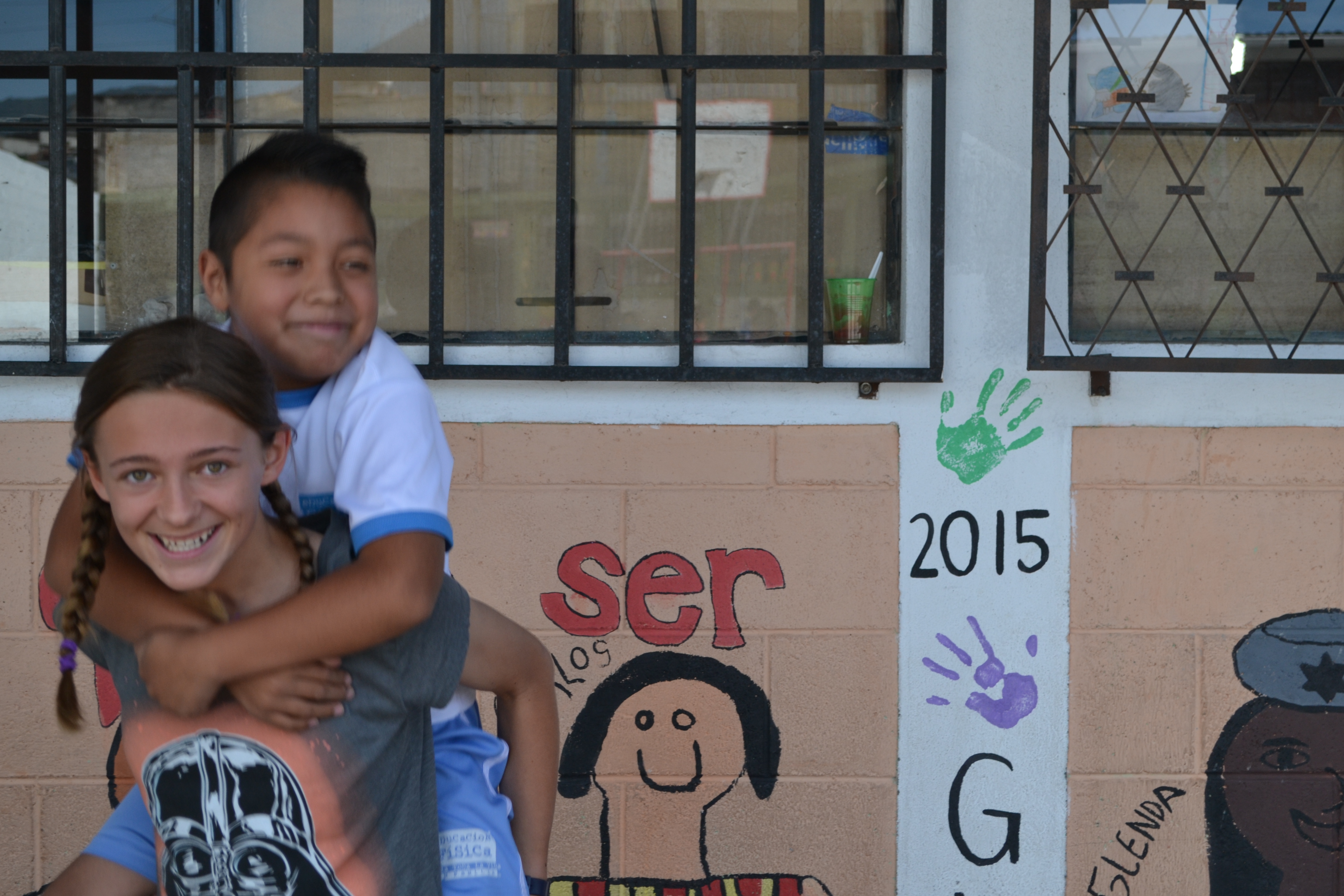 Piggy back rides during recess
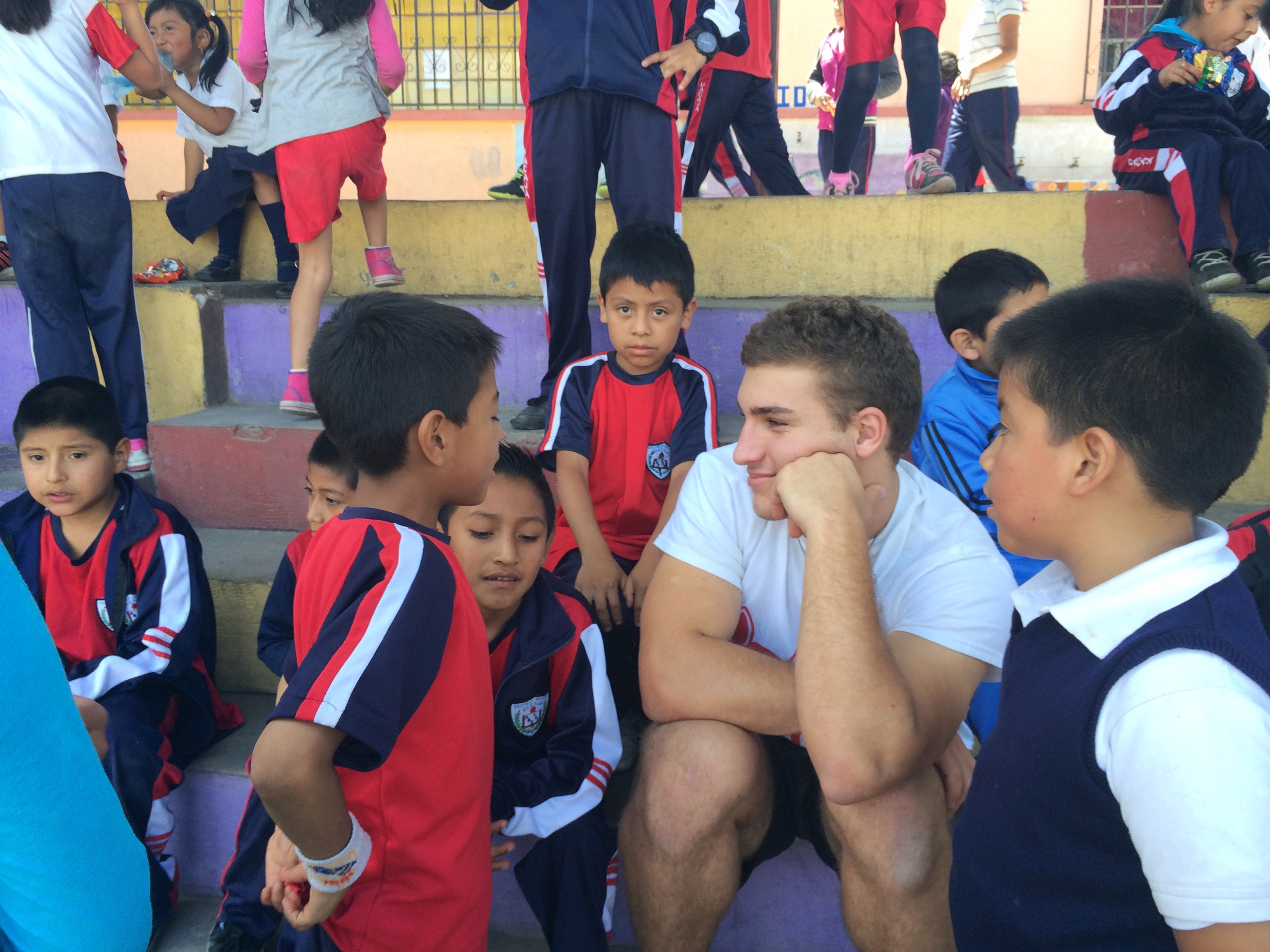
Taking a break from the school-wide soccer game
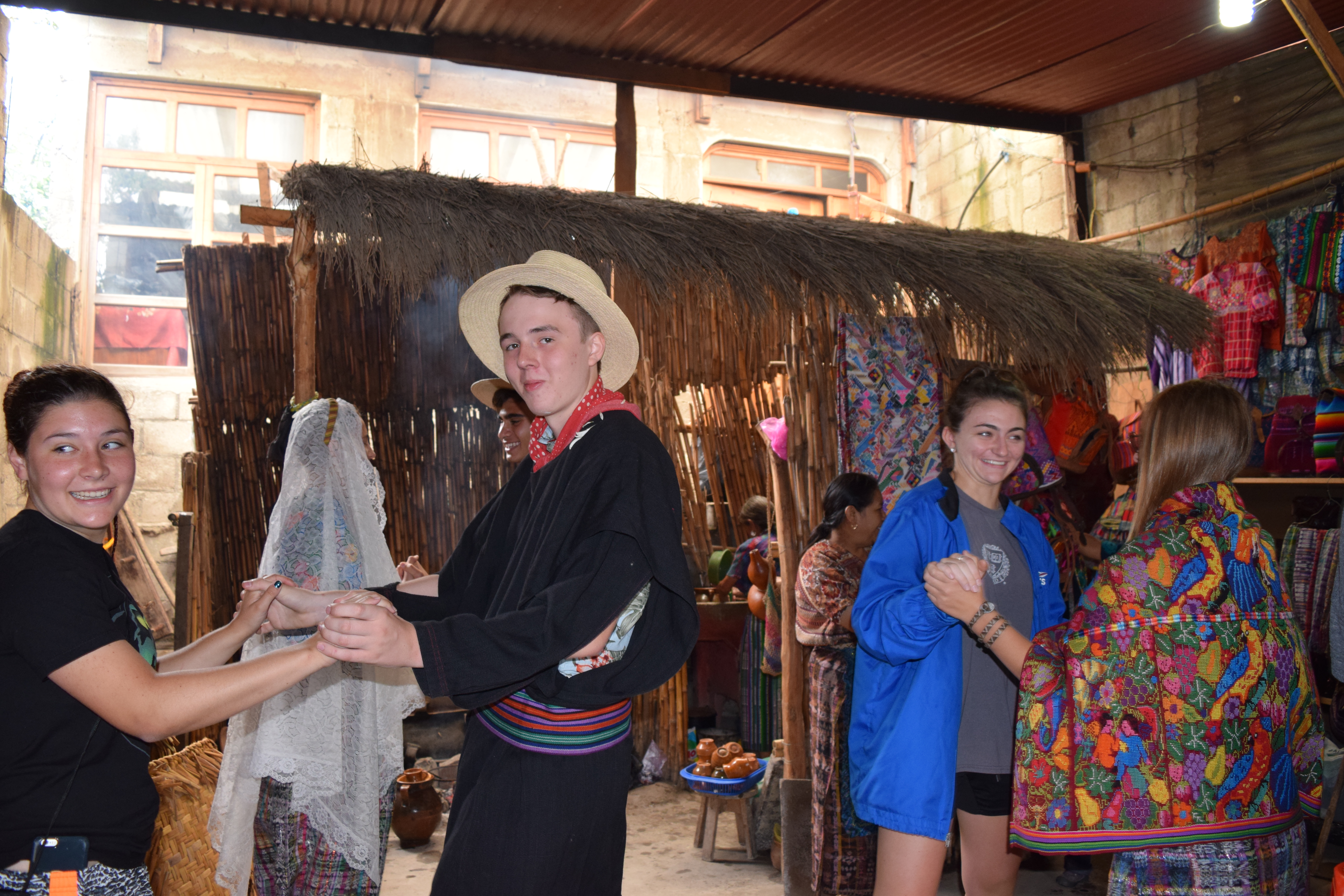
GLA students dance at a mock traditional wedding
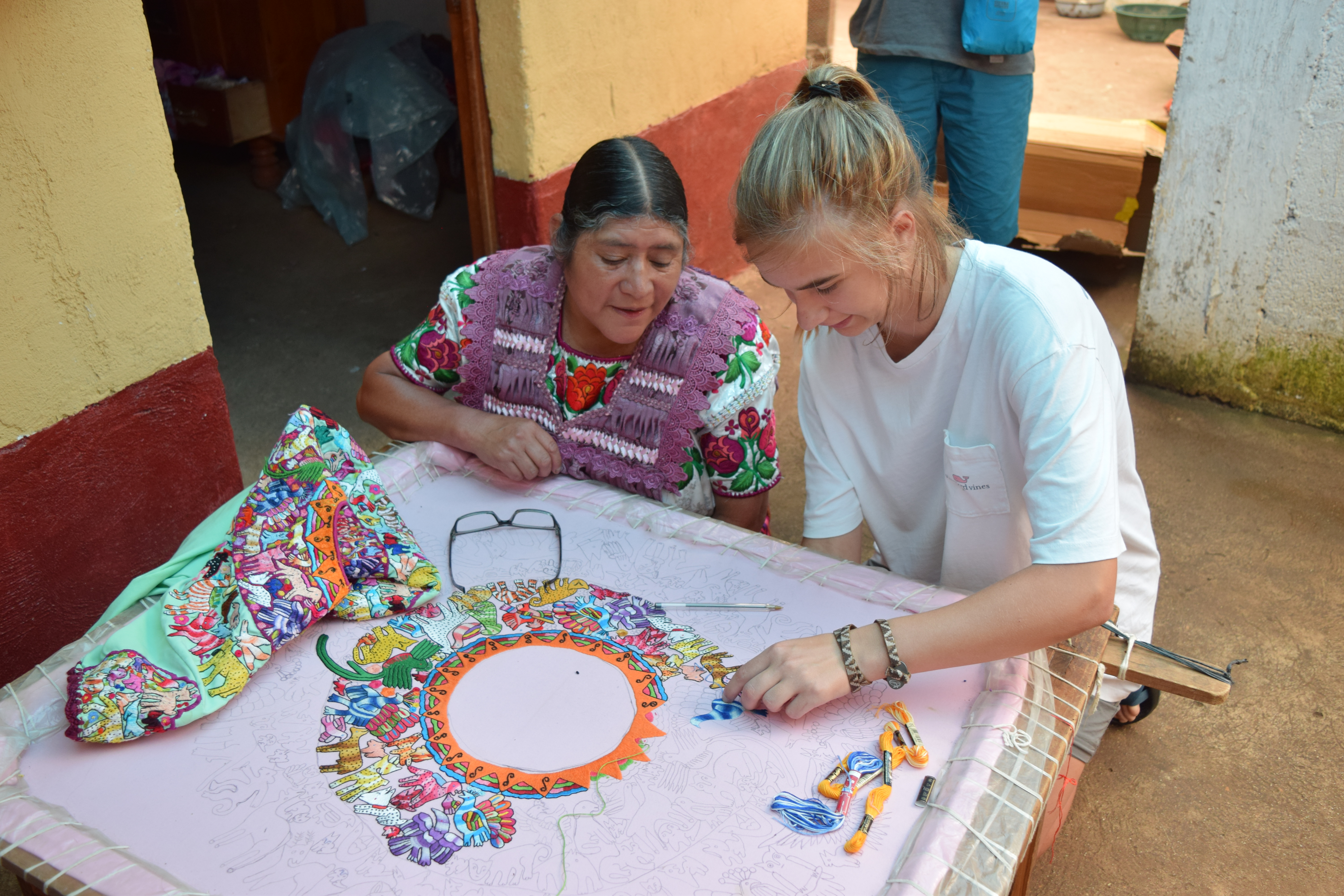
Students watch and take turns stitching as Dona Lupe sews a beautiful huipil, a traditional hand sewn blouse. She is a third generation embroider. A huipil costs about $400 U.S. Dollars. It can take up to 6 months to finish a huipil.
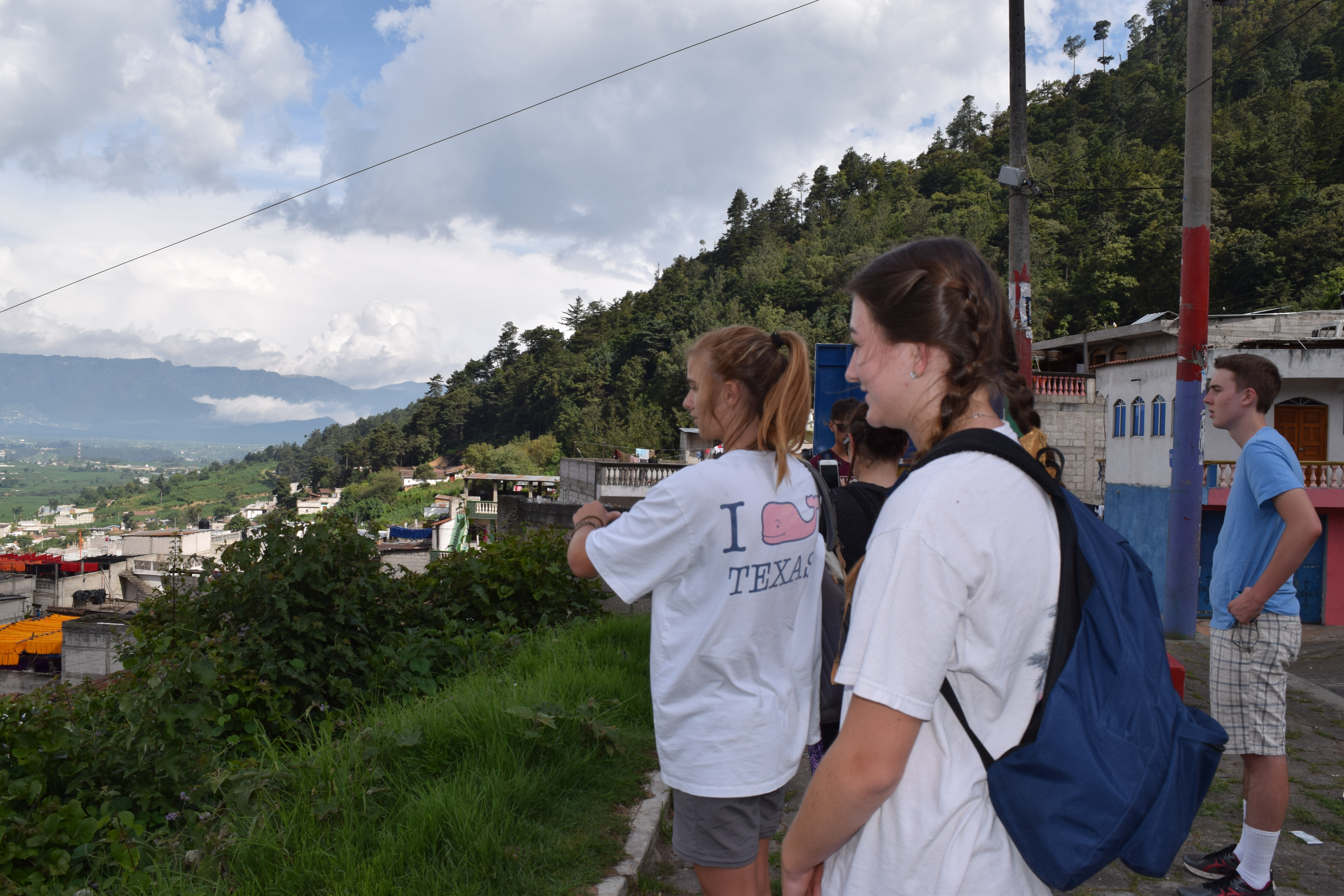
Enjoying the view after a hike up San Andres Xecul
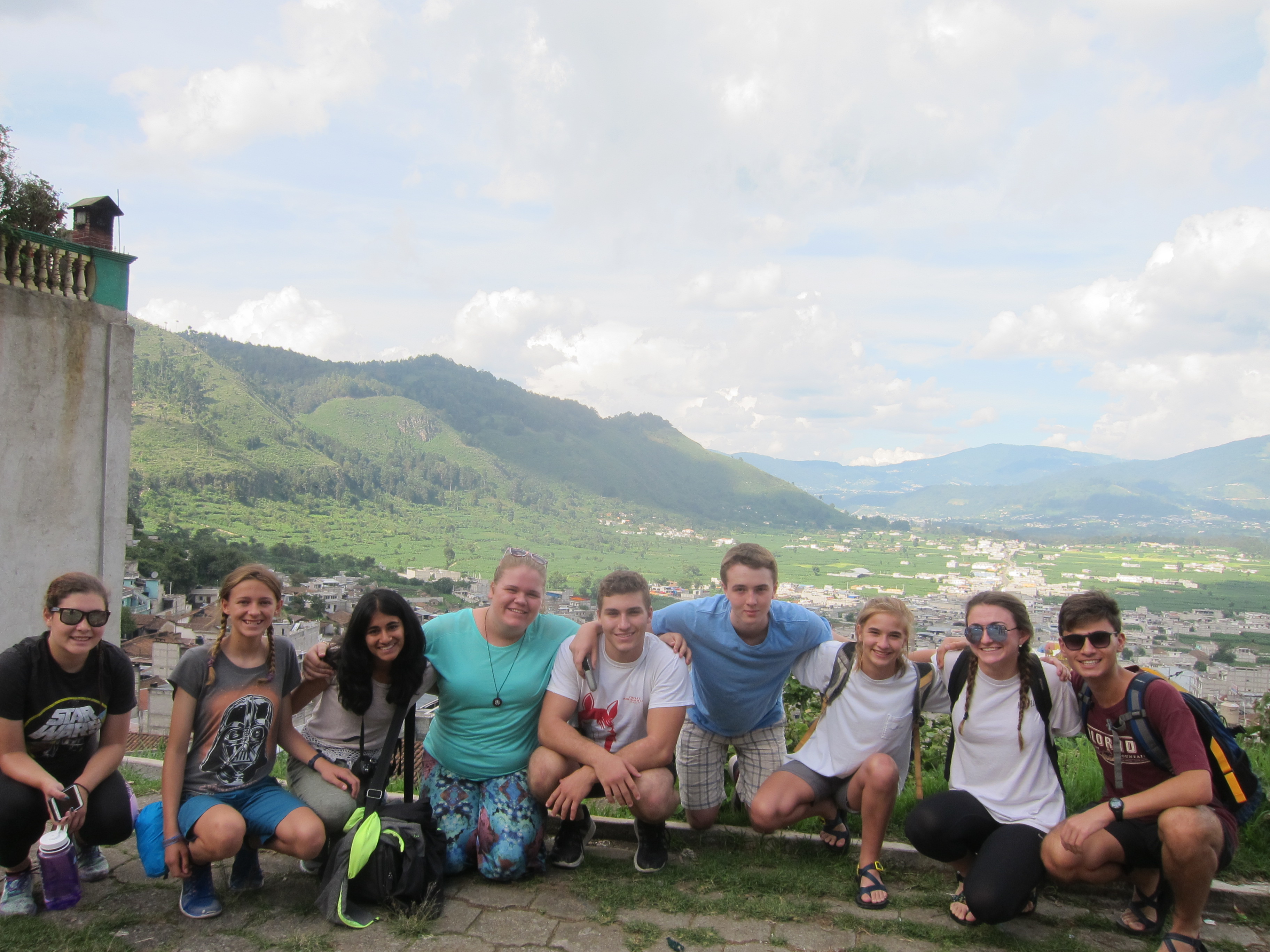
Group photo overlooking the town of San Andres Xecul
June 16, 2016
Once again, we had an early start, and, after a quick breakfast, we headed over to open fields to plant trees with the school. The fields were owned by a senior home that is run by nuns. After planting a few trees, we returned to the school to help out. Since this was their last day before a two week break, the school celebrated with a small ceremony in which they performed a traditional dance and had speeches from teachers and students. At the end of the ceremony, we were recognized for our help with a certificate and a handmade doll.
For our afternoon excursion, we headed to Totonicapan. There, we visited the home and shop of a local potter, Don Julio, who shared his experiences. He was an elementary school teacher for 20 years and then retired to continue pottery work. He has been working pottery since 1985.He related to us the disinterest for his craft in the Guatemalan community, and he mentioned how children in the area aren’t interested in learning or continuing the tradition. Afterward, he allowed us to try our hand at pottery. Early on, many of us figured out that it was not as easy as he made it look. This experience helped us gain an appreciation for all of the hard work that goes into the pottery-making process.
Tomorrow, we will continue our service work at the school by beginning the mural and the construction of a 5th grade classroom.
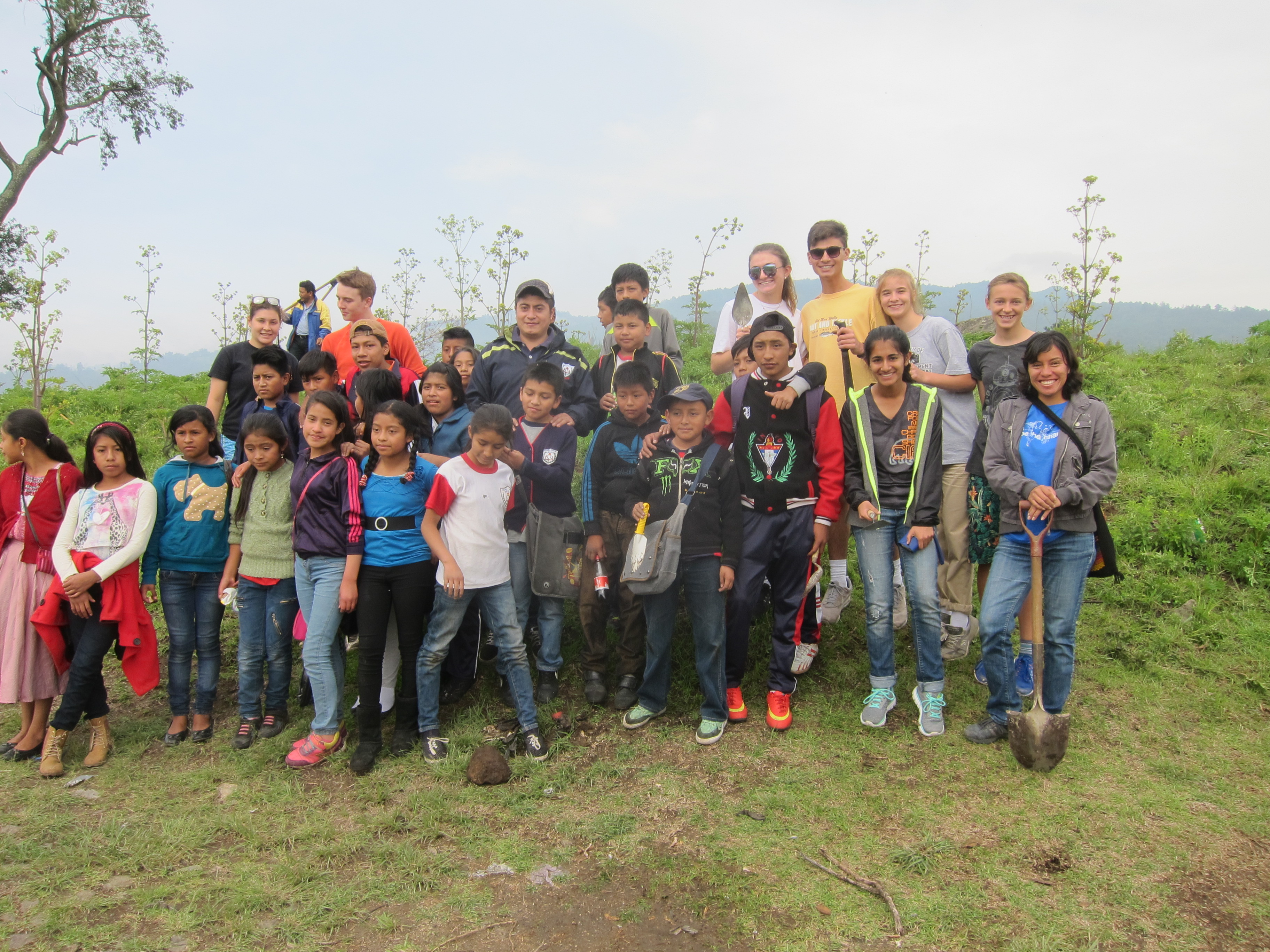
Group photo planting trees

The group tries the craft of pottery at Don Julio’s shop.
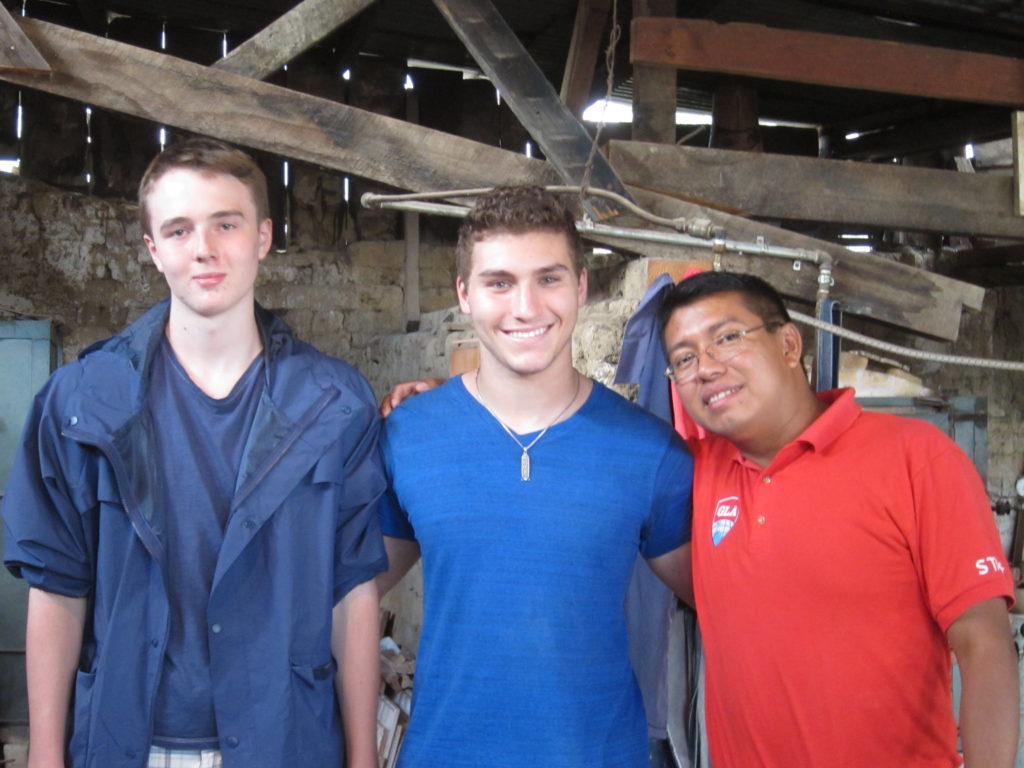
Posing for a picture at the potter’s workshop with Nayo, GLA Guatemala local staff.
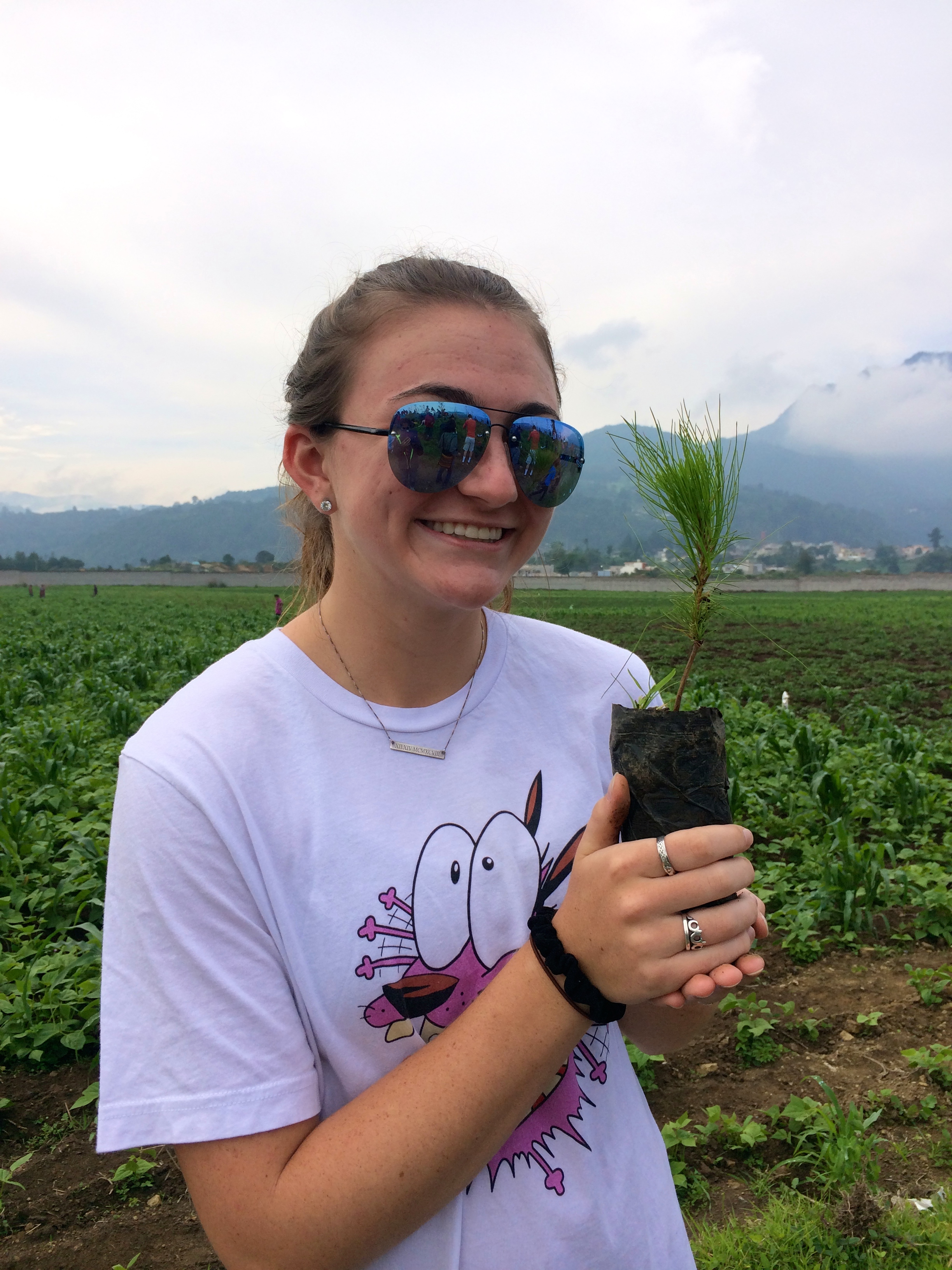
One of the “arbolitos” or “tiny trees” that the students planted
June 17, 2016
Early morning run team left the house at 5:45AM. Smiles and good times were had by all! #noexcuses

June 17, 2016
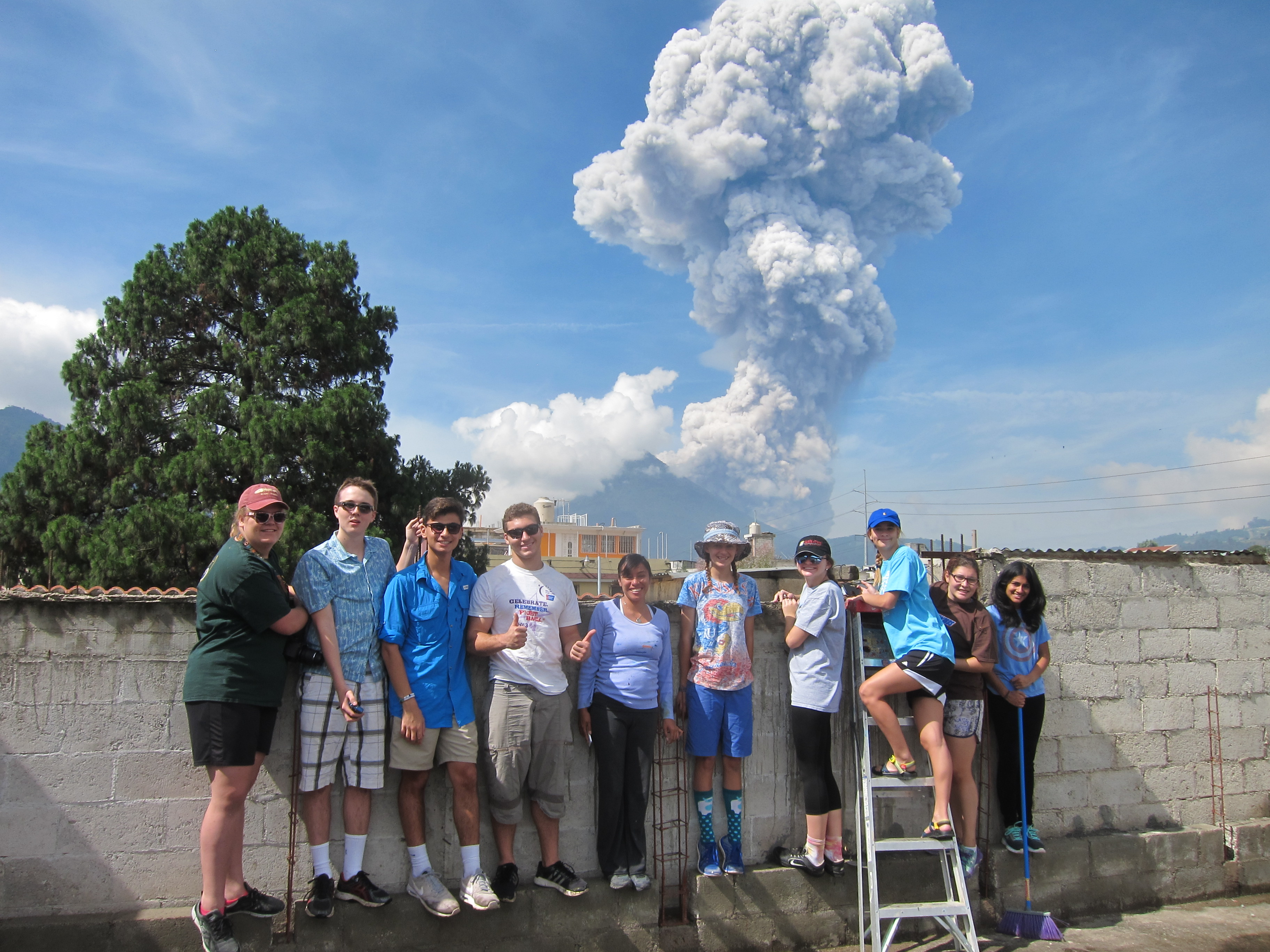
Students at the school after an eruption of the volcano Santiaguito
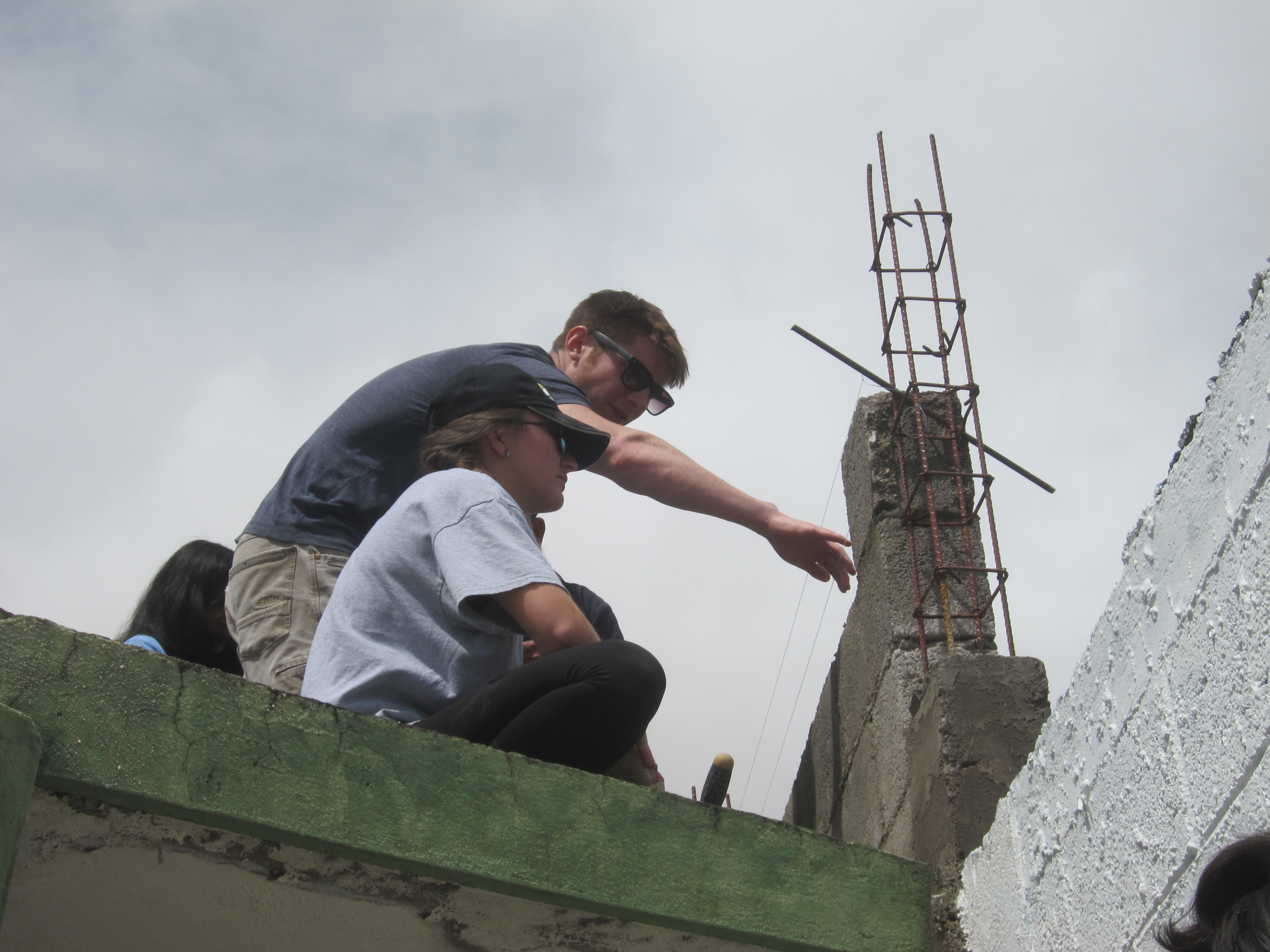
Students learning how to construct the first wall of the classroom
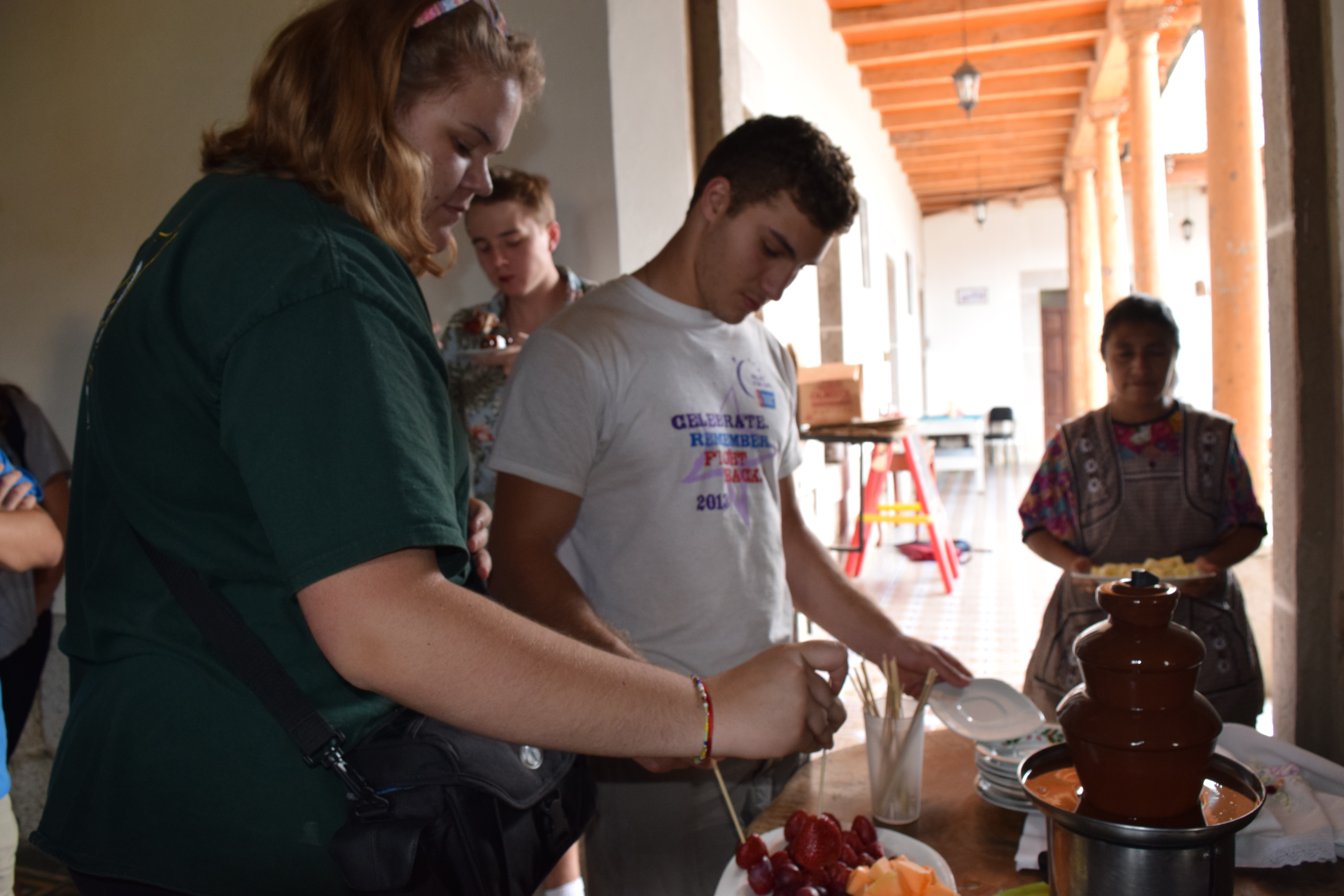
Enjoying a chocolate and strawberry drink at Doña Pancha’s chocolate workshop

Students getting chocolate from the chocolate fountain
Since the students were out of school today for Father’s Day, we were able to get a quick start on our two summer projects. The first is the construction of a fifth grade classroom on the second floor of the school. GLA has been constructing classrooms at the school since 2010. Today, we began by clearing the foundation and stacking bricks to form the outside wall. The second project is a large mural that extends across the length of the basketball court. The theme of the mural is water so we had been collecting drawings and ideas from students throughout the week. Our work today included making a grid across the mural wall to help with further planning. While we were working, the volcano Santiaguito, 50 km from the school, erupted, forming a giant cloud of smoke. We momentarily stopped work to take pictures as it was the first volcanic eruption that many of us had seen. (We were a safe distance away, and it was not a concern to our safety.)
After lunch, we went to a chocolate workshop owned by a fifth generation chocolatier, Doña Pancha. At the workshop, we got to try natural chocolate from a chocolate fountain and a chocolate strawberry drink. At the same time, she gave us a summary of the history of chocolate and how it had been passed down through her culture and from her Mayan ancestry. In the end, we had the chance to buy some of the chocolate that is made at her shop.
After spending a couple of hours in a local mall, we headed back to home base to listen to a lecture by Don Arturo. Don Arturo spoke of the history of Guatemala and the US involvement in its history and civil war. Through his lecture, we were able to understand one cause of the poverty we have come to see in Guatemala over this past week.
Tomorrow, we will head out on an excursion for the weekend to Lake Atitlan in Panajachel, taking a break from our service. The blog will not be updated for those days so stay tuned for an update after that.
by Akshara, Cody, & Emma
6/21/2016
Authors: Cody and Haley
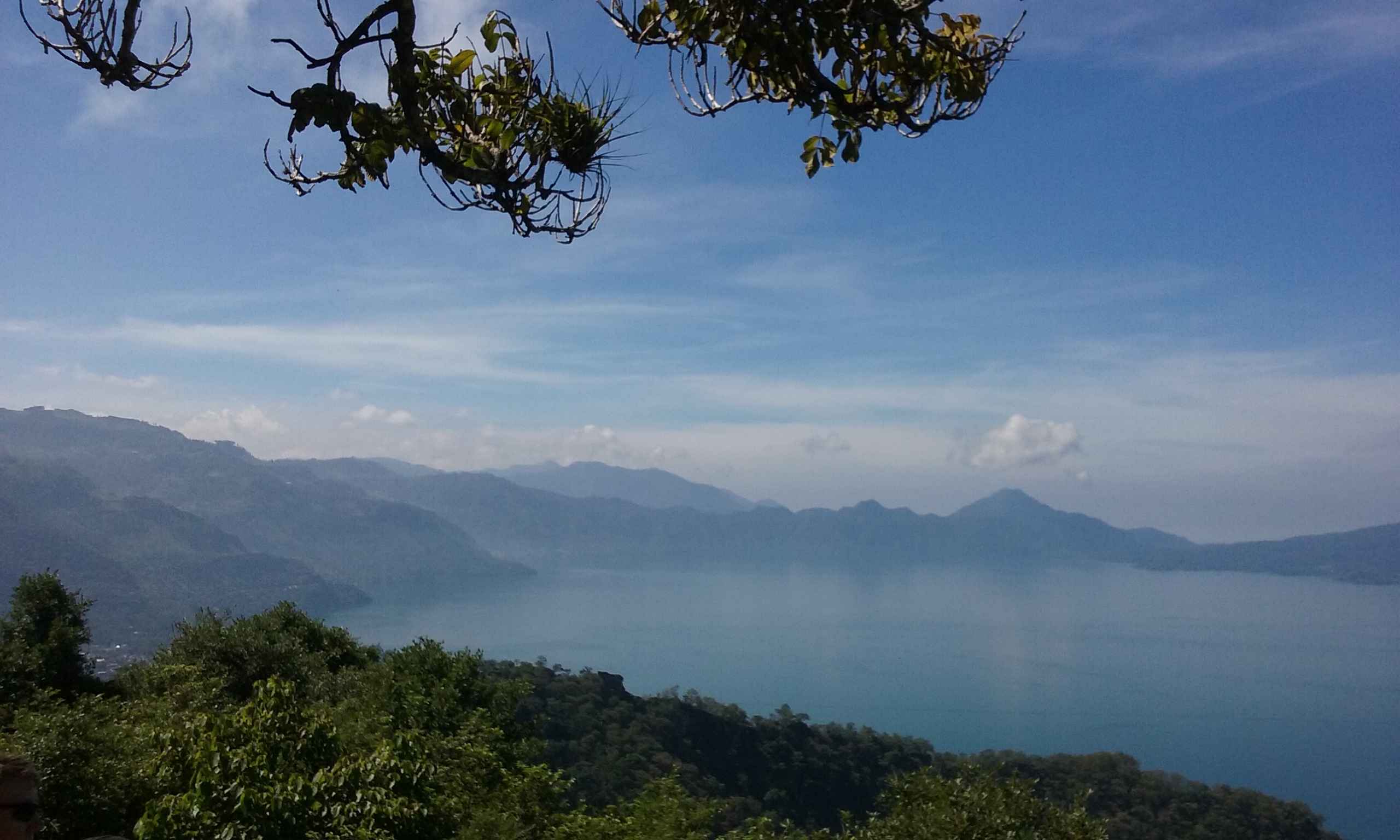
This weekend, while on a two day excursion to Lake Atitlan, Panajachel we visited craft markets in the town of San Juan and Atitlan by taking a boat. We stayed at the hotel Paradise Inn right on the beautiful lake. After a day of shopping and boat rides from market to market we went back to our rooms with amazingly soft beds until it was time to drive to our next destination, Chichicastinango, the biggest craft market in this hemisphere.
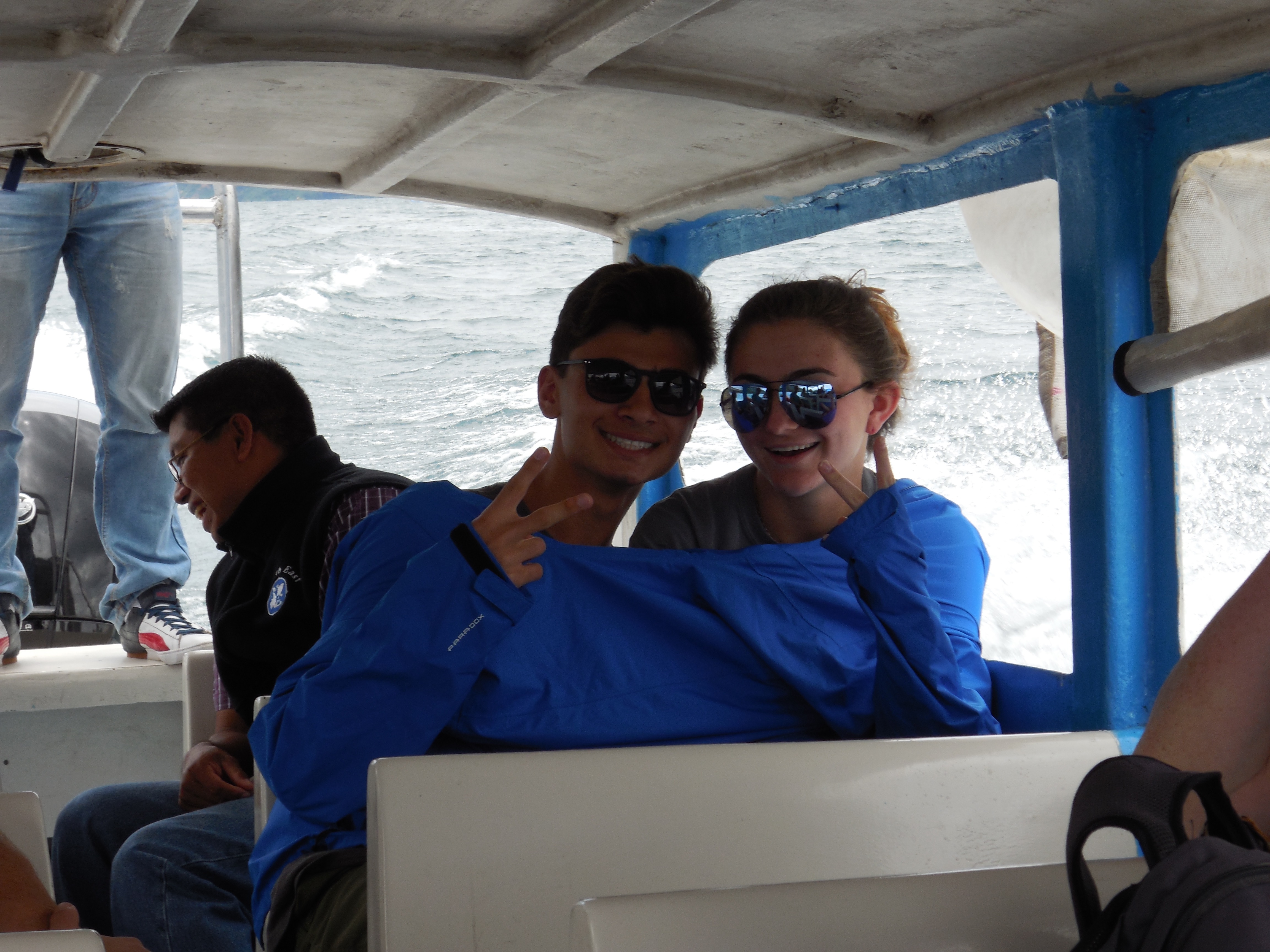
Boat ride to San Juan on Lake Atitlan
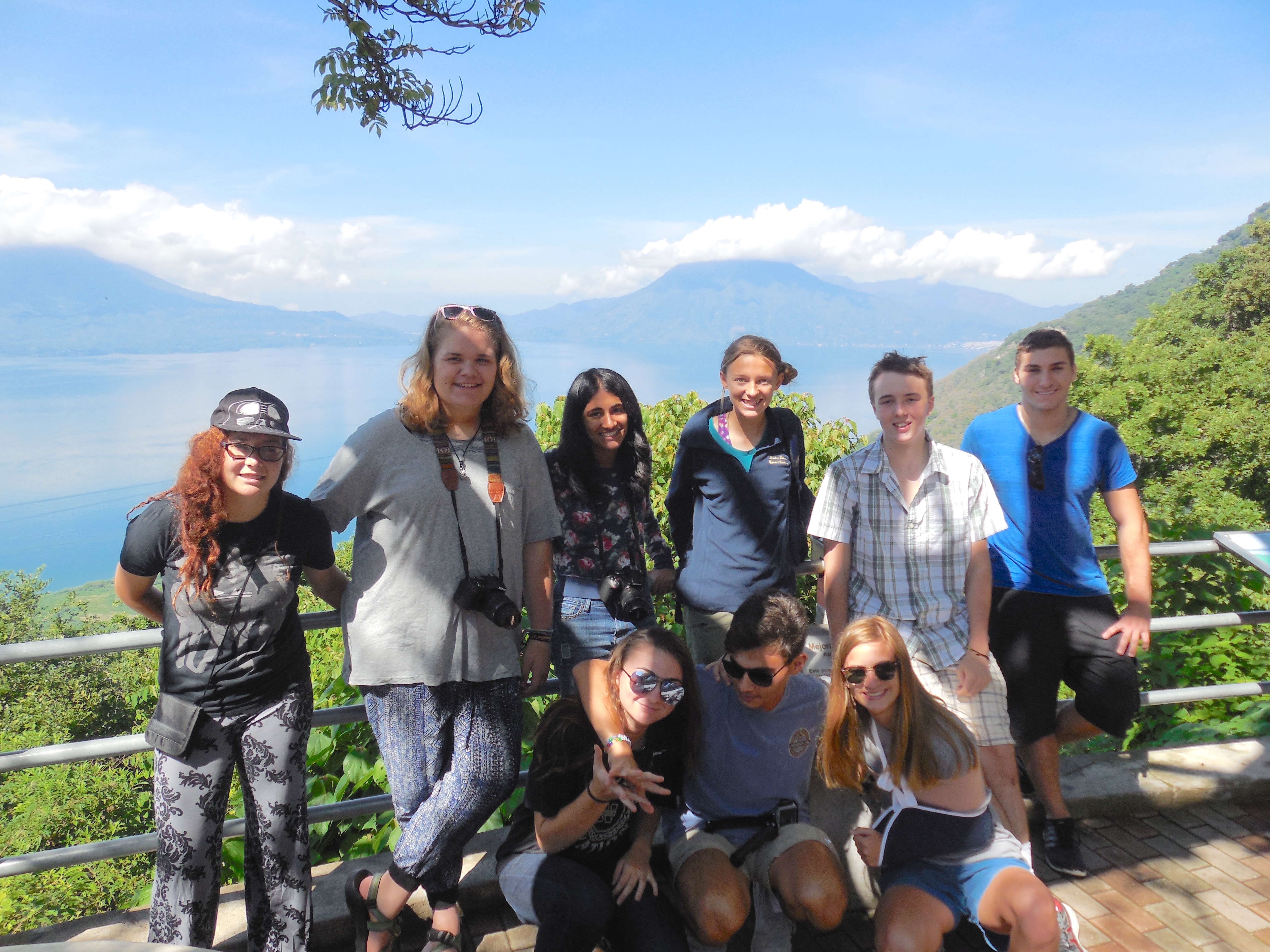
Group photo at the Mirador of Lake Atitlan, Panajachel
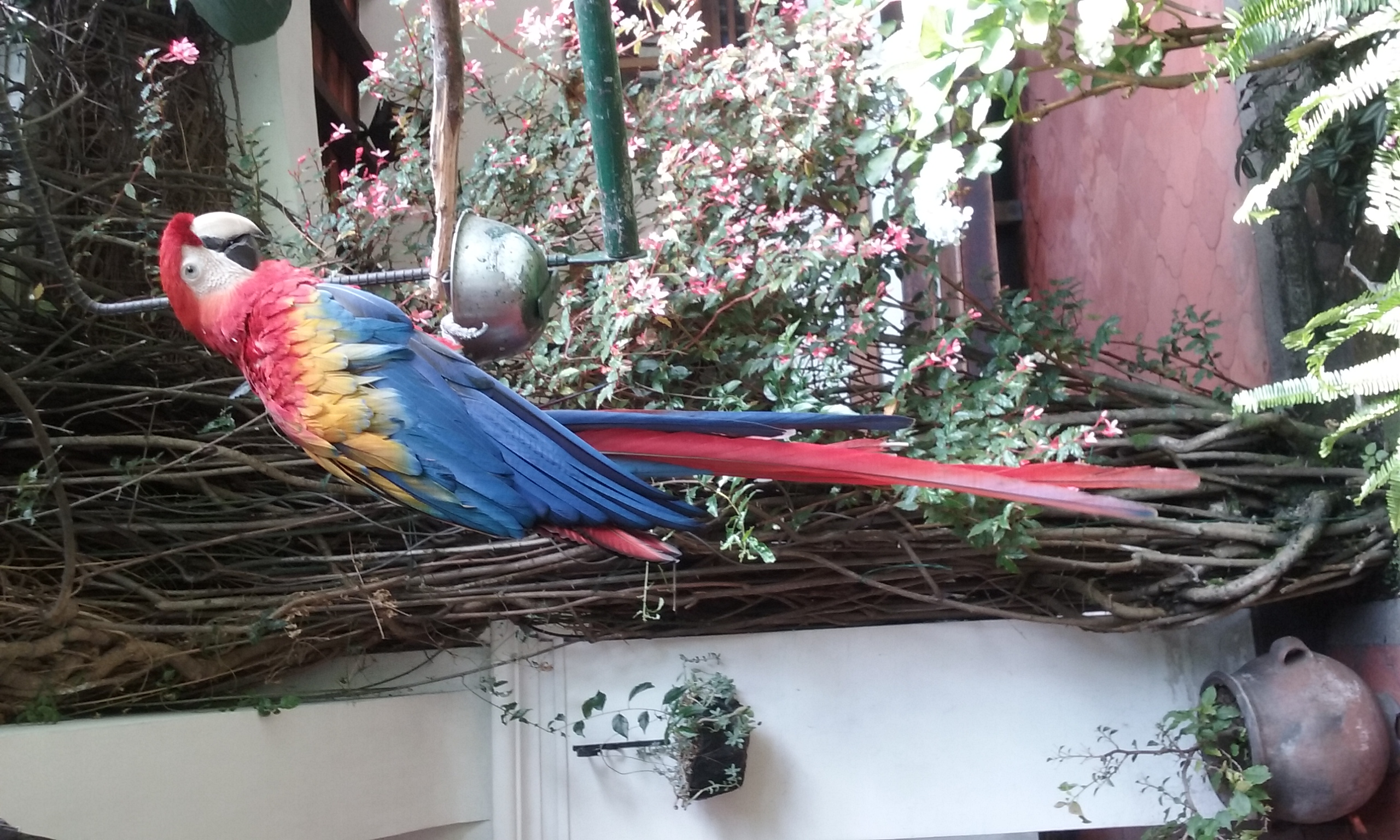
Parrots in Chichicastenango
Upon arrival we talked to parrots at the hotel that would be our temporary home base until it was time to venture out onto the streets. The market was filled with people of all ages trying to sell us things. It was a beautiful, colorful, and almost overwhelming place. After the market we ate our lunch then began our journey back to home base.
—
Today we continued with our service project. After lunch we also went to the bakery, XelaPan, two coffee shops in Historic Downtown Xela, and a bookstore. On our way home we stopped to get pupusas, a Salvadorian food that is a corn tortilla stuffed with cheese and beans.
Once we returned home we ate the dinner prepared for us even though most were stuffed with fresh bread and pupusas.
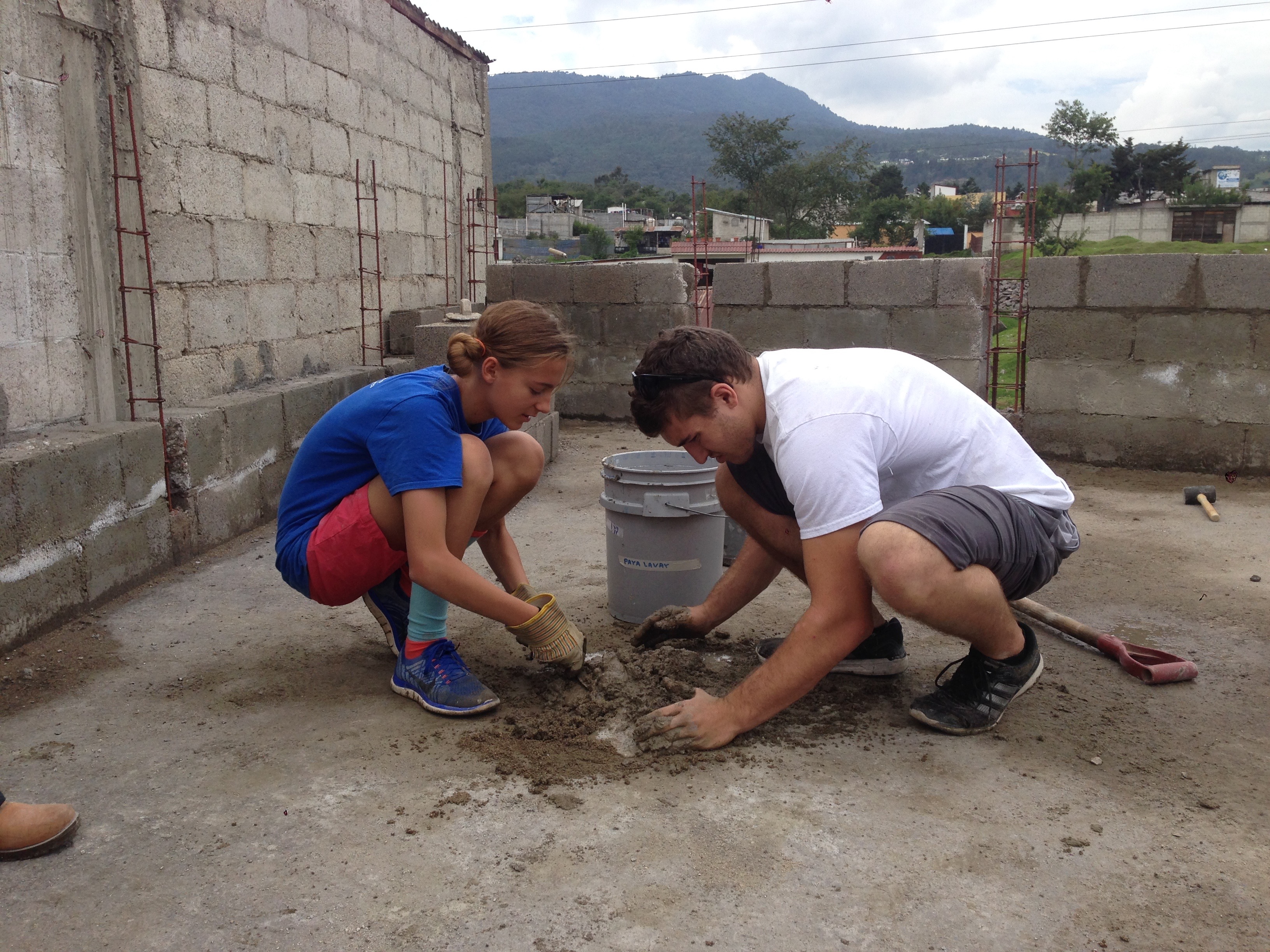
Classroom construction

Mochaccino at Cafe Armonia
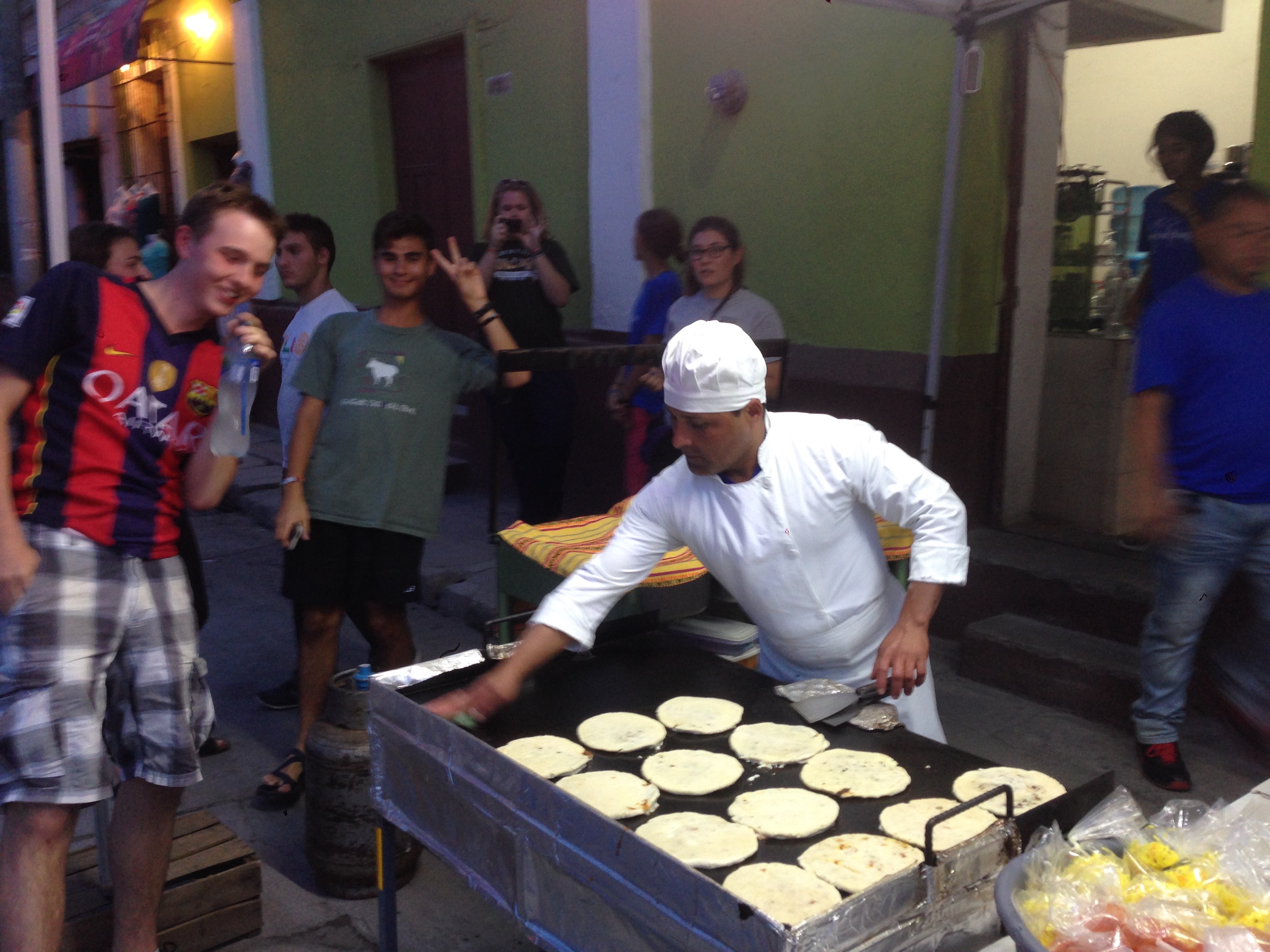
Pupusas in the making
June 22, 2016
Loud blasts of fireworks woke us up at 7 this morning for fellow GLA-er Audrey’s birthday. After wishing her a happy birthday and getting over the initial chaos, the day continued as usual; we headed up to the school to wrap up whatever we could on our service projects. The construction group continued adding cinder blocks and concrete to the walls, and the mural group began adding color to the outline. Both groups took a short break to have ice cream, tortrix, and play a friendly game of soccer. Once we had finished up, we cleaned out our equipment and said our final goodbyes to the school, taking pictures and expressing that we would love to come back some day.
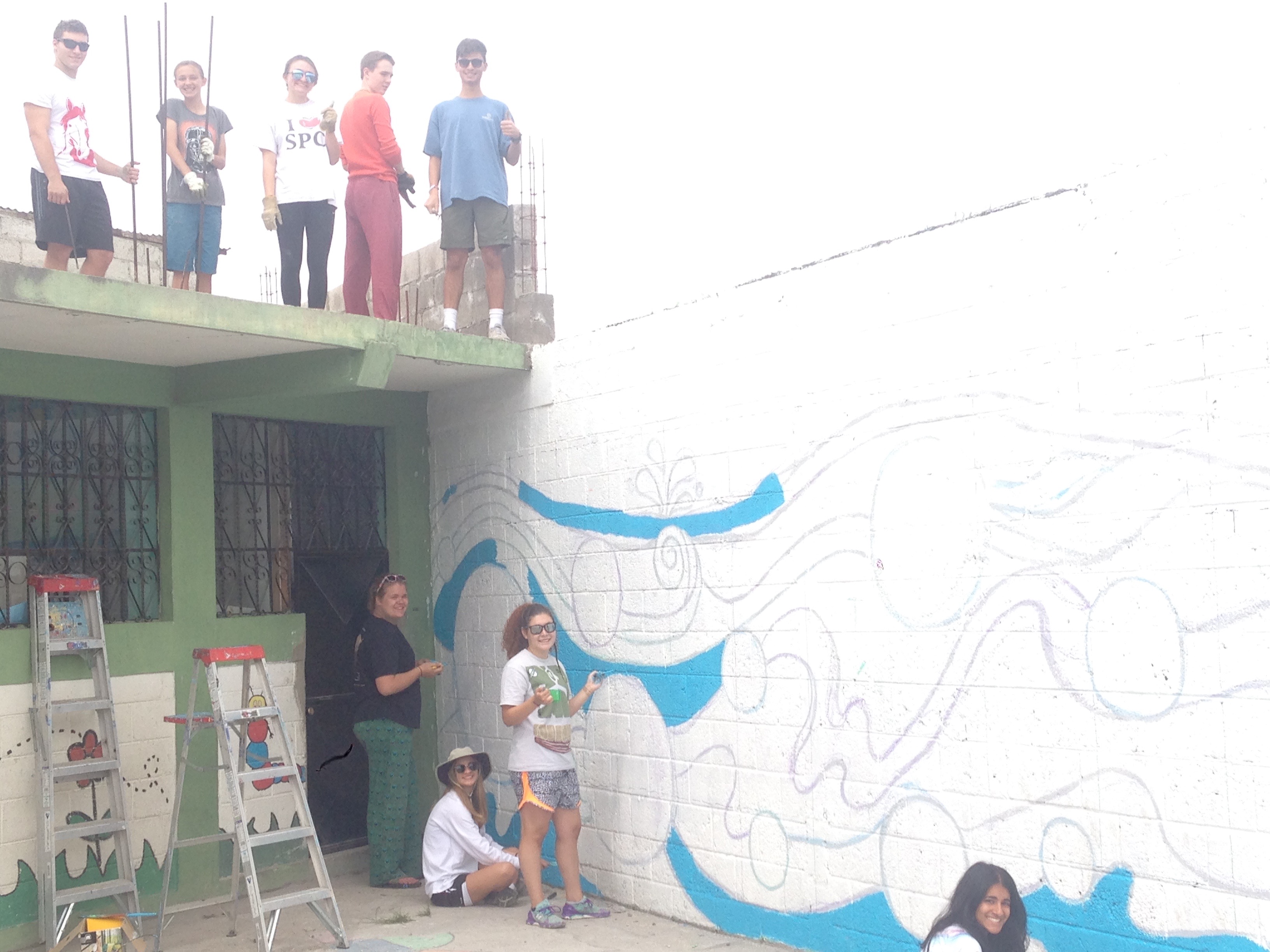 Students on the last day of work

Mural group after last day of work

Construction group after last day of work

Gathered at the school for the last time

Learning how to play the marimba / xylophone
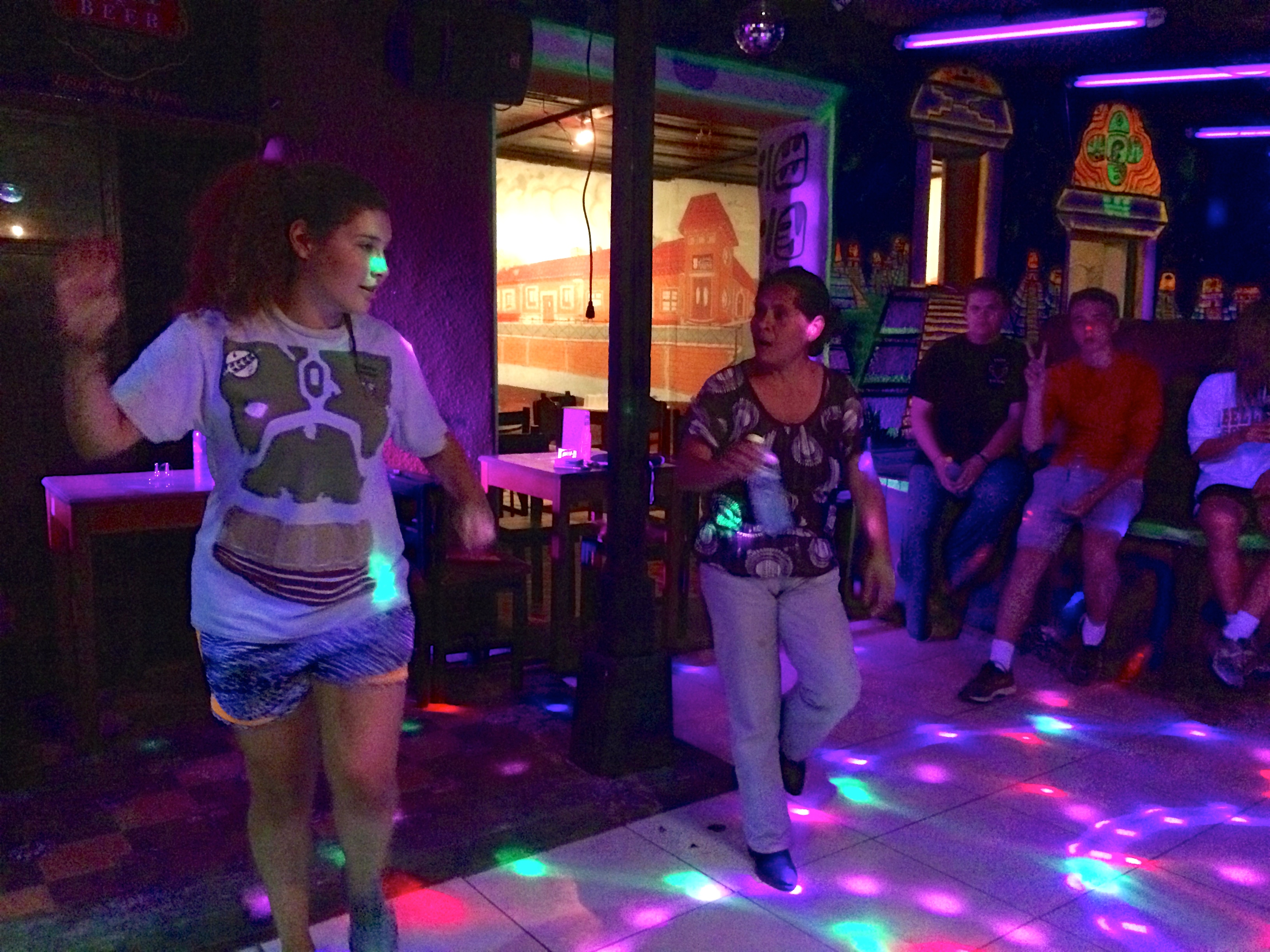
Students learn how to salsa dance step-by-step
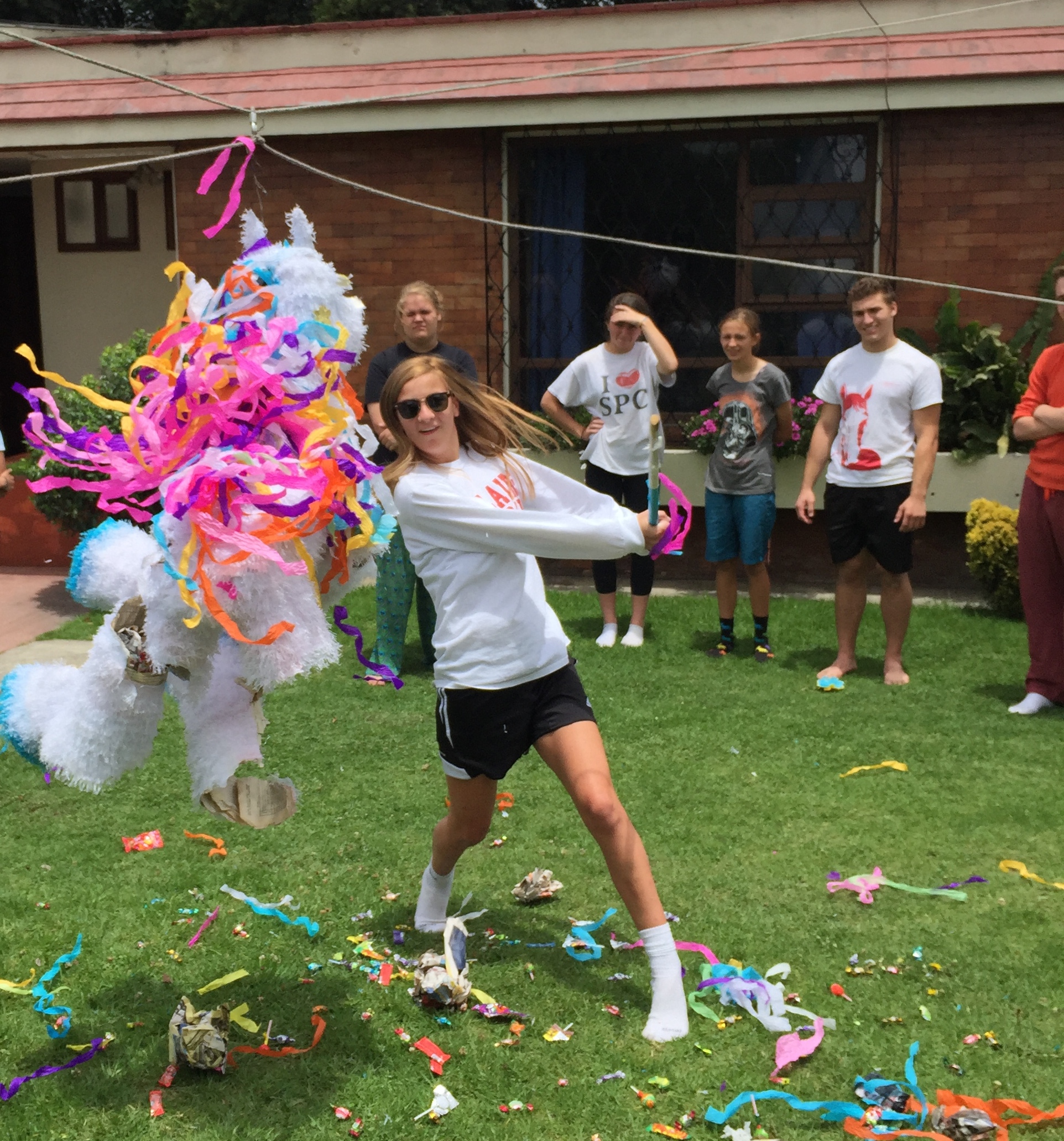
Students take turns taking swinging at the piñata for Audrey’s birthday.
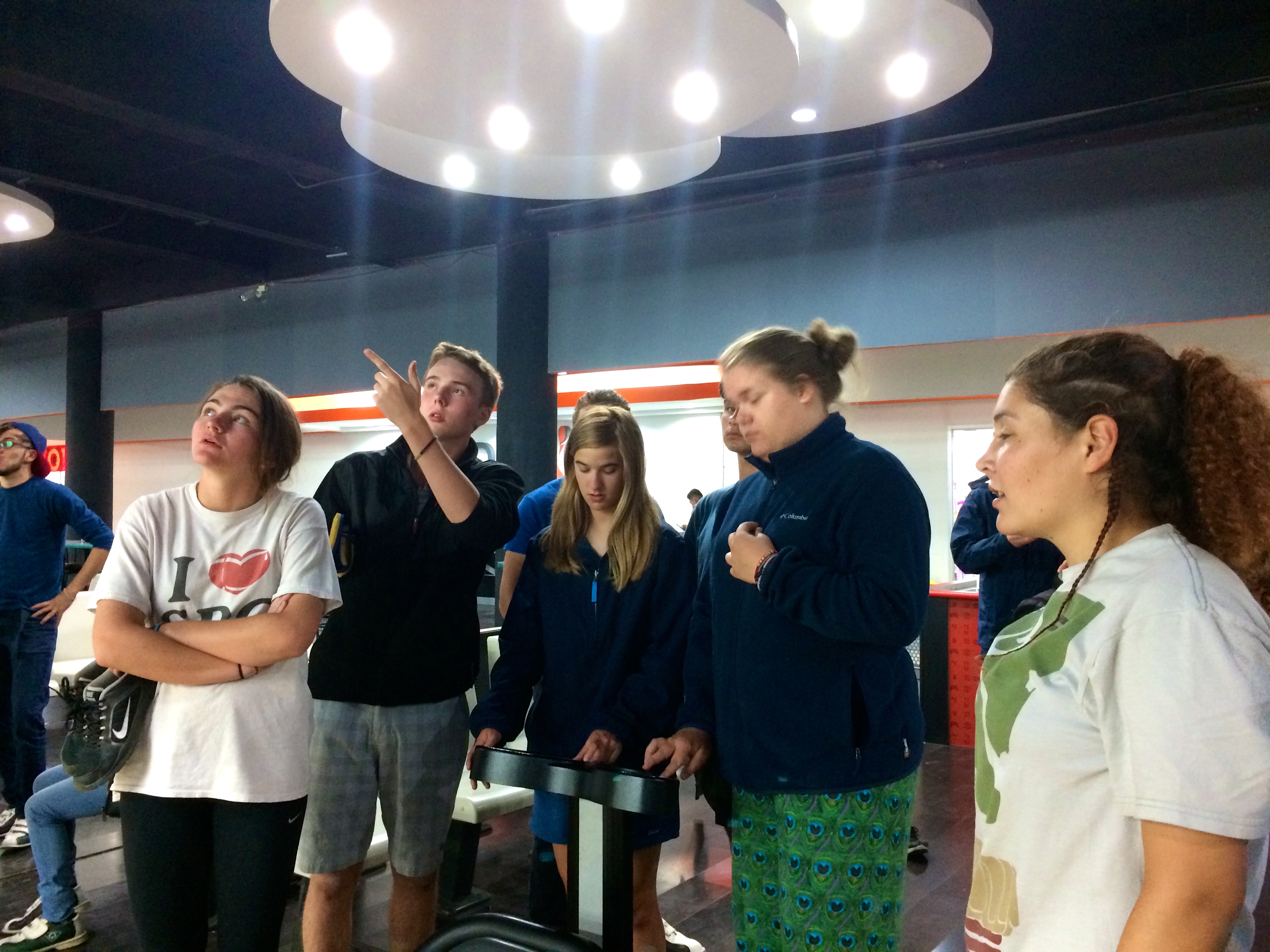
Students at a local bowling alley
June 23, 2016
Our morning started out 30 minutes earlier today as we began the hour long drive to the town of San Martin Sacatepéquez and Volcán Chikabal to go for a hike. From the base of the volcano, we stuffed into an open-roofed truck and took a bumpy uphill drive to the start of the trail. Soon after, we began hiking up the side of the volcano, taking breaks as needed. It was a challenging trek, but we soon made it to the lookout about a mile and 50 minutes later. From there, we had a beautiful view of Laguna Chikabal, a crater lake located at the center of Volcán Chikabal. Once we had finished taking pictures, we descended a separate trail which consisted of over 600 stairs. At the bottom, we were at the shore of Laguna Chikabal, which was enveloped in a thick layer of fog. We walked around the outside of the lake until we arrived at where our shaman Don Santo was setting up for our ceremony. The ceremony was complicated and each separate piece symbolized a different element of nature that was important to the Mayan people. During the ceremony, we were encouraged to take pictures and give white candles as an offering in exchange for something that we needed in our lives. In the end, we asked any lingering questions to the shaman and returned back up another slippery trail to the lookout and back to the base of the volcano.
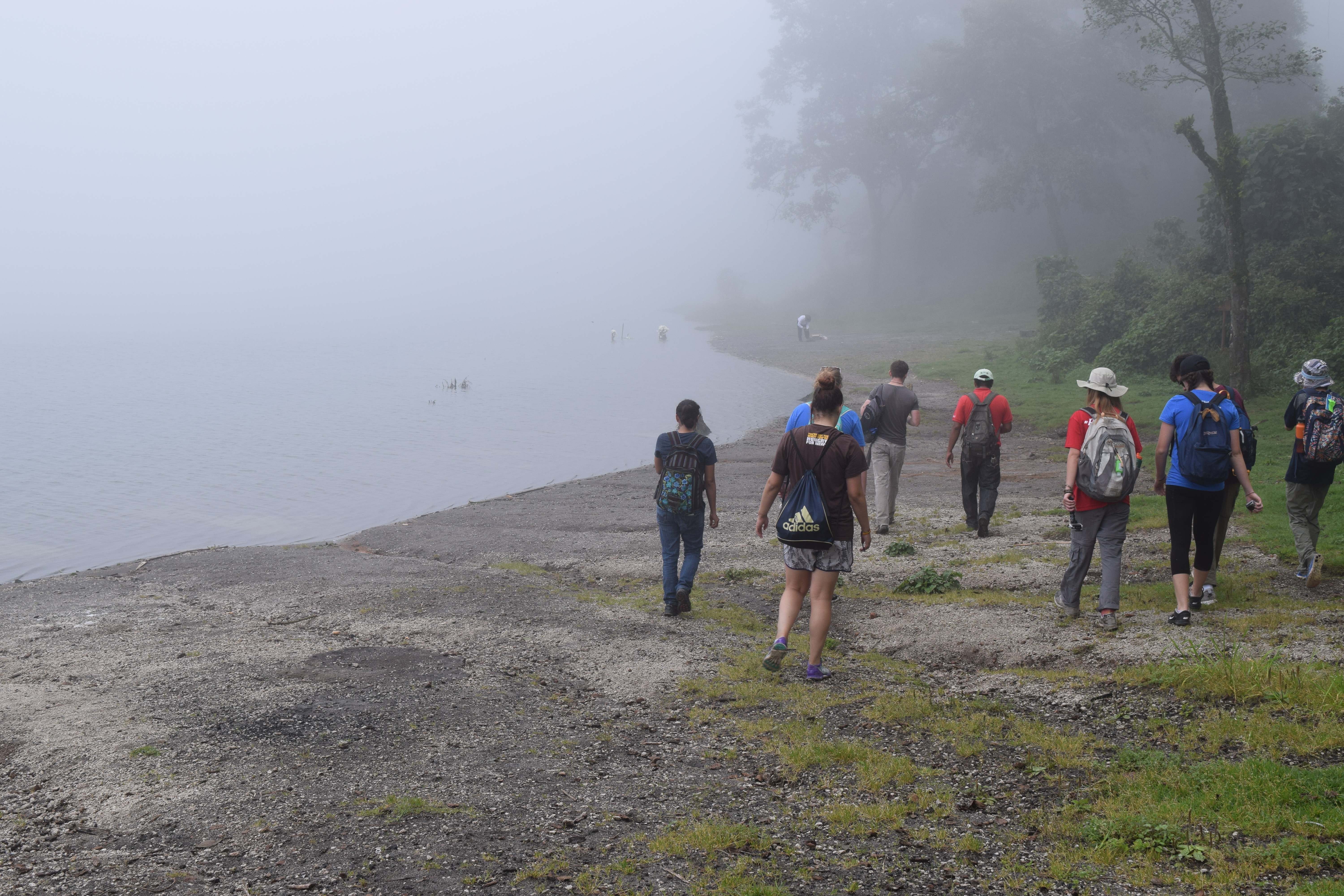
Hiking up to Laguna Chikabal
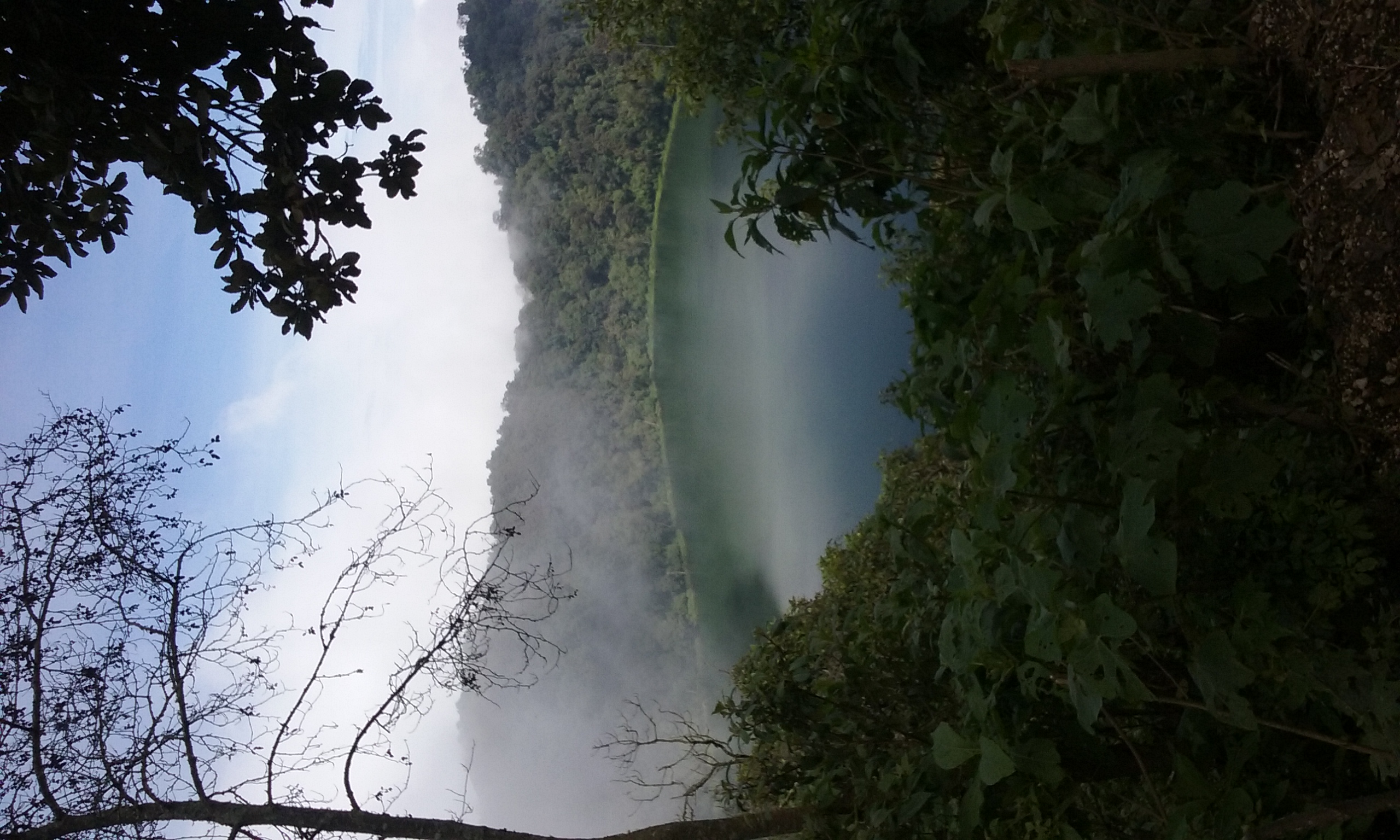
View from the top of Volcán Chikabal

Students gathered next to Laguna Chikabal before the ceremony
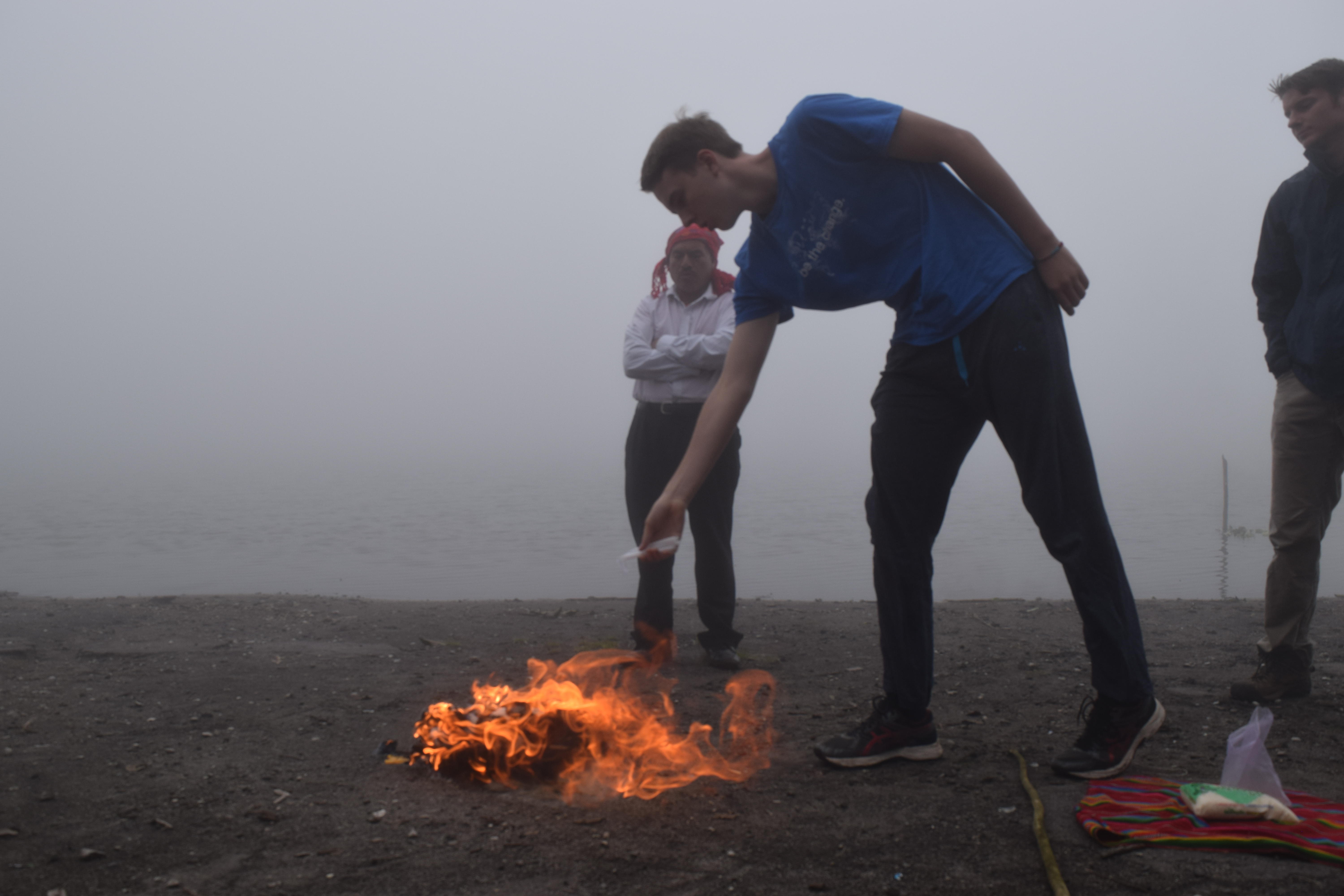
Students offered white candles during the ceremony
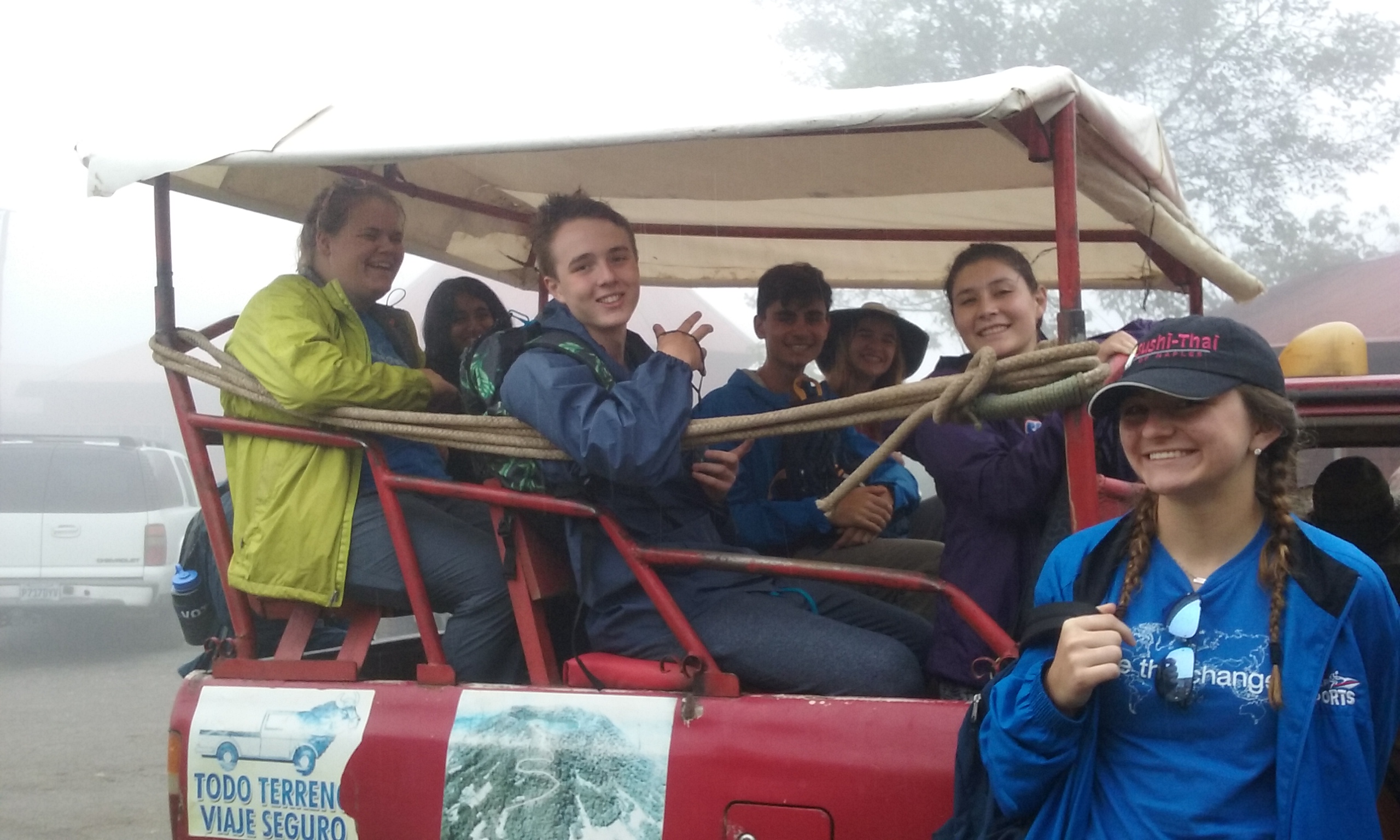
“El Torito”, the vehicle that took us back to and from the base of the volcano
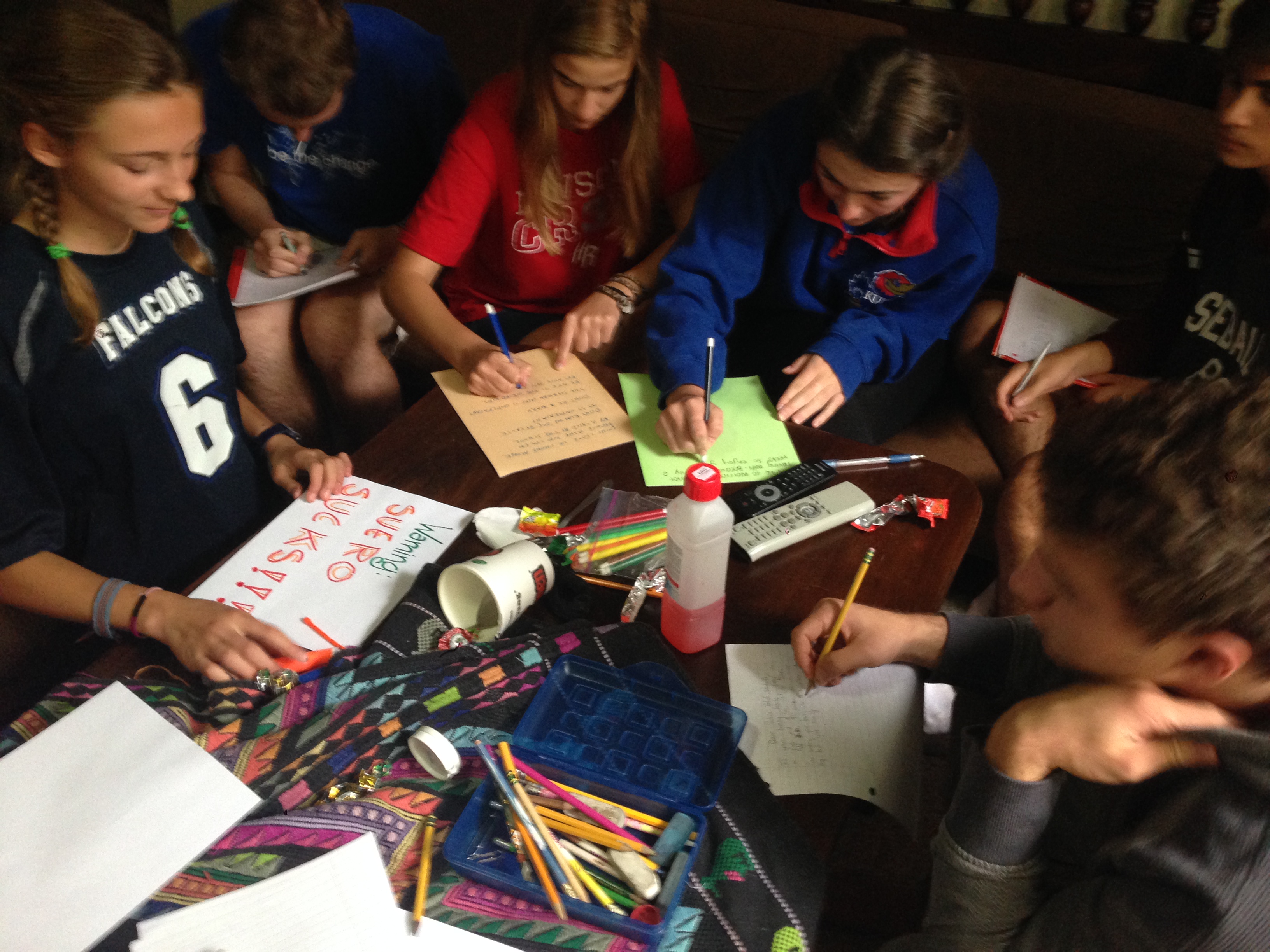
Today was our last day at home base in Xela/Quetzaltenango as tomorrow we will be returning to Antigua for our flights back home on Saturday. As a farewell activity, our group wrote letters to the incoming group with advice and warnings and statements of good luck.
- « Previous Page
- 1
- …
- 14
- 15
- 16
- 17
- 18
- …
- 39
- Next Page »
