The Young Leader

  • GLA Program Blogs
  • Gamechangers
  • Newsletters
  • About The Young Leader

May 29, 2016 by The Young Leader

Why You Should Take Spanish Classes in Costa Rica

taking-spanish-classes-in-costa-rica

Costa Rica is a tiny country about the size of West Virginia in the United States. Because of that, it may not really even be on your radar when you think of places to study Spanish. You might be gravitating toward more conventional choices like Spain or Mexico, but Costa Rica is an amazing place to study as well. Here’s why you might want to consider studying abroad, and especially in Costa Rica.

The Power of Immersion

There are a lot of drawbacks to learning in a tiny little classroom in the comfort of your own hometown. Mainly, you lack the opportunity to use the language you’ve practiced in real situations.

School classroom situations are carefully manufactured and while useful, they are no substitute for the real thing. Also, in a lot of cases, you simply can’t go outside and use the language that you’ve learned, meaning you’re likely to forget it. We call that being in “the bubble.” You learn the language in your little bubble and then go outside and speak English the rest of the day (or week in some cases), popping that little Spanish bubble.

In a place like Costa Rica, where the language is spoken naturally, you can reinforce what you learn in class by going out among the people and using the language, further cementing it in your mind. You also get the chance to experience real language, which is often vastly different from the language being used in the textbook. Face it, how many times have you used “This is a pen” or “Hello, how do you do?” in your daily life speaking English? Well, that’s a downfall of the language learning industry. That’s why you need to get out there and experience “real language” how the locals use it. And that’s why taking Spanish classes in Costa Rica that combine immersion in the community with teachable moments in class is an ideal learning method.

Natural Beauty

Costa Rica is a country rich in natural beauty and a great place to go to experience something truly different and amazing.

The country is known for its beautiful natural hot springs, supplied by the country’s volcanic landscape, and its astonishing wildlife and scenery. Among the things to see include waterfalls, volcanoes, and the expansive rainforest.

Arenal Volcano, for instance, is a gorgeous hike that can be supplemented with an amazing zip lining or rafting experience. There are also an abundance of national parks, both inland and seaside, that allow you to take in the beautiful sights, see amazing animals like the famous sea turtles, and just relax. The natural beauty of Costa Rica is unmatched, and is definitely a very attractive point to studying abroad there.

The Experience of a Lifetime

Studying abroad is an experience you will carry with you for a lifetime. It will shape you in more ways than you can possibly even imagine as you sit reading this blog post.

Take it from a seasoned language learner and study abroad aficionado, a chance to immerse yourself in a vastly different culture will change for perspective and alter your life and your way of looking at the world for the better. So what are you waiting for? Get out there and start your new adventure in Costa Rica. It’ll be an experience to treasure for a lifetime.


Contributed by Nick Bartholomew
Filed Under: Latest Posts, Wanderlust

May 6, 2016 by Brett Scuiletti

Your Future: Volunteering Abroad During Spring Break (in College!)

DR-ASU-DC-GLA-NPCA

You may have heard of GLA’s Dominican Republic: Spring Break Service Adventure program for high school students. But did you know there are opportunities to volunteer abroad during spring break in college as well?

If not, now is the time to begin planning for your future!

IMG_0534

While many colleges and universities across the United States offer study abroad courses for students interested in spending a semester or two overseas, the corresponding number of institutions offering service-learning experiences – education crossed with meaningful volunteer work – is much smaller.

GLA’s sister organization, Discover Corps, is affiliated with the National Peace Corps Association and Next Step Travel, and operates a spring break service program for college students in the Dominican Republic. Its first partnership is with Arizona State University, and Jessica Hirshorn, lecturer for the College of Letters Sciences, tied in the program with the new Peace Corps seminar she began teaching this past semester.

IMG_0604

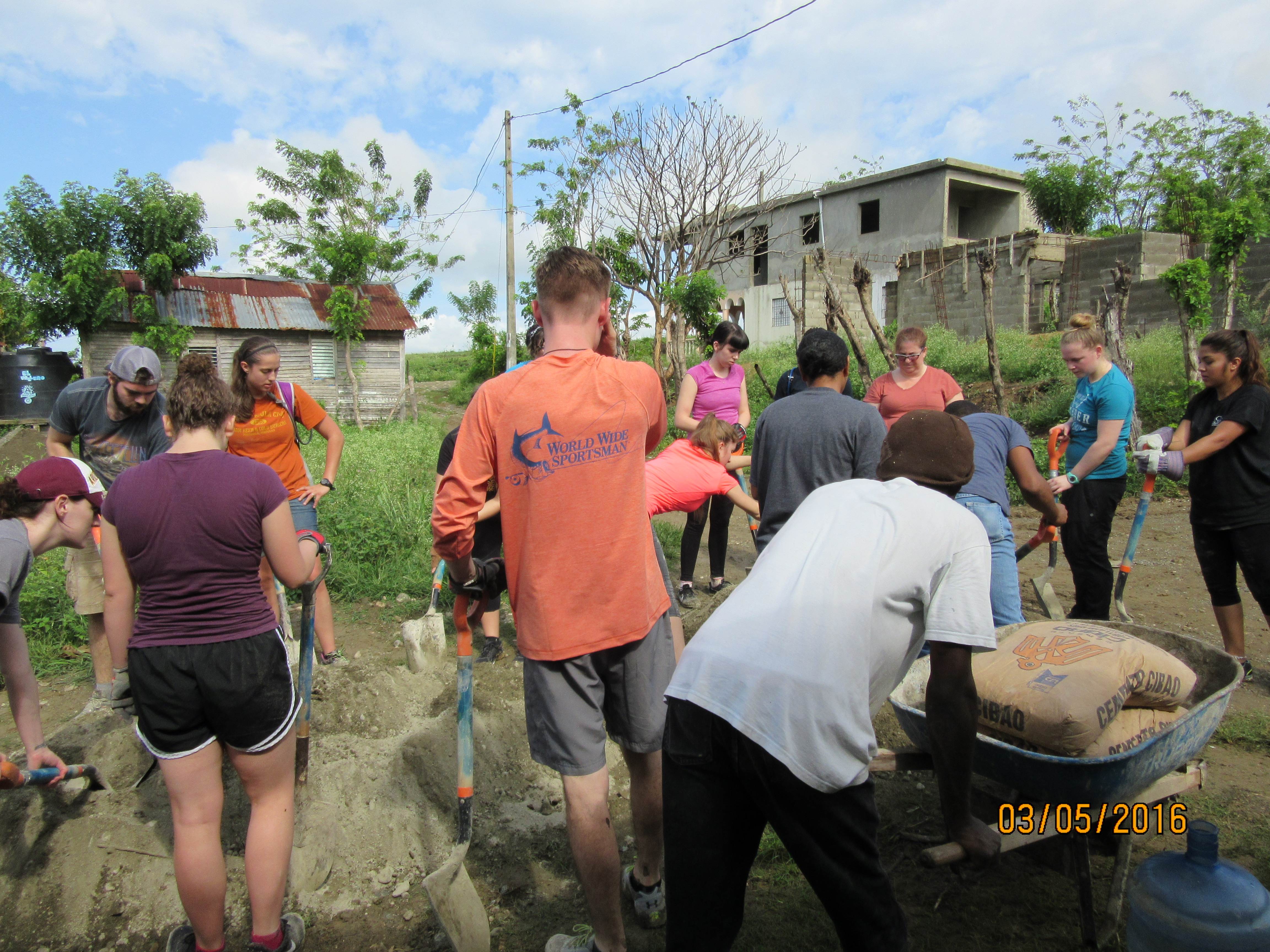
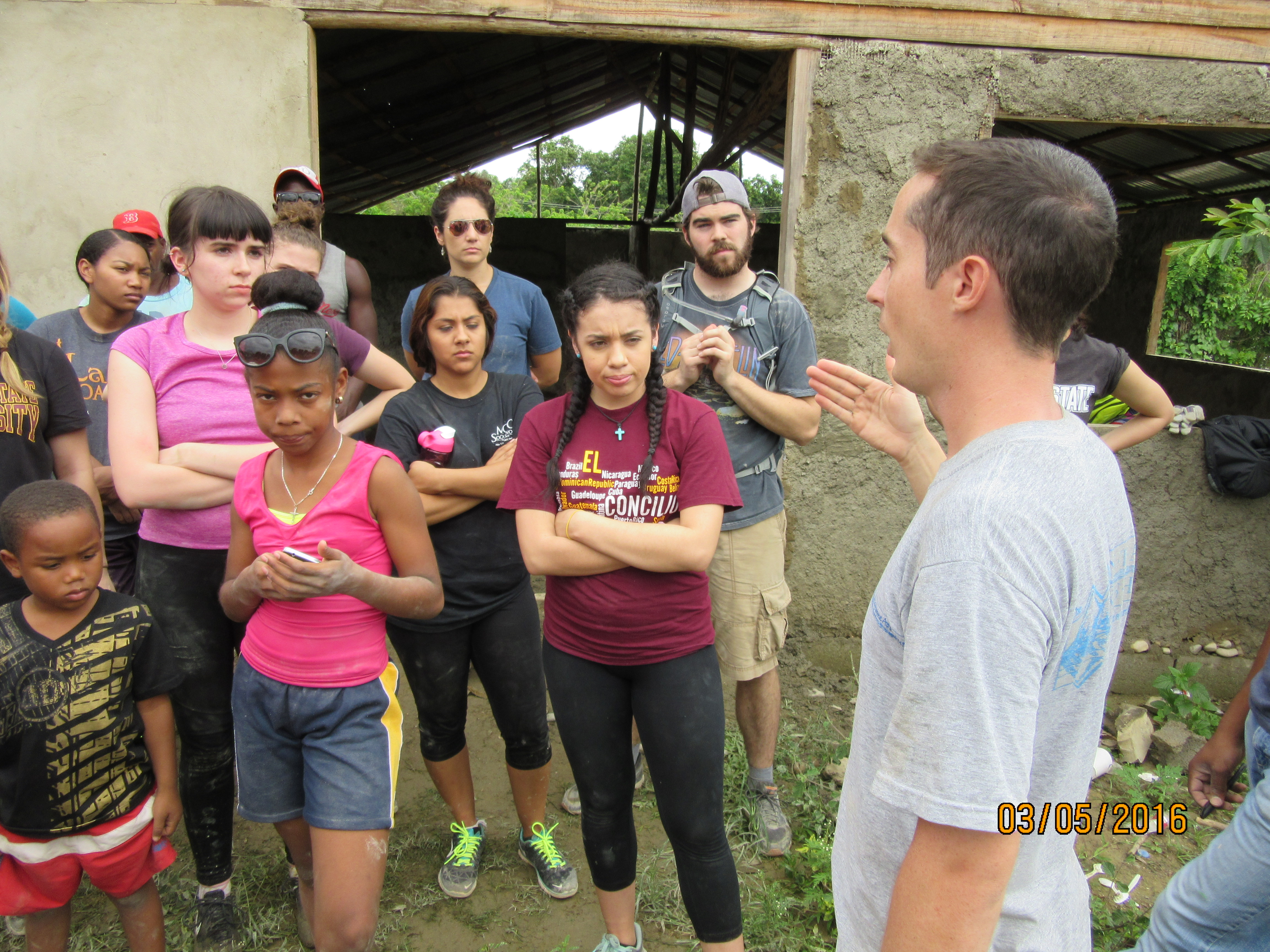
Students on this program spent nine days in the Dominican, contributing to a shared service project. The focal points of the program are global development and sustainability, with an eye toward providing lasting infrastructure that benefits local communities.

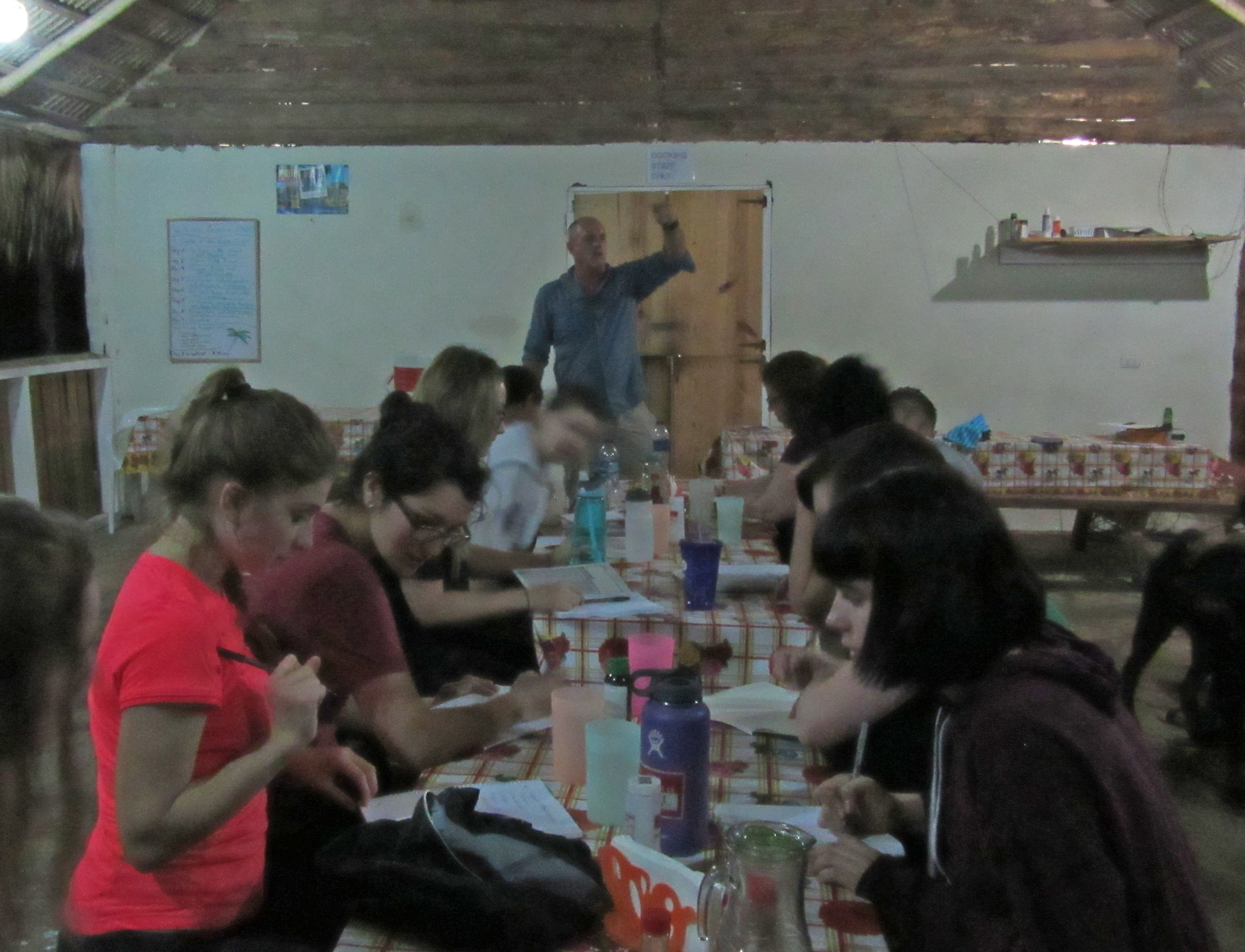
Education is also imperative to success on this program, as Local Director, Dr. Dave Addison, leads nightly lectures explaining the seven elements of human security. This structured and responsive curriculum directly addresses issues of both local and global magnitude, and ties into how well-meaning volunteers need to consider the repercussions facing communities in developing countries before implementing projects that may have negative impacts on their health and livelihoods.

dr-lecture

IMG_0558

In order to volunteer with the Peace Corps, applicants must hold a college degree, and many ASU graduates have gone on to serve with the Peace Corps around the world. By going on this trip with a partner of the National Peace Corps Association before graduation, it can help college students make a final determination about whether or not the Peace Corps is suited for them.

If you’re interested in having a Peace Corps-style experience in high school, check out our GLA programs by service type.

If you’re in college or heading there soon, you can check out Discover Corps’ programs for college students and beyond.

Filed Under: Bright Futures, Latest Posts

May 4, 2016 by The Young Leader

An Interview with Her Dad

GLA alum and ambassador Beate Kaz presented the following questions to her father about her GLA experience.

Here are his answers:

Q: ​Were you nervous about her flying alone? How did this experience turn out?

A: When my daughter was 14, we were reluctant to send her on flights so far away without her being with us, but we were excited about her seeing Guatemala and having a learning experience. GLA was helpful throughout this process because they gave us the contact information for other students on her trip who lived near us so that we could email and have our children fly together. Once at the airport we immediately saw the blue Gla shirts and met up both knowing our children would have easy flights.

Q: ​What concerns did you have about sending her on a GLA program? What happened with those concerns?

A: My daughter knew she wanted to travel abroad and we wanted her to have that experience, but of course we had concerns. We wanted to make sure GLA was a safe and organized program, and through their website we were able to get in contact with staff member who helped talk with us about GlA, easing our concerns.

Q: ​What were you hoping she would gain from this experience? Were your expectations met, and if so, how?

A: My daughter picked a trip that had Spanish classes in hopes to expand her language skills, and it really did make a difference. Not only did her skills improve, she was know more interested in becoming fluent than before!

Q: Did you notice any differences in Beate immediately after she returned home from her program? Two months after her program?

A: Immediately after her trip my daughter was happy all the time and talked about Guatemala non-stop! In the long run, she was more involved with global affairs and had a new perspective on what was happening around her.

Q: ​Do you feel like this experience changed your daughter’s college choice or career path? How?

A: My daughter has always been intrigued by the Peace Corp, and after her first GLA program she came home knowing that was something she wanted to do in the future. One of her counselors had done the Peace Corp in Peru and gave her group a slide show on his trip and answered any questions they had about his experience. My daughter was immediately hooked.

Filed Under: Latest Posts, Official Student Bloggers

April 29, 2016 by The Young Leader

The Challenges and Opportunities of Language Learning

language-learning

Learning a new language opens a world of opportunity. You not only understand a new method of communication, but also culture, history, and a new way of thinking. The benefits spread far, but it demands effort. Language learning takes determination and perseverance and many factors contribute to how challenging a language can be including age, motivation and native tongue. There isn’t one “hardest language in the world.” It is all relative and depends on the individual.

As a seasoned ESL (English as a Second Language) teacher and a student of Spanish, I have been on both sides of the desk when it comes to language learning. English and Spanish are desirable to learn because of their prevalence in the world, yet both have their challenges and may have you ripping your hair out at some point.

Thanks to the Internet, travel industry and the dominance of the US post-WWII, English is the lingua franca of today. If two individuals need to communicate and they don’t share a native tongue, then chances are they will attempt to communicate through English. For this reason, as well as others, English is one of the top languages studied today. In my experience teaching ESL, there isn’t one specific aspect of the language that is of paramount difficulty, but some challenges tend to recur for all students; in particular pronunciation.

There are twenty-six letters in the English alphabet. This is misleading when it comes to learning the sounds of English and creates a paradox for some students. Each letter, especially vowels, can have a variety of sounds depending on several reasons, such as position in a word and adjacent letters. In reality, there are forty-four sounds in English, so simply learning one sound for each letter of the alphabet would be like learning all the notes in only one scale for music. Yes, you know the notes, but only in one form. There are still several others to comprehend.

Spanish also has its fun and games. Having lived in both Spain and Peru, I know firsthand the curve balls that Spanish throws. I was lucky to live with a host family in Peru, so I had plenty of speaking practice, which is a key to language learning, and programs like GLA give you the opportunity to immerse yourself. It’s extremely useful learning a world language such as Spanish, but some peculiarities made me want to eat a raw habanero instead.

Personally, having to memorize all those irregular verbs was a big challenge. Spanish verbs can contain the subject, so you first need to understand who or what does the action and then know the tense and how to conjugate it. It’s a lot to think about at once. Another struggle for me was learning the differences between por and para. These words translate to the single preposition for in English, but there are two of them and they aren’t interchangeable. Generally, por is used for time and money while para is used for people and purpose. It’s more complicated than this; trust me, I know. While irregular verbs and these two words will always be my Spanish language enemies, finally understanding them has broadened my worldview and made me sensitive to the challenges my students and all students face when learning a new language.

Here are a few tips that have helped me with my language endeavors. First, speak a lot. Language is a social activity and we learn how to speak before we write. Speaking requires you to think quickly and, over time, it will become natural. Second, write everything down by hand. Technology has made everything convenient but almost too convenient. Writing reinforces what you have learned and by physically putting pen to paper you create a connection with the language that typing doesn’t allow. There are many other tips out there but these are simple and effective.

There’s no question that language learning benefits, but don’t be discouraged by the challenges. It’s both a daunting and rewarding experience. Some languages are hard to learn for different reasons but all are accessible as long as you put in the time and effort. In the end, you will be smarter and have a better understanding of the world around you.


Contributed by Anthony Zamarro

Filed Under: Bright Futures, Latest Posts

April 29, 2016 by The Young Leader

Pre-College Programs for International Studies Majors

summer-pre-college-programs

Snapshots of people leading their camels across dusty deserts, of farmers selling their exotic fruits in markets, of students sitting in coffee shops with menus you cannot understand (and not just because of the fancy drink names). Videos of children laughing and singing in their language, of families eating foods you have never heard of nor seen. Do things like this fill your heart? Is learning about other cultures and peoples a great passion of yours? Then you are probably already interested in pursuing something like international studies when you enter college. You just cannot wait to start learning and using your studies to help others, whether in business, government, volunteering/charity, etc. But do you really have to wait until college to start? How do you get involved now? Let’s look at a few pre-college programs and ideas that give you some great experience learning about and working with other cultures:

  • Join an International Club: First look within your own school. Sometimes schools offer international clubs, where you can learn about other cultures and even practice languages. Some high schools even have a Model UN, an opportunity for students to get to experience what working with the United Nations is like. You will become a “delegate” and participate in conferences, learning about the procedures and policies the UN uses when working together. This is a perfect opportunity for anyone interested in international studies. If you would like more information about the Model UN, visit their website or ask if your school has a Model UN.
  • Participate in a Language Immersion Program: Global Leadership Adventures offers four unique summer pre college programs focused on language learning, one in China, one in Peru, and two of which are in Costa Rica. You will truly dive into the language, the culture, and the nation. Each of these programs ingrain language-learning into the time you are there. GLA knows your trip will fly by and time is precious, so as you are volunteering alongside natives, tasting some new dish, and experiencing the beautiful surroundings, you will also be learning and practicing your Spanish or Chinese. Plus, there will be fun “field trips,” like surfing, shopping, and hiking. These language immersion programs will not only open doors to volunteering and gaining experience, but you will also have had a beautiful adventure, with people and places you will never forget.
  • Study Abroad for a Semester: Become a high school exchange student in another country. Similar to GLA’s language immersion programs above, you will be out of your comfort zone, and because of that fact alone, you will learn about the culture and language pretty rapidly. You will get to experience what daily life is like in another culture, while at the same time, continuing your studies. You already have to be in school, so why not study in another culture? It makes for great experience (and a lot of fun, too)!
  • Volunteer within Your Own Community: You would be surprised at how many opportunities there are to work/volunteer with international peoples right within your own city. Often, there are whole communities of people from another country living in a town or city. Look at yourself, and ask what you can do. You could tutor and help improve internationals’ English skills or provide translation. You could help provide relief. You could volunteer with a local organization that works with international students and communities. You could talk with your family about hosting an international exchange student in your home. There are many options and programs, and each opportunity will be unique depending on your hometown. But every place has some way you can learn about other cultures and peoples. It will be good experience, and you will already be doing what you love: working alongside other cultures and nations.

So what’s holding you back? You can start pursuing your international studies degree today! And remember: in International Studies, you never stop learning, so be open to new adventures and have fun!

Have you been on one of GLA’s Language Immersion programs? If so, tell us about your experience in the Comments! We want to hear your story.


Contributed by Addie Davis

Filed Under: Bright Futures, Latest Posts

  • « Previous Page
  • 1
  • …
  • 16
  • 17
  • 18
  • 19
  • 20
  • …
  • 39
  • Next Page »

Brought to you by

Copyright © 2026 · Executive Pro Theme on Genesis Framework · WordPress · Log in